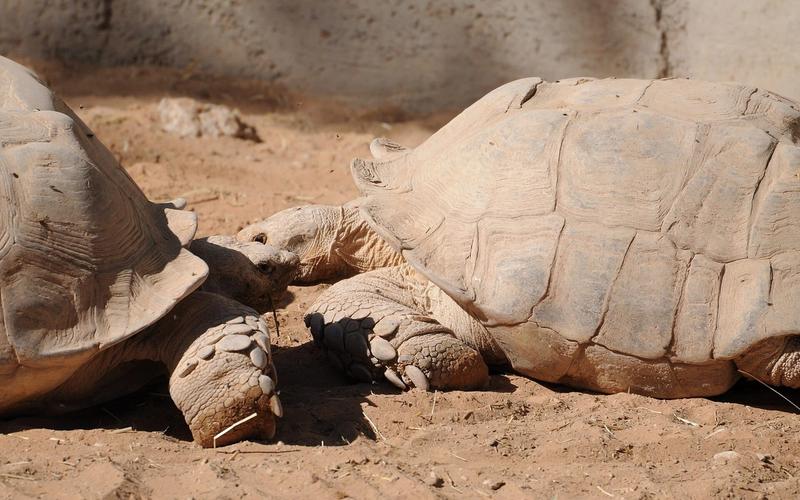
Giant tortoise survey finds 180,000 on Seychelles atoll
A five-year study of Aldabra Atoll has produced the highest-ever population estimate for the Aldabra giant tortoise, a figure that now exceeds the number of people living in the Seychelles.
Research, discovery, and the natural world — explained clearly.
A five-year study of Aldabra Atoll has produced the highest-ever population estimate for the Aldabra giant tortoise, a figure that now exceeds the number of people living in the Seychelles.
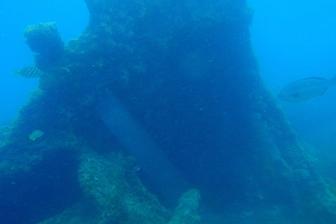
Torpedoed in 1941 while evacuating wounded soldiers, the Italian ship Po now hosts a thriving reef ecosystem, including a rare sighting of an endangered Mediterranean monk seal, researchers report.
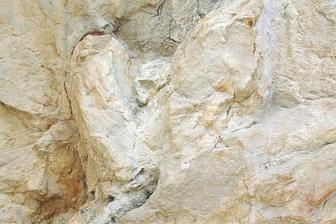
Scientists have identified four connected footprints in the Hell Creek Formation as the first known trackway made by a walking adult Tyrannosaurus rex, allowing researchers to calculate its speed for the first time.
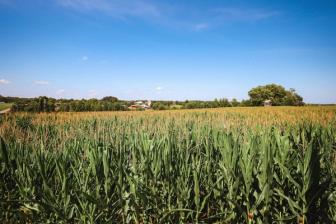
A 40-year analysis of genetically engineered crops in the United States finds modest yield gains and less year-to-year volatility, with the technology helping farmers adjust as climate change shifts where crops can grow.
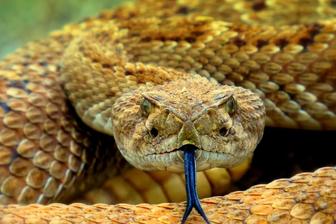
University of Maryland researchers have found that combinations of proteins from rattlesnake blood neutralised venom roughly ten times more effectively than current antivenom in laboratory tests, offering a potential path to cheaper, safer treatments.
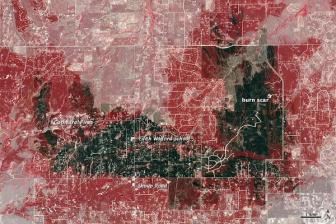
American forests are burning at nearly twice the rate of two decades ago, but the federal agencies meant to fight and prevent wildfires have lost staff, funding and prescribed-burn capacity under the Trump administration.

A five-person team has shown that percolation, the mathematical model behind wildfire spread and epidemic outbreaks, always undergoes an abrupt phase transition on a broad class of infinite networks, closing a question left open since the 1980s.
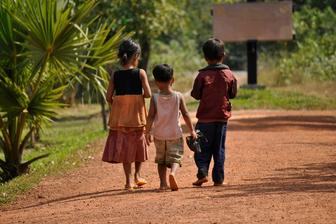
New research finds more than 40% of children under 10 worldwide already endure at least 20 additional days of dangerous humid heat each year because of human-caused climate change, more than any other age group.
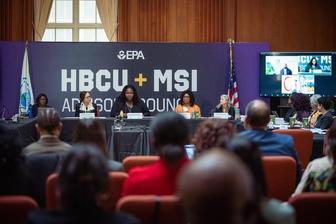
New federal guidance says power plants built solely to run data centers do not have to follow Clean Air Act monitoring rules that apply to plants supplying the public grid. Critics say the change removes oversight just as huge gas plants are being proposed to feed America's AI boom.
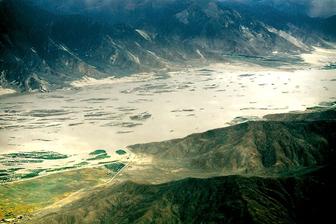
A glacier collapse on the Nepal-Tibet border triggered a flash flood that killed at least 165 people and left hundreds missing, including dozens of American pilgrims. It is the second such disaster on the same river system in just over a year.
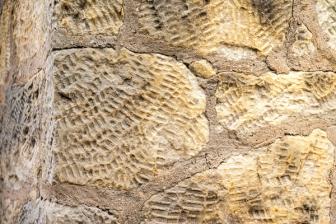
A fossil misidentified as a crustacean for four decades has been reclassified as a stem-group insect, suggesting the move from water to land was gradual rather than sudden.
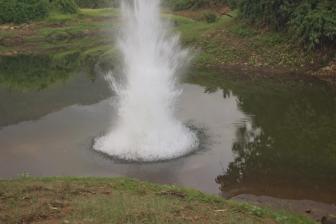
Underwater microphones and artificial intelligence have revealed the scale of illegal blast fishing in Indonesia's Coral Triangle, recording an explosion roughly every hour for more than a year.
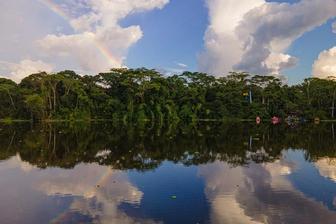
Keiko Fujimori was sworn in as Peru's president in late July after a razor-thin election win. Environmentalists and Indigenous leaders fear her pro-mining, pro-oil agenda could harm the Amazon.
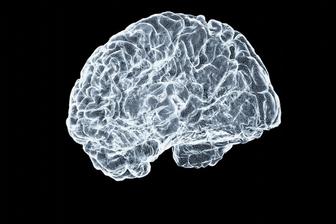
A new preprint examines why glioblastoma, the most aggressive form of brain cancer, can develop resistance to oncolytic viruses, an experimental therapy designed to kill tumour cells directly.
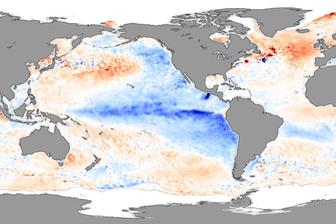
A major El Niño event that began around June 2026 is warming the Pacific faster than any comparable event in 45 years of satellite data, raising the odds that 2026 or 2027 becomes the hottest year on record.

The World Health Organization says the Democratic Republic of Congo will receive 70,000 doses of the Ervebo vaccine to combat what it calls the fastest-spreading Ebola outbreak on record, caused by a strain the vaccine was not originally designed to fight.
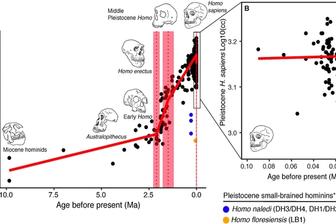
A Monash University researcher argues the family tree of early human relatives should be simplified, folding Australopithecus and Paranthropus into an expanded genus Homo. The proposal, published in the American Journal of Biological Anthropology, challenges decades-old classification rules.
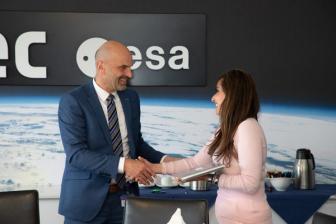
The European Space Agency runs several structured programmes for students, graduates and early-career professionals seeking work in the space sector. Physics World has laid out how each pathway works and who qualifies.

A new analysis from the King's Fund finds obesity among English adults has doubled since 1993, reaching a record 30% in 2024, even after successive governments launched 14 separate strategies to curb it.
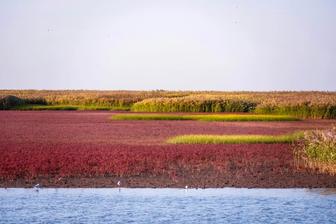
As cuckoos and swifts begin their autumn journey south from Britain, a new international scientific review warns that many migratory bird populations along the route they follow are shrinking fast.
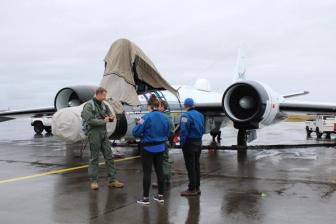
A NASA research aircraft flew above heavy cloud off Iceland's coast to capture the sun's corona during Wednesday's total solar eclipse, after ground observers across Iceland and Spain faced poor visibility.
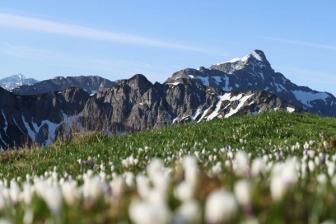
A 21-year survey of 53 European summits shows warmth-loving plants are spreading across the continent's high mountains, but researchers found local temperature rises alone cannot explain how fast this happens at any single site.
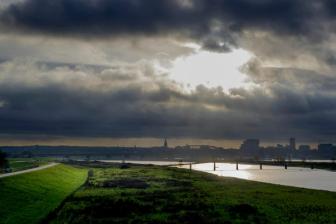
The Rhine has fallen to its lowest recorded flow as it enters the Netherlands, exposing riverbeds and grounding cargo ships. The government is now weighing bigger changes to how the country stores and shares fresh water.

A new theoretical study suggests gravitational waves could, in principle, be locked into stable, non-radiating patterns, an idea borrowed directly from photonics research on light.