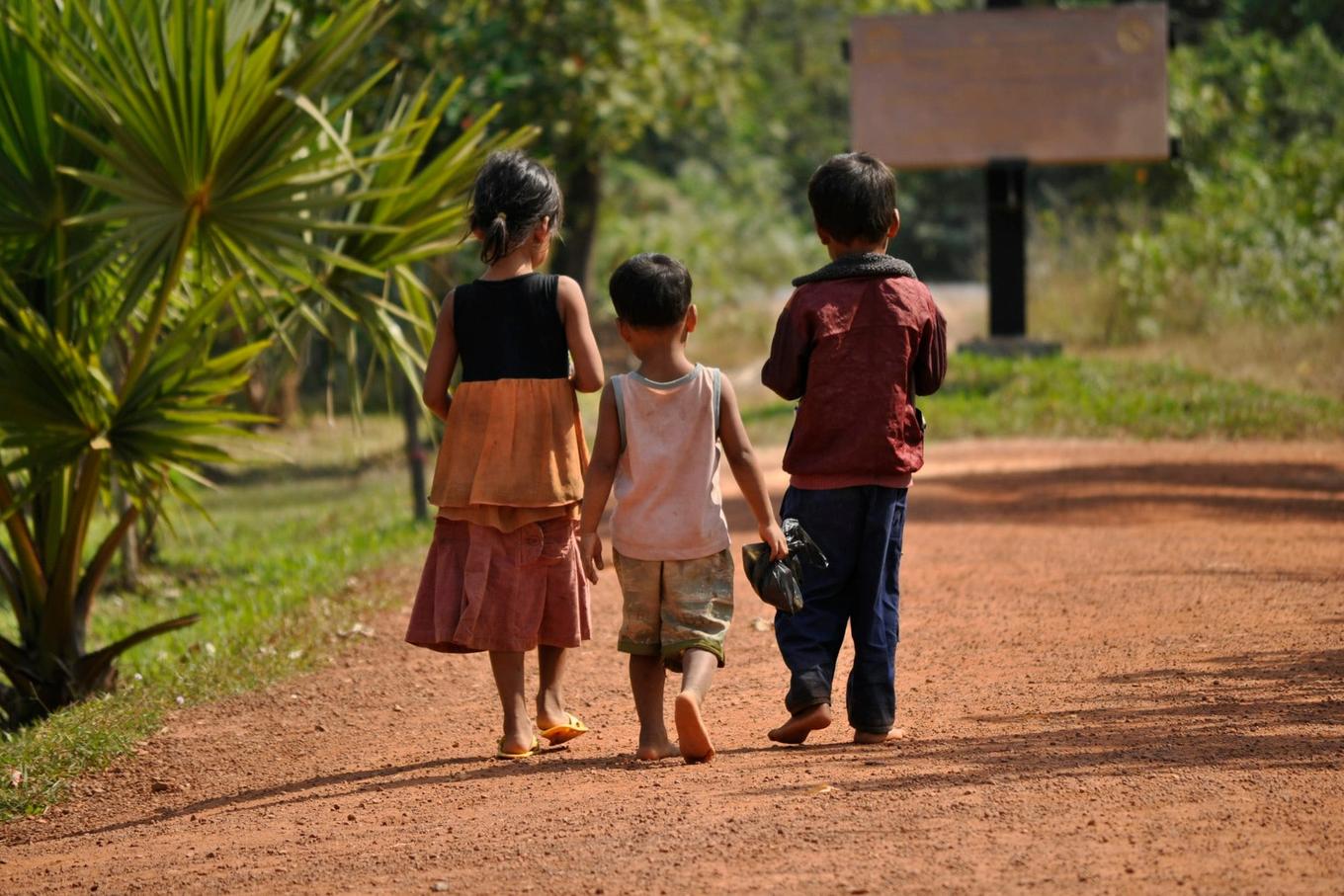
More than 580 million children under the age of 10, over 40% of that age group worldwide, already experience at least 20 additional days of dangerous humid heat every year because of human-caused climate change, according to a new attribution study published in Science Advances.
The research, led by Rosa Pietroiusti, a PhD student at the Vrije Universiteit Brussel (VUB), finds that young children face more of these extra ‘heat-stress days’ than any other age group, including older adults who are typically considered especially vulnerable to heat.
How the study measured heat stress
The researchers used a modified version of the wet-bulb globe temperature (WBGT), a widely used measure that combines heat and humidity to gauge how dangerous conditions are for the human body. A day counted as a ‘heat-stress day’ when this measure crossed a set threshold. The team compared today’s climate, which has warmed by roughly 1.3 degrees Celsius due to human activity, with a simulated version of the pre-industrial climate to isolate how much of today’s heat exposure is attributable to climate change, rather than natural variation.
They then combined these climate models with detailed population data to see which age groups and regions carry the greatest burden, and repeated the analysis for future warming scenarios of 1.5C and 2C, using the SSP2 population scenario, under which global population is projected to peak above nine billion later this century, with most growth concentrated in low-latitude regions such as sub-Saharan Africa.
A widening gap between children and older adults
Under today’s climate, 11% of all children under 10 already experience 100 or more extra heat-stress days a year. That share rises to 13% at 1.5C of warming and to 23% at 2C, according to the study. By contrast, only 6% of people aged 60 to 69 currently face that level of exposure. Overall, the study finds roughly three times more children than older adults are exposed to at least 20 extra heat-stress days a year because of climate change.
A related analysis by VUB, using a stricter threshold of at least one extra month of heat stress a year, found up to 560 million children aged 0 to 9, or 43% of that age group, are affected, compared with 190 million people aged 60 to 69, or 30% of their age group.
have contributed the least to historical greenhouse gas emissions
Pietroiusti, quoted by Carbon Brief, points to an equity dimension in the findings: many of the children facing the highest exposure live in regions, including south Asia, southeast Asia and west Africa, that have contributed comparatively little to the emissions driving the warming.
Limits of the data, and a note for Europe
really focuses on humid heat, at levels that are relatively rarely felt in Europe
Pietroiusti notes that the study’s metric captures humid heat stress at levels rarely experienced in Europe, meaning the findings speak more directly to conditions in the tropics and subtropics than to the dry heatwaves that have periodically struck European countries in recent summers.
The study also has a known blind spot: its underlying data does not capture the urban heat island effect, the phenomenon by which cities trap and radiate more heat than surrounding rural areas. “Our data also doesn’t capture the urban heat island effect, due to the resolution of the data we use,” Pietroiusti said, meaning heat stress for children in dense cities worldwide is likely underestimated.
The findings build on earlier work by some of the same researchers. A 2021 study found children born in this century will face more extreme weather events over their lifetimes than earlier generations, and a follow-up found that more than half of children born in 2020, about 62 million people, will face what researchers called ‘unprecedented lifetime exposure’ to heatwaves even if global warming is capped at 1.5C.
This article is free to read. It always will be — no paywall, no account, no tracking.