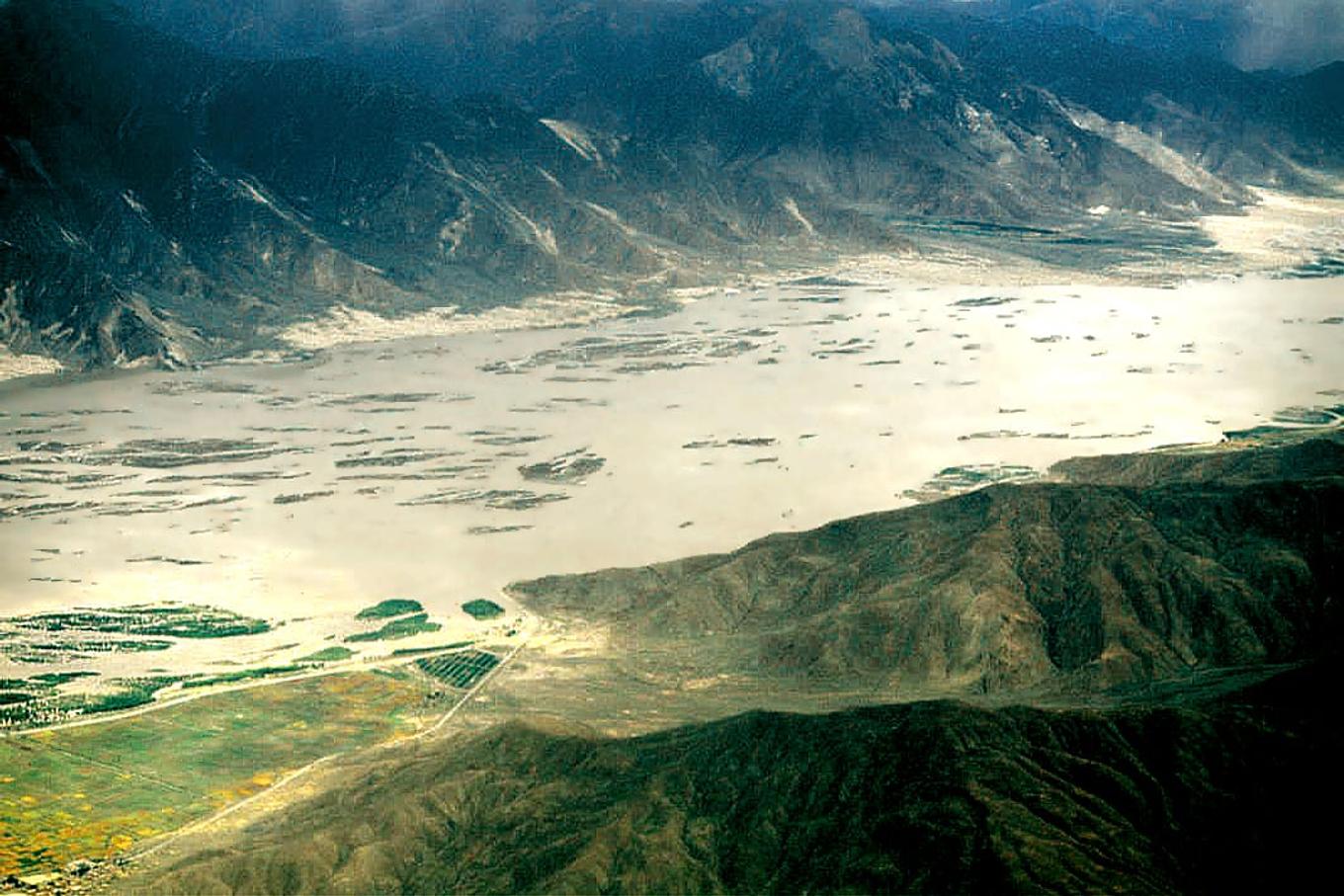
A catastrophic flash flood swept through the Nepal-Tibet border region this week after a large section of glacier collapsed high above the Lhende river, killing at least 165 people and leaving hundreds missing, according to Al Jazeera. The collapse, at around 8:40am local time on 26 August, sent ice and rock crashing into the river, temporarily damming it before the blockage gave way in a sudden, violent surge.
The wall of water and debris tore down the Lhende Khola into the Bhote Koshi and then the Trishuli river, which rose by as much as 9 metres in just 30 minutes, Nepali officials said. It swept through settlements in Nepal’s Rasuwa district, including Timure and Syabru Besi, before reaching Nuwakot and Dhading districts and the town of Bidur. Across the border, mud and debris hit Gyirong Port in China’s Shigatse region.
A seismic false alarm
The US Geological Survey initially recorded what appeared to be a magnitude 4.4 earthquake at the moment of the disaster. It later corrected itself, saying the signal was seismic energy generated by the glacial collapse and the debris flow that followed, not a genuine earthquake.
At least 19 bridges and around 40km of roads were destroyed by the flood, hampering rescue efforts. Nepalese soldiers have been deployed with helicopters, drones and search dogs, but continued high river levels and landslide risk have slowed the search, according to Al Jazeera.
The Lhende Khola has flooded twice in 14 months, this time triggered by an ice-rock avalanche from a glacier on the Nepal side that blocked the river and released a sudden surge downstream. — Saswata Sanyal, disaster risk reduction specialist, quoted by Al Jazeera
Pilgrims among the missing
Ninety Americans were reported missing in the disaster’s aftermath, among them pilgrims who had travelled to Tibet’s Mount Kailash, a site sacred to several religions. Deepak and Madhu Ahuja were among those unaccounted for. Their daughter, Shreya Ahuja, told CNN they had just completed the pilgrimage before the flood struck: “They had just finished the pilgrimage, and they were feeling really proud of themselves for completing it. They were ready to come home.”
A Red Cross spokesperson told CNN the organisation remains on high alert, saying: “We’re extremely concerned about the possibility of a renewed” flood. Chinese authorities warned on 27 August that a newly formed barrier lake, holding an estimated 2 million cubic metres of water near the confluence of the Chhochen Khola and Purepu Tsangpo rivers, carries a high risk of breaching.
A second disaster in 14 months
This week’s flood is the second major event on the same river system in just over a year. In July 2025, the outburst of a supraglacial lake in Tibet sent floodwater down the Bhote Koshi, killing eight to nine people, leaving dozens missing and destroying the Sino-Nepal Friendship Bridge at Rasuwagadhi, a crossing that disrupted cross-border trade for months during reconstruction.
Writing in The Guardian, Kathmandu-based climate policy specialist Sunil Acharya argued that Nepal and Tibet are absorbing the human and financial cost of a warming climate driven largely by wealthy, high-emitting nations. The Trishuli eventually feeds into the Narayani River, which crosses into India’s Bihar state as the Gandak, meaning the consequences of glacial instability in the high Himalayas extend well beyond Nepal’s borders.
This article is free to read. It always will be — no paywall, no account, no tracking.