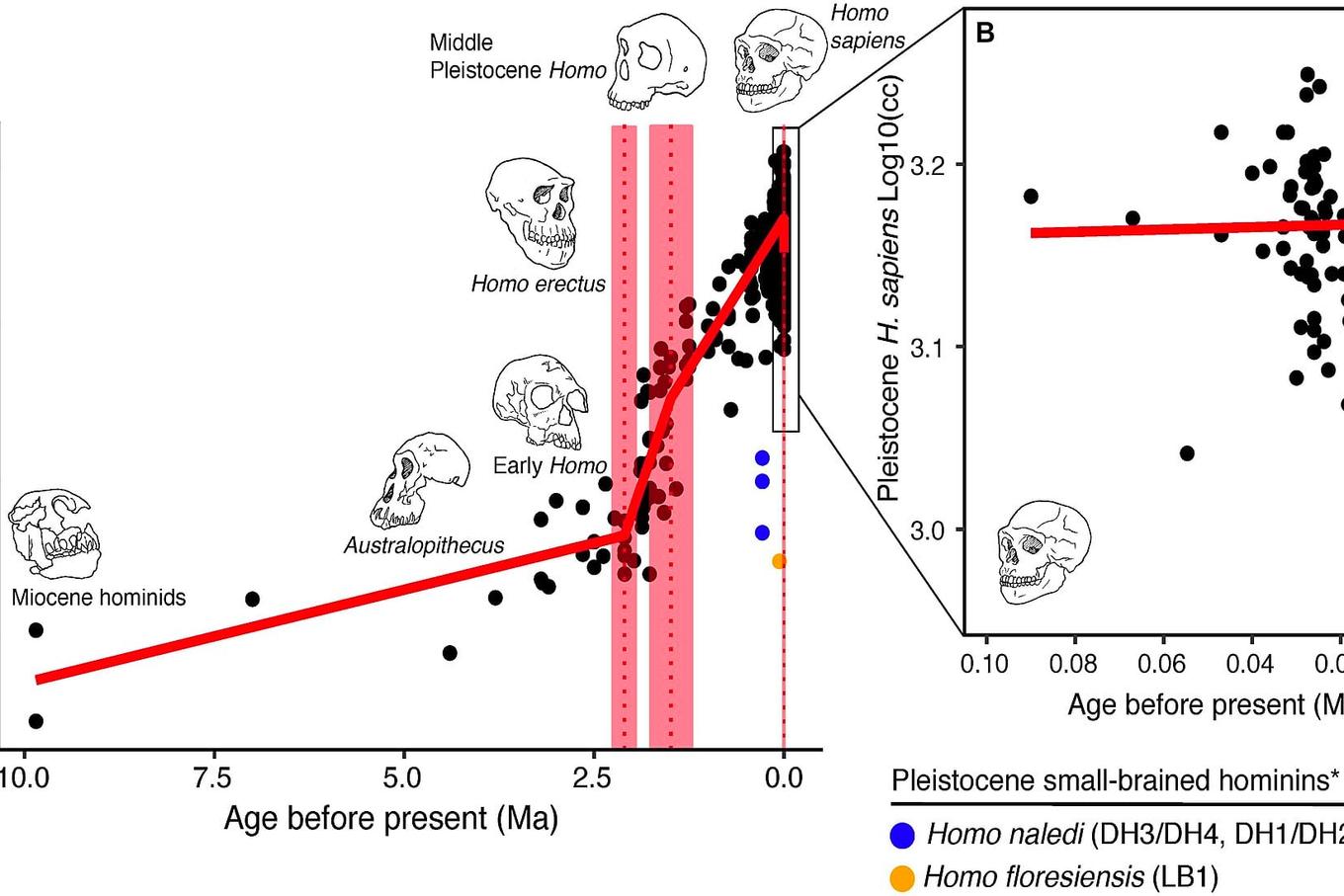
A researcher at Monash University in Australia has proposed a significant overhaul of how scientists classify early human relatives, arguing that the genus Homo, which includes modern humans, should be expanded to absorb two or three other genera entirely.
Dr Ian Towle, a Research Fellow at the Monash Biomedicine Discovery Institute, sets out the case in a paper published in the American Journal of Biological Anthropology, according to ScienceDaily. He argues that Australopithecus and Paranthropus, and in some versions of the proposal Kenyanthropus as well, should be folded into a single, broader Homo genus.
Why the current system is under strain
For decades, paleoanthropologists have divided early hominins, the broad group encompassing humans and their close extinct relatives, into separate genera based on physical traits such as brain size, skull shape and evidence of tool use. Towle contends that this framework has not kept pace with the fossil record.
“Recent discoveries are eroding the usefulness and accuracy of current classification, including the current species in our own genus Homo, but also in Australopithecus and Paranthropus, who all lived within the past 5 million years.” — Ian Towle, Research Fellow, Monash Biomedicine Discovery Institute
The proposed expanded Homo genus would stretch back roughly 4 to 5 million years, anchored close to the branching point involving Australopithecus anamensis, one of the earliest known members of this broader group of hominins. Fossils of Paranthropus and Australopithecus discussed in the study are themselves up to 5 million years old.
Revisiting a 1983 landmark decision
The proposal directly challenges a foundational moment in the field’s history. In 1983, paleoanthropologists Tim White, Donald Johanson and William Kimbel classified the famous Hadar fossils, which include the specimen known as Lucy, as Australopithecus rather than Homo. Their reasoning rested on the combination of upright walking with an absence of corresponding brain expansion, a distinction Towle now argues is outdated given what has since been learned about overlapping traits across these groups.
Rather than continuing to reassign individual fossil finds as new evidence emerges, Towle frames his proposal as a way to build a more durable system from the outset.
“I propose expanding Homo to include these other groups to provide a more accurate and stable way to represent the complex evolutionary relationships revealed by the growing fossil record.” — Ian Towle, Research Fellow, Monash Biomedicine Discovery Institute
Towle also frames the change as a practical fix rather than a radical rewrite of what is known about human origins itself. “Expanding the Homo genus to also include species of Australopithecus and Paranthropus will allow us to account for differences without regularly reclassifying particular groups,” he said, according to Sci.News.
The proposal has been covered by several science outlets, including Sci.News, Phys.org, The Conversation and Nautilus, reflecting broader interest in how the taxonomy of human ancestors is defined. Any formal shift in classification would likely take time to gain consensus among paleoanthropologists, a field where naming disputes over hominin fossils have historically been contentious and slow to resolve.
This article was researched and drafted with AI assistance and reviewed by Lasse Pedersen before publication. How we use AI
This article is free to read. It always will be — no paywall, no account, no tracking.