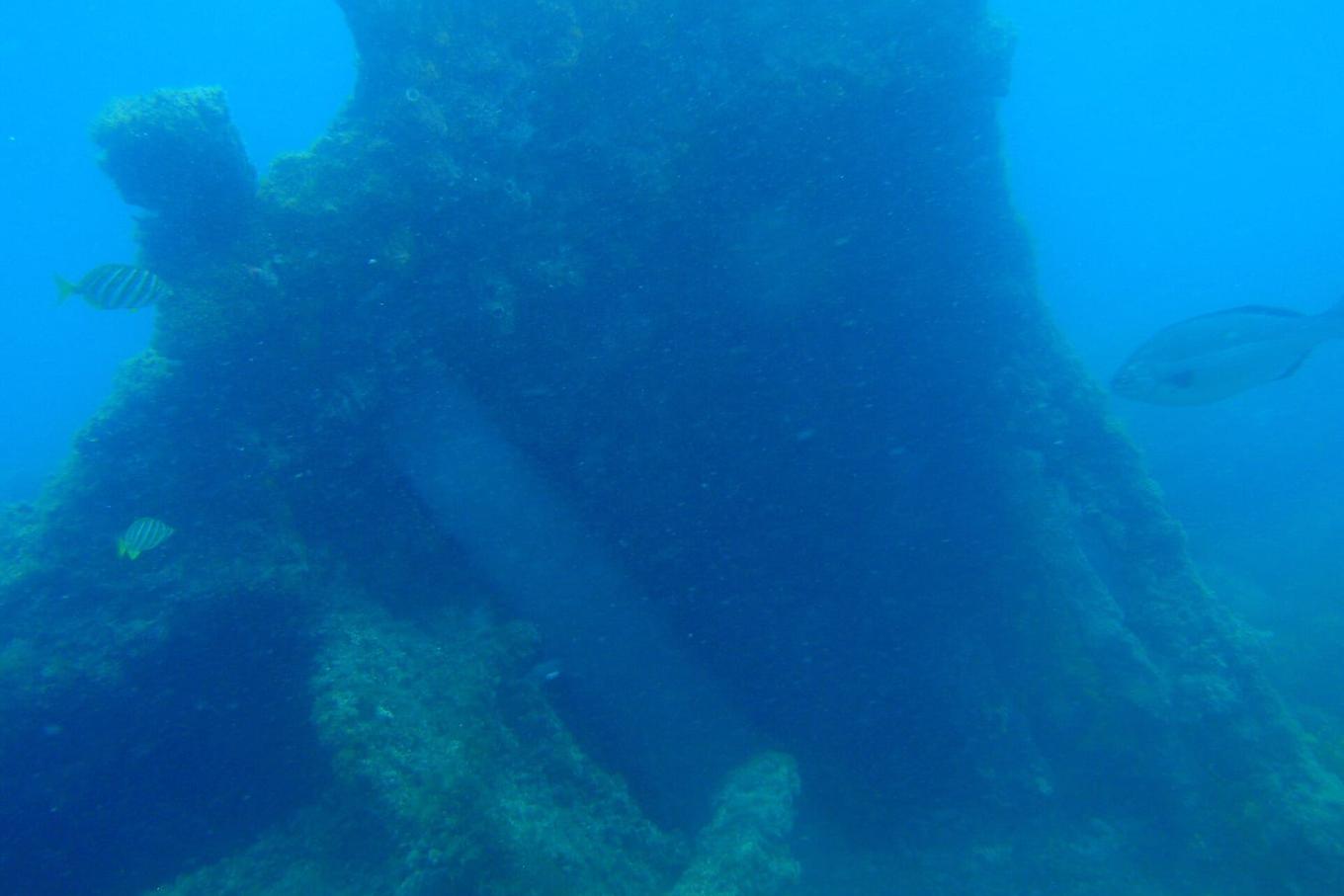
A World War II shipwreck lying off the Albanian coast has become an unlikely haven for marine life, according to a new scientific survey. The Po, an Italian hospital ship torpedoed by a British Swordfish bomber on the night of 14 March 1941, sank in Vlora Bay while evacuating wounded soldiers, killing an estimated 23 people. More than 80 years later, researchers say the wreck now supports a thriving underwater ecosystem.
Decades underwater, a new ecosystem
The Po, originally built as a passenger ship before its conversion for military hospital service, was first located by divers in 2005. It rests within the Karaburun-Sazan Marine Protected Area, about one mile (1.6 kilometres) off the Albanian coast, at a depth of roughly 33 to 37 metres (108 to 121 feet). Divers have reported the wreck remains remarkably intact, with ceramic bathroom tiles, ceiling fans and teak deck tables still visible.
Between June 2022 and September 2024, an international research team led by scientists from the University of Ferrara in Italy carried out 32 dives on the site, combining scientific diving, an underwater robot (ROV), high-resolution sonar mapping, 3D photogrammetry, and biological and sediment sampling. The findings were published in the journal Frontiers in Ocean Sustainability by researchers Modugno, Castro, Pustina, Kromidha, Dedej and Meçöllari.
From sponges to a rare seal
The survey documented approximately 151 species and taxa living on and around the wreck, ranging from sponges, sea squirts, mussels and oysters to fish including groupers, sea bream, mullet, wrasse, amberjack, sea bass, scorpionfish and goby. Researchers also found clusters of squid eggs attached to the hull, suggesting the wreck functions as a nursery site for cephalopods.
Among the more striking observations was a sighting of a Mediterranean monk seal at the wreck, one of the world’s rarest and most endangered marine mammals. The species is a conservation priority across the Mediterranean and Adriatic, and sightings near structures like the Po are seen by marine scientists as evidence that such sites can support vulnerable wildlife alongside historical value.
Not all the newcomers are welcome, however. The team also recorded invasive lionfish, sometimes referred to as ‘devil firefish’, colonising the wreck. Lionfish, native to the Indo-Pacific, have been spreading through Mediterranean waters in recent years, and their presence on the Po adds it to a growing list of sites tracking the species’ advance.
The wreck’s transformation from a wartime casualty into a functioning artificial reef illustrates how sunken vessels can become long-term habitats, even as they also record the arrival of species that were never meant to be there.
For researchers, the Po offers a rare case study: a well-documented historical wreck that has been monitored with modern survey tools over multiple years, allowing scientists to track both the resilience of native marine life and the steady creep of invasive newcomers in protected Mediterranean waters.
This article is free to read. It always will be — no paywall, no account, no tracking.