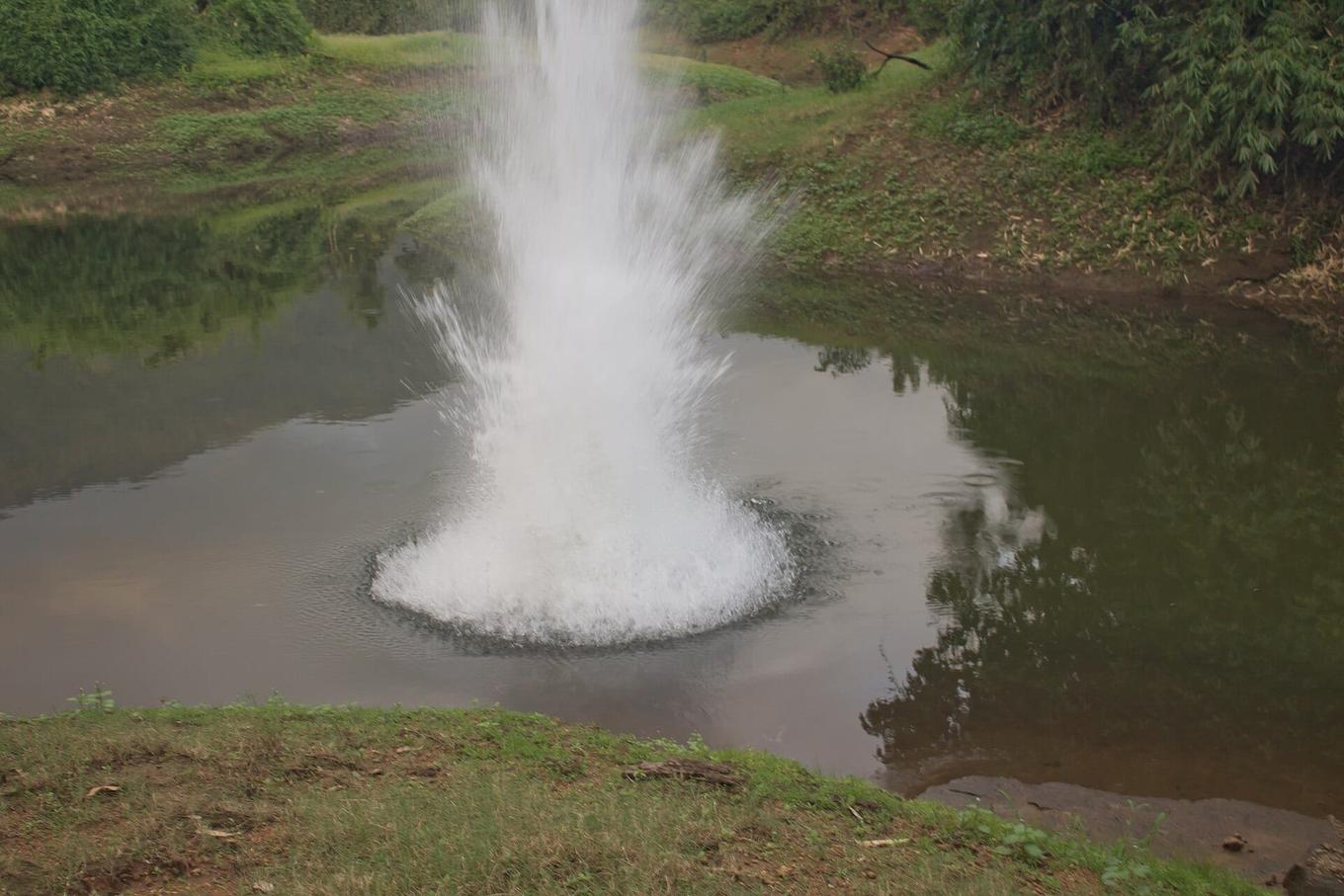
Scientists using artificial intelligence to listen to Indonesia’s coral reefs have documented an extraordinary scale of illegal blast fishing, with an estimated 8,500 explosions detonated each year in a single stretch of sea off southwest Sulawesi.
The findings, published in the journal Remote Sensing in Ecology and Conservation and reported by Yale Environment 360 and Inside Climate News, come from underwater passive acoustic monitoring in the Spermonde Archipelago, a cluster of islands and reefs that forms part of the Coral Triangle. That region, spanning parts of Southeast Asia and the western Pacific, is widely regarded by marine biologists as the world’s most biodiverse marine ecosystem.
One blast every 62 minutes
Researchers deployed underwater microphones that used AI to detect and classify the acoustic signature of bomb-fishing blasts, distinguishing them from other underwater noise. Between May 2023 and September 2024, the system captured 3,567 confirmed bomb-fishing incidents across nearly 3,700 hours of recordings.
Extrapolated across the roughly 350-square-mile study area, that works out to a detonation approximately every 62 minutes, day and night. Researchers estimate the blasts destroy the equivalent of about three football fields of reef every year.
Bomb fishing typically involves improvised explosives, often ammonium nitrate and kerosene packed into glass bottles of around 600 millilitres, dropped into the water to stun or kill fish for easy collection. The shockwaves shatter the structurally complex limestone skeletons that reef-building corals take decades or centuries to grow, leaving rubble in their place.
A practice with deep roots
Blast fishing has been outlawed in Indonesia for decades but remains entrenched in parts of the archipelago, and has been documented in at least 34 countries globally, according to DIVE Magazine. Separate reporting by Yale E360 and Mongabay has found that in other parts of Indonesia, some fishers extract TNT from unexploded munitions left over from the Second World War to manufacture their explosives.
They do burn them, but usually with caution, because the fires often trigger bullets or bombs to explode.
That observation, from Sonya Martha Kawer, an archaeologist at Indonesia’s National Research Center for Archaeology, describes how communities handle unexploded wartime ordnance, illustrating the tangled and sometimes dangerous supply chains behind the practice.
The degradation of reefs carries consequences well beyond the immediate blast site. Coral reefs shelter juvenile fish, buffer coastlines from storms, and underpin the livelihoods of coastal communities that depend on fishing and tourism. Researchers involved in the study, including Dr Tim Lamont of Lancaster Environment Centre, argue that continuous acoustic monitoring could help authorities identify hotspots and respond in near real time, rather than relying on sporadic patrols or aerial surveys.
For now, the scale revealed by the new monitoring technology underscores how difficult the problem remains to police, even where it is clearly illegal and its costs to marine ecosystems are well understood.
This article was researched and drafted with AI assistance and reviewed by Lasse Pedersen before publication. How we use AI
This article is free to read. It always will be — no paywall, no account, no tracking.