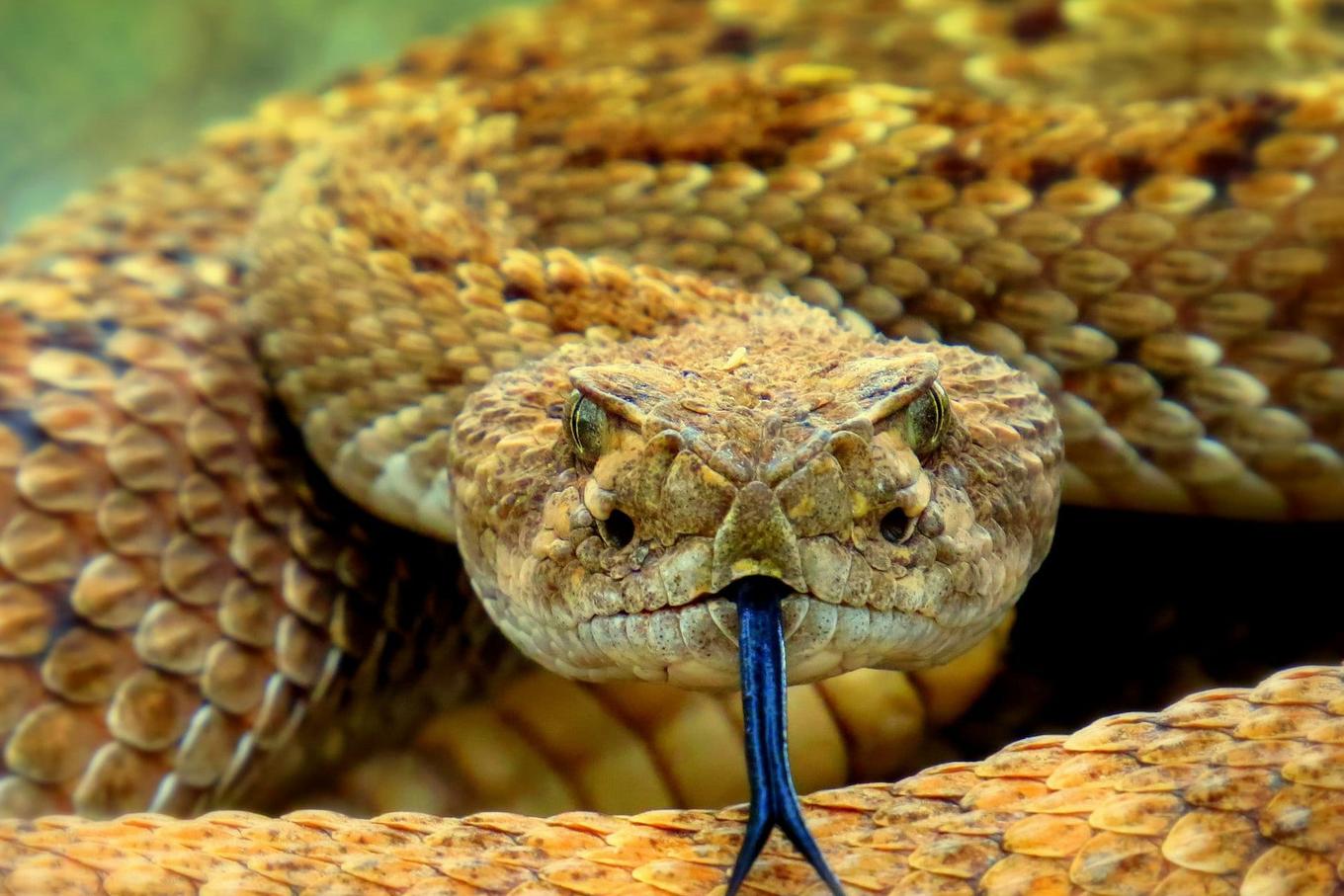
Scientists have long known that venomous snakes are largely immune to their own poison, but the mechanism behind that immunity has remained a mystery for decades. A new study from the University of Maryland, published July 29 in the Proceedings of the National Academy of Sciences, suggests the answer could also lead to a far more powerful antivenom for humans.
The research, led by Distinguished University Professor of Biology Sean B. Carroll, identifies protein combinations found in the blood of the western diamondback rattlesnake that neutralise venom far more effectively than the antivenoms currently used in hospitals, which are typically produced by injecting sheep or horses with venom and harvesting their antibodies.
We’ve known from anecdotes for 100 years that vipers tend to be resistant to their own venom. But for a long time, nobody knew what exactly was circulating in their blood that protected them.
How the proteins work
The proteins in question, known as FETUAs, derive from an ancestral blood glycoprotein called Fetuin-A. They belong to a family of four rattlesnake metalloproteinase inhibitors studied by Carroll’s team. Metalloproteinases are enzymes in snake venom responsible for much of the tissue damage and bleeding caused by a bite.
On their own, individual FETUA proteins only partially blocked venom’s harmful effects, whether measured by enzyme activity, bleeding, or lethality. But when researchers combined several FETUA proteins together, the neutralising power increased dramatically. The best combinations completely blocked the lethal effects of rattlesnake venom in laboratory tests and also protected against venom from other viper species.
That cross-species protection matters because a single snake’s venom can contain around 100 different toxin proteins spread across multiple protein families, and venom composition varies significantly between species. Finding inhibitors broad enough to work against several types of venom has been a persistent challenge for antivenom developers.
The ingredients are there. We just have to keep testing various mixtures.
From lab bench to treatment
Snakebite envenoming is classified by public health researchers as a neglected tropical disease, affecting more than one million people annually according to the framing used in the PNAS study, with broader estimates putting the global death toll between 80,000 and 140,000 a year and hundreds of thousands more left permanently disabled, mostly in regions with limited access to modern healthcare.
Current antivenoms are expensive to produce, inconsistent in quality, and can trigger severe immune reactions in patients because they rely on antibodies from another species. A treatment built from proteins that already exist naturally in snake blood could, in principle, sidestep some of those problems, though the study’s authors caution that the work so far has been conducted in laboratory settings rather than in patients.
Carroll said he expects the first practical use of the discovery to be in veterinary medicine, treating dogs and livestock bitten by venomous snakes, with human applications following at a later stage. The research built on earlier work from his lab, which in 2022 identified a single protein, FETUA-3, capable of blocking many of the toxins in rattlesnake venom.
We could make train cars-worth of this stuff and help solve a massive global health problem.
The study’s co-authors include Fiona P. Ukken, Yetunde A. Ayinuola, Luis Escalona, Montamas Suntravat and Elda E. Sanchez, with the latter three affiliated with Texas A&M University-Kingsville. The work was supported in part by the Howard Hughes Medical Institute, according to the University of Maryland.
This article is free to read. It always will be — no paywall, no account, no tracking.