Desk · News Unlimited
Science Desk
The Science Desk covers research, discoveries and the natural world, explained clearly. Its articles are researched and drafted with AI assistance, and every one is reviewed by a named editor before publication.
Edited by Lasse Pedersen
ScienceA study from the University of Southern California has mapped a precise biological pathway by which the gut tells the brain what to remember. Early-life junk food diets blunt the same signalling circuit implicated in Alzheimer's disease.
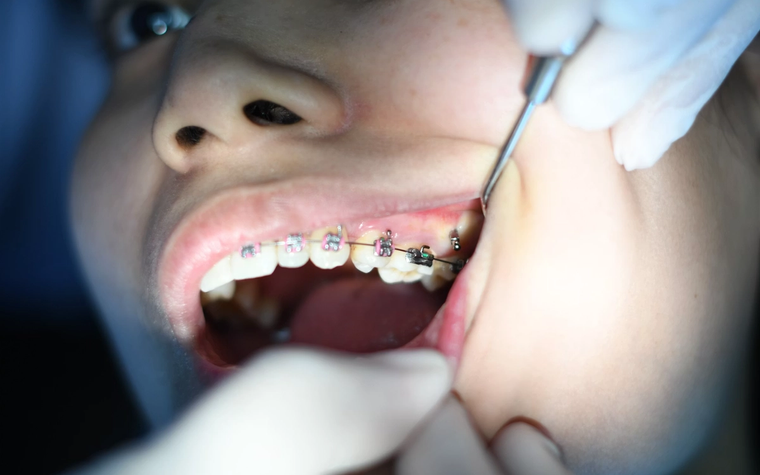
ScienceA major US clinical trial has found that silver diamine fluoride, a liquid painted onto teeth in seconds, halted decay in more than half of treated baby teeth. The findings could finally push regulators to approve it as a formal cavity treatment.
ScienceRay Williams, a propulsion test engineer who spent nearly three decades as a contractor at NASA's Stennis Space Center in Mississippi, has been sworn in as a federal civil servant under the agency's drive to rebuild its internal technical workforce.
ScienceSimultaneous fires in France and Spain have triggered one of Europe's largest peacetime evacuations in decades, burning a combined area larger than any previous wildfire in Spanish history. A fresh surge in temperatures threatens to undo the fragile progress firefighters have made.
ScienceA week of record-breaking temperatures in June wiped £1.15 billion from the UK economy in lost output and stripped 24 million hours from the working week, according to new research from the London School of Economics and an Italian climate institute.
SciencePhysicists at CERN's CMS experiment have made the most precise measurement yet of a quantum asymmetry thought to explain why the universe contains matter at all. The results, drawn from three years of collider data, confirm the Standard Model but tighten the net around any hidden new physics.
ScienceThe US Food and Drug Administration has approved Lipfendra (enlicitide), a once-daily pill that cuts LDL cholesterol by up to 59%, ending a decades-long era in which this class of drug was available only by injection.
ScienceTeeth and jaw fragments from a Queensland fossil site have led scientists to propose a new marsupial order that may have lived on the continent for 35 million years. The lineage left no known descendants.
ScienceA seismic study of the world's largest underwater plateau has found that the colossal eruption that built it also chemically and structurally transformed the oceanic plate beneath it, overturning assumptions about how Earth's tectonic plates form and evolve.
ScienceResearchers at the City College of New York have published a landmark review in Nature Materials, mapping how atomically thin magnetic semiconductors allow light and magnetism to interact in ways that were previously unachievable.
ScienceScientists in Vienna have formally proposed a new category of natural material, dubbed "bio-metals", after studying the metal-reinforced jaws of a common marine bristle worm. The findings, could guide the design of tough, lightweight materials produced without industrial forges or furnaces.
ScienceA Jupiter-sized exoplanet has been found orbiting a dead star just 80 light-years from Earth, and new James Webb Space Telescope data now explain how it survived. The findings, published in Nature, offer humanity's clearest look yet at the long-term fate of planetary systems, including our own.
ScienceNew satellite maps and recent drilling expeditions have revealed a continent beneath the continent: mountains as tall as the Alps, more than 400 liquid lakes, and microbial life sealed in darkness for millions of years. The discoveries are reshaping how scientists model sea-level rise.
ScienceAnthropic has released Claude Science, an AI workbench that unifies scientific databases, code execution, and computing infrastructure in a single environment. The platform, now in beta for paying subscribers, is aimed squarely at computational biology and pharmaceutical research.
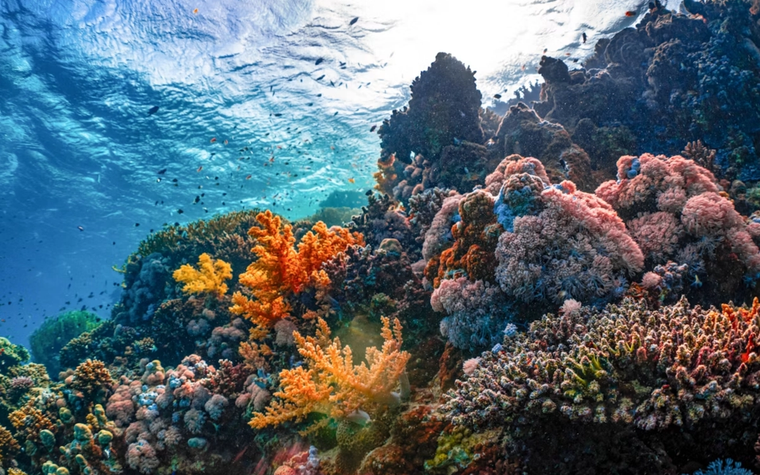
ScienceA major new study has identified three times more climate-resilient coral reef than previously known, spanning 71 countries and offering governments a precise map for conservation priorities. The findings, arrive as a potentially powerful El Niño threatens to trigger mass bleaching events worldwide.
ScienceThree Brazilian sisters aged 103, 104, and 109 — certified by Guinness as the oldest living sibling trio on Earth — are now at the centre of a University of São Paulo study probing the genetic roots of extreme old age.