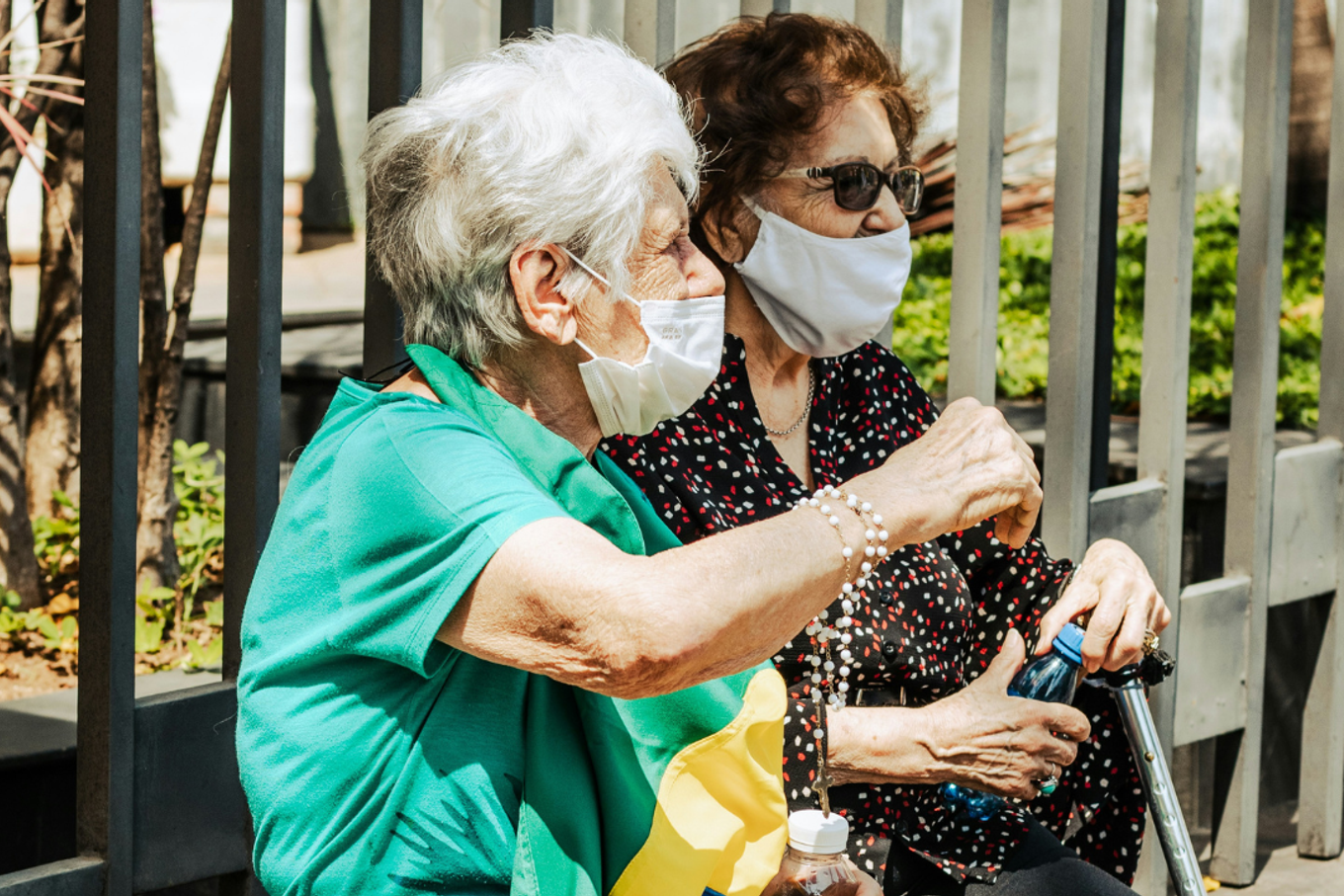
In a family home in Rio de Janeiro, three sisters are doing something remarkable — not just by living past 100, but by potentially helping science understand why anyone does. Zulina de Deus Nunes, 103, Zoraide de Deus Mota, 104, and Levita de Deus Nunes, 109, were certified by Guinness World Records this month as the oldest living trio of siblings on the planet, with a combined age of 316 years. Now, their DNA is at the centre of one of Brazil’s most ambitious ageing studies.
The sisters were identified through LongeviQuest, a global organisation that verifies extraordinary longevity claims and works in partnership with Guinness World Records. Their case quickly drew the attention of researchers running the DNA Longevo Project — formally titled Longevidade Saudável: Quais são os segredos? (Healthy Longevity: What Are the Secrets?) — at the University of São Paulo.
Genes, not just lifestyle
The project is led by Mayana Zatz, who coordinates the university’s Human Genome Research Centre and has spent years building a national cohort of Brazilians who have aged exceptionally well. The study examines the genomic, molecular, and cellular profiles of people in their 90s, 100s, and beyond, comparing them against peers who developed frailty, cognitive decline, or chronic disease at similar ages. The goal is to isolate the biological traits — particularly genetic ones — that allow some people to remain sharp and physically capable well into extreme old age.
“Through DNA testing, we look for protective genes, and we know there are several of them.” — Mayana Zatz, University of São Paulo
Scientists working on the project believe inherited factors may play a larger role than environment or lifestyle in preserving health in very late life. The sisters’ case is particularly valuable precisely because all three have reached such advanced ages: when multiple siblings from the same family survive well past 100, a strong shared genetic component becomes difficult to dismiss. Researcher João Paulo Guilherme, who works alongside Zatz, says the team’s target is to enrol 500 centenarians before drawing definitive conclusions about longevity.
Why Brazil matters for global ageing research
Brazil is emerging as an unusually rich source of data for longevity science. Its population is one of the most genetically diverse in the world, shaped by centuries of Indigenous heritage, Portuguese colonisation, the forced migration of millions of enslaved Africans, and later waves of European and Japanese immigration. That diversity means Brazilian genomes contain millions of genetic variants absent from standard datasets — including rare variants potentially linked to immune strength and cellular resilience. Many Brazilian supercentenarians also grew up in underserved regions with limited access to modern healthcare, giving researchers a rare window into biological resilience that developed largely independent of medical intervention.
The sisters themselves describe ordinary lives marked by physical work and simple food. Zoraide worked as a nurse and raised five children; Levita was a craftswoman and later worked at a television network; Zulina raised six children. They attribute their longevity to an active childhood spent outdoors and a diet of fresh, unprocessed food. But Ben Meyers, CEO of LongeviQuest, notes that proximity to one another may also be a factor. “There is definitely a community aspect as well,” he said, pointing to the mutual support network the sisters share by living near each other.
“When sisters reach that age, there is clearly a strong genetic component.” — Ben Meyers, CEO of LongeviQuest
For now, the sisters offer something scientists rarely get: a living, consenting, multigenerational window into what it takes to survive and thrive past a century. Whether the answers lie in a particular cluster of protective genes, a lifetime of community bonds, or both, the DNA Longevo Project intends to find out — one centenarian at a time.
This article is free to read. It always will be — no paywall, no account, no tracking.