Firefighters in southwestern France and central Spain are racing to consolidate control of two vast wildfires before a new surge of extreme heat arrives this week. Around 330,000 people have already been displaced across both countries, in what the Associated Press has described as one of Europe’s largest evacuation operations in decades.
Record-breaking fires on two fronts
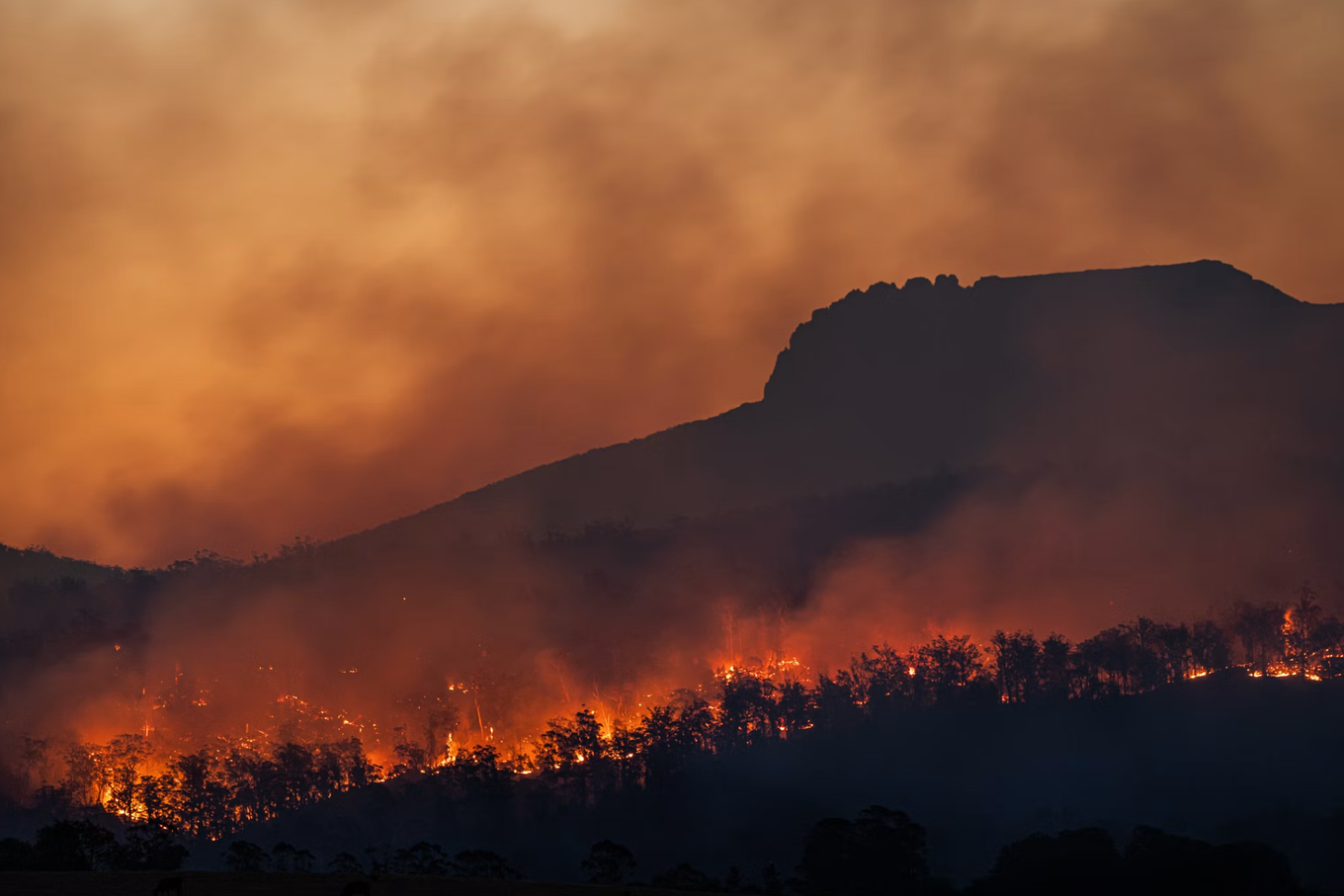
The blaze burning through the Gironde region west of Bordeaux has scorched approximately 42,000 hectares over six days, destroying 240 homes and forcing around 220,000 people to flee toward the city. CNN reported that France has staged its biggest peacetime evacuation since the Second World War, with thousands sheltering in and around Bordeaux.
In Spain, the situation has set a grim national record. A fire in the province of Ávila, roughly an hour’s drive west of Madrid, has burned more than 500 square kilometres, making it the largest wildfire in Spanish recorded history, according to the Spanish government. NPR notes that figure is roughly five times the size of Barcelona. A second major blaze in the eastern province of Castellón has also triggered mass evacuations, while two large fires near Madrid came close at times to merging into a single mega-blaze.
“Climate change is accelerating. So our response must evolve just as quickly.” — Hadja Lahbib, EU Crisis Management Commissioner, speaking to Reuters
A fourth heatwave before the fires are out
Firefighters made some overnight progress on both fronts, but the gains remain fragile. Spain’s national weather agency, AEMET, has forecast temperatures reaching 42°C in the northeast and 39°C in central regions this week — Spain’s fourth heatwave of the summer. France’s Météo-France has warned of temperatures up to 40°C accompanied by the dry winds that helped the Gironde fire become, in the words of France’s interior minister Laurent Nuñez, “extremely virulent and unpredictable.” No rain is forecast for either country’s fire zones.
The broader scale of this summer’s heat across Europe has been severe. Western Europe recorded its hottest June on record, and an estimated death toll approaching 10,000 has been linked to the heat season so far, according to data compiled by weather analysts. Spain alone reported more than 100 heat-related deaths as the heatwaves stacked up through June and July, while France linked dozens of deaths, including drownings, to people seeking relief from the heat.
European coordination stretched to its limits
The EU’s rescEU mechanism — a shared reserve of firefighting aircraft and personnel that member states can draw on when overwhelmed — has deployed seven planes and four helicopters to France, and six planes plus three ground teams to Spain, according to Reuters. The EU pre-positioned a record 770 firefighters across at-risk countries ahead of this summer, a figure that itself signals how expectations have shifted. Czech Black Hawk helicopters were filmed scooping water from the Arcachon Bay near Bordeaux. Greek, Italian and Portuguese crews have joined Spain’s effort, alongside 2,737 Spanish personnel, 426 ground vehicles and 21 aircraft deployed by Madrid.
EU Crisis Management Commissioner Hadja Lahbib told Reuters that buying more firefighting equipment alone is insufficient. She argued that countries must invest EU funds in forest management that reduces fire risk before it ignites, and in public education about fire-starting behaviour. Around 90 percent of wildfires are started by human activity, such as campfires or discarded cigarettes, she noted. EU officials added they are preparing for fires to still be burning in November this year.
“The coming weeks will be tough and we have to hold out.” — French President Emmanuel Macron, speaking after visiting Bordeaux’s fire coordination centre on 27 July
The European Commission launched an Integrated Wildfire Risk Management Strategy in March 2026, reflecting a recognition that wildfires are no longer a seasonal problem confined to the Mediterranean south but a continent-wide threat. Whether the resources and political will to implement that strategy will arrive before next summer’s fire season is already a live question in Brussels.
This article is free to read. It always will be — no paywall, no account, no tracking.