A set of fossil vertebrae from the extinct giant shark Otodus megalodon, long believed lost after a museum relocation went wrong in 1989, has resurfaced in Denmark. The rediscovery has allowed scientists to directly re-examine evidence that underpins some of the largest size estimates ever proposed for the animal.
The specimen was originally excavated from a commercial clay pit in Gram, in southern Denmark, during the late 1970s and formally described in the early 1980s. It became a key reference point for calculating the shark’s maximum possible size. But disaster struck in 1989, when the vertebrae were damaged while being transferred from the Geological Museum of Copenhagen to the Museum of Southern Jutland, and the fossils were presumed destroyed.
Found in a forgotten box
For decades, researchers had to rely on old photographs and written descriptions rather than the physical fossil itself. That changed when Bent Erik Kramer Lindow, a vertebrate palaeontologist and curator at the Natural History Museum of Denmark, noticed a box of jumbled fossil fragments and realised he was looking at the missing remains, as first reported by ScienceAlert.
The new study, published in the journal Palaeontologia Electronica, was carried out by staff at the Museum of Southern Jutland together with a researcher at Aarhus University and colleagues in the United States and Australia. Having the actual fossil in hand, rather than just images of it, allowed the team to verify measurements that had previously been taken on faith.
“The rediscovery of the vertebrae was a true delight because it empirically confirms the maximum vertebral diameter of 23 cm reported in the literature,” said lead author Kenshu Shimada, a paleobiology professor at DePaul University in Chicago.
A shark far larger than fiction
The confirmed 23-centimetre vertebral diameter is, according to the researchers, the largest recorded for any shark, and indeed for any fish. It supports a maximum body length for megalodon of 24.3 metres and an estimated weight of roughly 94 tonnes, dwarfing even the exaggerated great whites of the Jaws films, which topped out at 10.5 metres, as The Conversation notes in its analysis of the study.
Shimada cautioned that the figure represents the outer edge of what can currently be justified scientifically. “Although our growth model suggests that Megalodon could theoretically have been slightly larger, the length of 24.3 metres is currently the largest scientifically supported size,” he said, according to Aarhus University.
The growth analysis also produced striking figures for the shark’s life history. Otodus megalodon, which patrolled oceans worldwide from around 15 million to 3.5 million years ago, is now estimated to have given birth to pups roughly 3.6 metres long, and to have lived for close to a century, based on growth-ring analysis of the vertebrae.
Why cartilage fossils are so rare
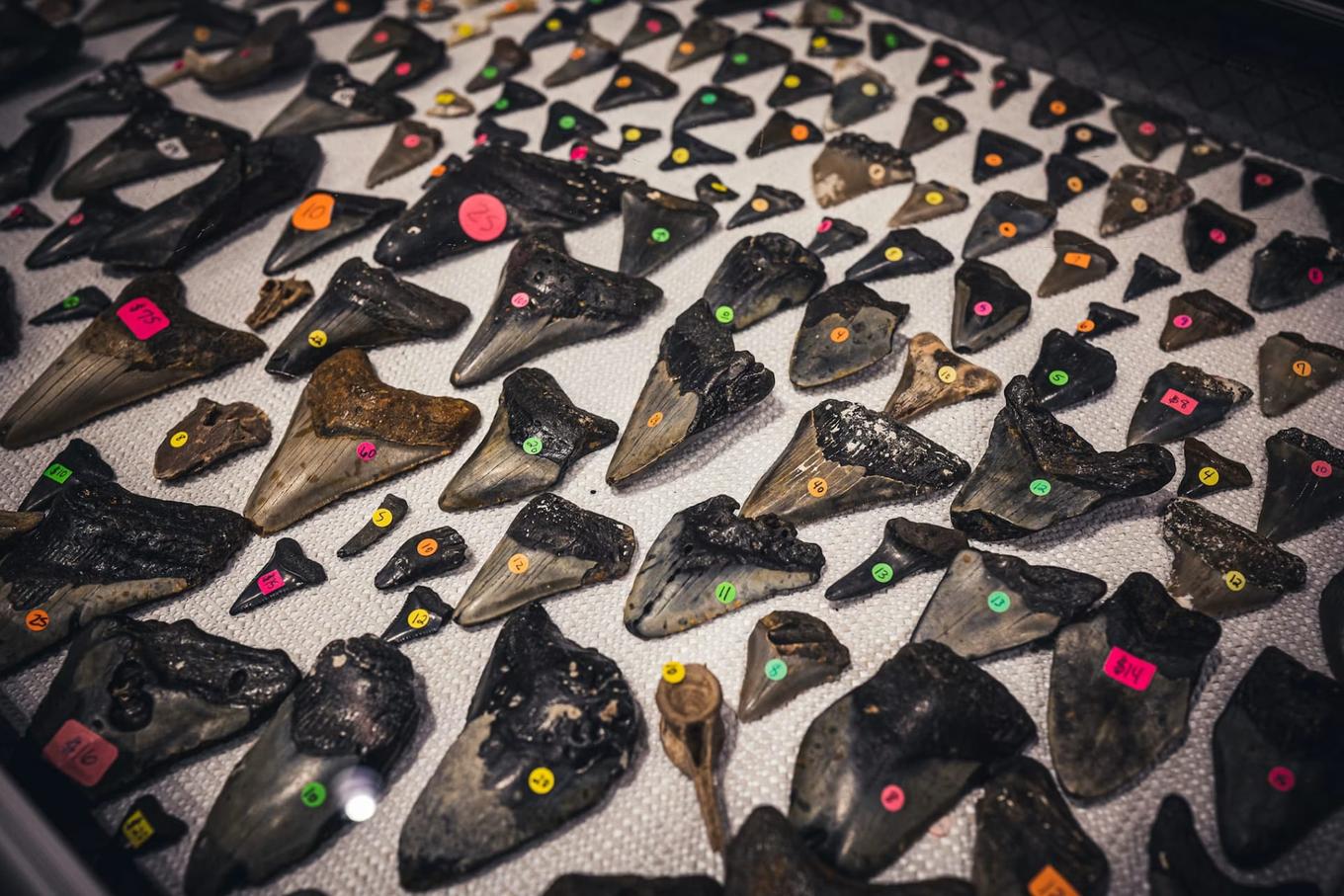
Sharks pose a particular challenge for palaeontologists because their skeletons are made mostly of cartilage rather than bone, which rarely survives fossilisation. Most megalodon fossils recovered worldwide, including specimens held in collections across Europe, are isolated teeth, making a well-preserved set of vertebrae exceptionally valuable for reconstructing the animal’s biology.
Mette Elstrup, a palaeontologist at the Museum of Southern Jutland and one of the study’s authors, said the specimen’s significance goes beyond simple record-keeping. “The giant megalodon vertebrae are of great importance because size matters when it comes to understanding the biology, ecological impact, and geographic distribution pattern of this extinct giant predator,” she said in a statement.
Researchers stress that all such figures remain estimates, since no complete megalodon skeleton has ever been found anywhere in the world. Even so, the Danish rediscovery removes a layer of uncertainty that had lingered over the shark’s record-setting size for decades, turning a near-loss for European natural history collections into a rare scientific win.
This article is free to read. It always will be — no paywall, no account, no tracking.