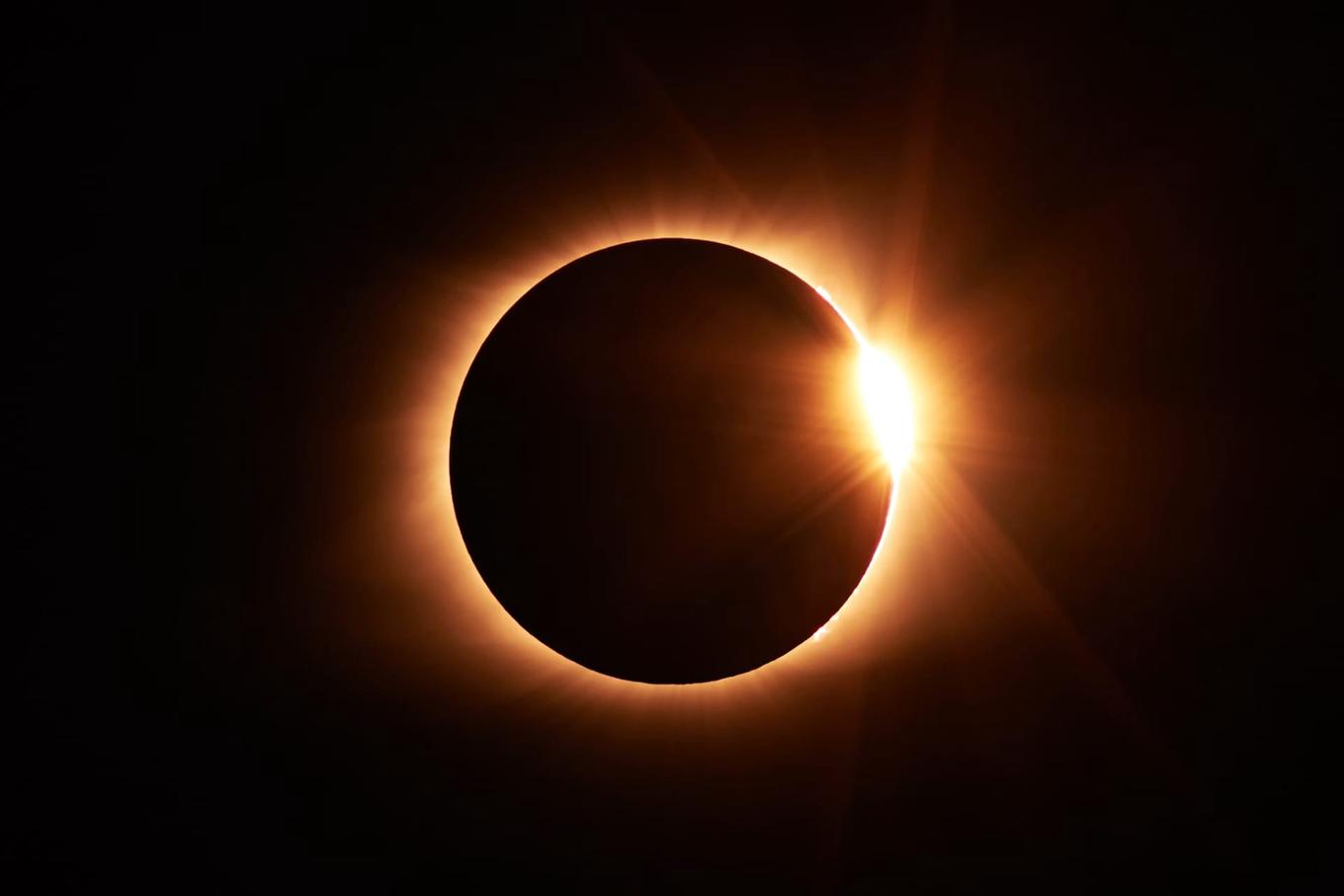
On the evening of Wednesday 12 August 2026, skywatchers across much of Europe will get a rare view of the Moon sliding in front of the Sun. It is a partial solar eclipse for most of the continent, but a small strip of Greenland, Iceland and northern Spain will experience full totality, the first time a total solar eclipse has crossed mainland Europe since 1999.
For readers in the UK and Ireland, this is being billed as the deepest partial eclipse since 2015, and the most dramatic since the famous 1999 event. According to Royal Museums Greenwich, viewers in London will see about 90 percent of the Sun covered, while those in Cornwall could see up to 95 percent and observers on Ireland’s south-western tip almost 97.5 percent.
A low sun, not a dark sky
Unlike some eclipses that happen high overhead, this one arrives close to sunset. Maximum coverage occurs at around 7:12pm in London, with the Sun already low in the western sky. Because of the shallow angle, the BBC Sky at Night Magazine notes that major UK cities will experience a very deep partial eclipse, with Cardiff and Belfast among those seeing the greatest coverage.
That low position means the event will look more like a dramatic, crescent-shaped sunset than a darkened sky. It also means trees, buildings and hills could easily block the view, so anyone hoping to watch should scout a location with a clear, open horizon facing west or west-northwest well before the eclipse begins.
Protecting your eyes
Public health officials are stressing that the eclipse, however partial, is not safe to view with the naked eye. The UK Health Security Agency has warned that looking directly at the Sun without protection can cause permanent damage to eyesight, even though the Sun appears dimmer during an eclipse.
“Ordinary sunglasses, no matter how dark, do not provide adequate protection for viewing a solar eclipse.”
The danger is that reduced glare can override the eye’s natural instinct to look away, allowing solar radiation to damage the retina painlessly and without warning. After the 1999 eclipse, the Royal College of Ophthalmologists recorded around 70 cases of vision problems, with roughly 40 percent of those affected having looked at the Sun for less than a minute.
The only safe way to look directly at the eclipse is through glasses certified to the ISO 12312-2 standard, worn throughout the event. Even certified glasses that are old, scratched or creased should be discarded, since their filtering properties may no longer be reliable, according to Royal Museums Greenwich.
For those without certified glasses, indirect viewing is just as effective and requires no special equipment. A simple pinhole projector, made by poking a small hole in a piece of card and letting sunlight pass through onto a sheet of paper, will safely project an image of the crescent Sun. The UK Health Security Agency also suggests watching the dappled light filtering through tree leaves, or projecting the Sun’s image using a kitchen colander.
Cameras, binoculars and telescopes need their own certified solar filters fitted before use. NASA has cautioned that pointing an unfiltered camera or telescope at the Sun while wearing eclipse glasses is not safe, because the concentrated light can burn straight through the glasses’ filter and cause severe eye injury.
Wider European view
The eclipse will not be confined to the British Isles. Observers across France, Belgium, Switzerland and northern Italy are expected to see coverage of roughly 88 to 95 percent, according to Royal Museums Greenwich, while the narrow path of totality further north and west will pass over parts of Russia, Greenland, Iceland and Spain before reaching a small corner of Portugal.
Cloud cover, not the eclipse’s timing, is likely to be the biggest variable for many watchers. With the event happening so close to sunset, even a thin band of haze on the horizon could obscure the view, so those hoping to catch it are advised to check local weather forecasts and have a backup viewing spot ready.
This article was researched and drafted with AI assistance and reviewed by Lasse Pedersen before publication. How we use AI
This article is free to read. It always will be — no paywall, no account, no tracking.