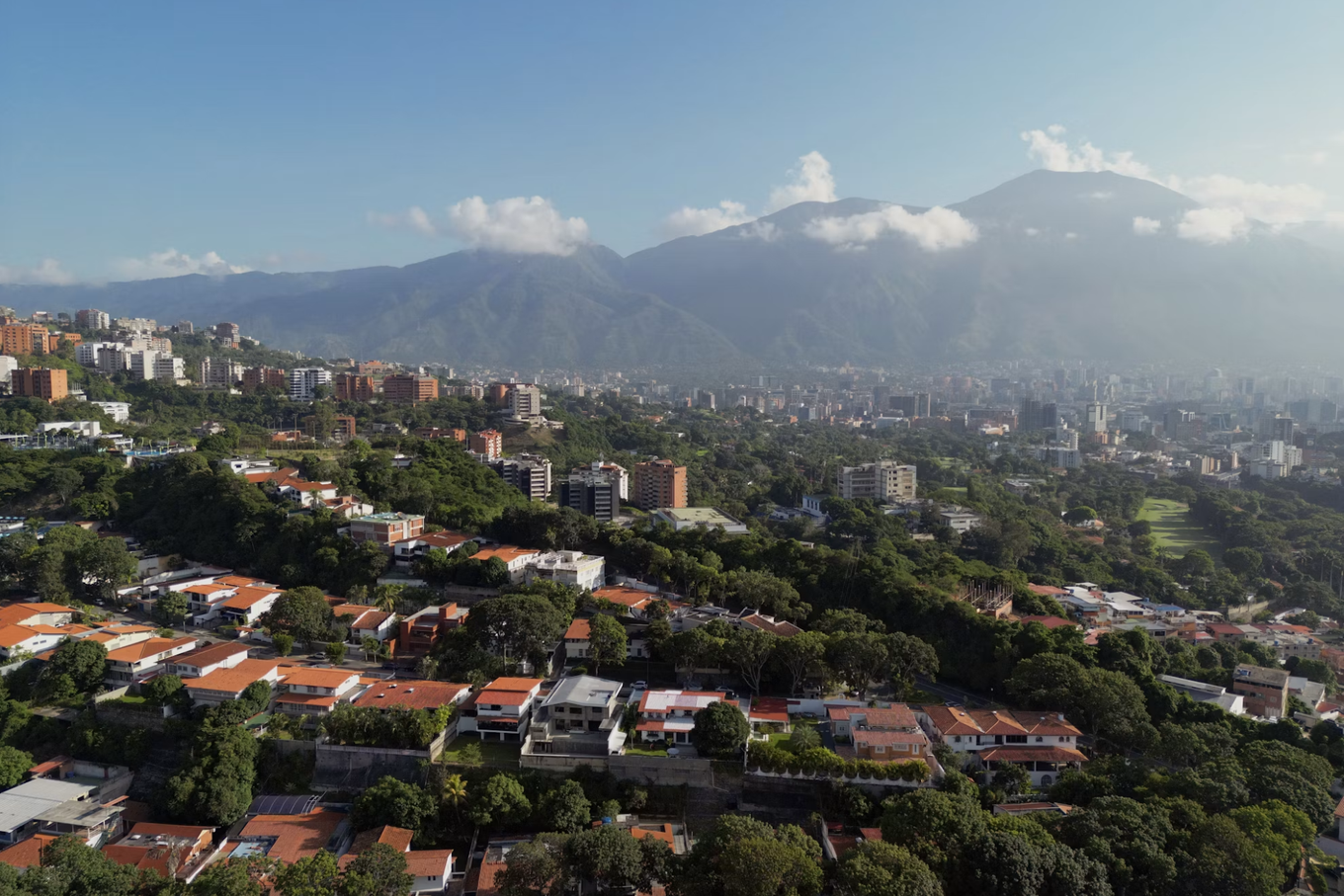
About 100 protesters gathered in Caracas last week, chanting ‘now or never’ and marching to the headquarters of Venezuela’s secret police to demand free elections and the release of political prisoners. Authorities dispatched officers to watch them. The demonstration soon broke up.
The scene captures the state of Venezuela’s democratic transition six months after a US military operation removed Nicolás Maduro from power: vocal but outgunned opposition, a government that has made no commitments, and a fresh crisis that has pushed elections even further down the national agenda. According to NPR, twin earthquakes that struck last month killed 4,829 people and injured 16,740, according to official figures, making earthquake recovery the government’s stated priority.
A new reason to delay
Acting President Delcy Rodríguez assumed power on 5 January 2026, two days after US forces captured Maduro in a pre-dawn raid on Caracas and flew him to New York to face drug-trafficking charges. Rodríguez, Maduro’s former vice-president, has retained many pro-Maduro hardliners in senior positions. Critics contend that the post-earthquake state of emergency has given her government cover to ignore mounting demands for a presidential election timetable.
Early transition talks between opposition envoys and Rodríguez representatives had started before the earthquakes. NPR reports those talks have since been suspended. When Nobel Peace Prize laureate and opposition leader María Corina Machado attempted to fly back to Venezuela from the United States last month, the government briefly closed national airspace to her aircraft. In a speech last week, Rodríguez accused opponents of exploiting post-earthquake chaos to ‘conspire’ against her government.
“The regime always comes up with new excuses to delay things. For them, it will never be the right time to talk about elections, or a democratic transition.” — José Rolón, pro-Machado activist, La Guaira state
Broken institutions, divided opposition
Even setting aside the earthquake, analysts have long warned that Venezuela’s institutional landscape is not ready for a credible vote. Former diplomat and radio host Vladimir Villegas told NPR that Venezuela must first replace its deeply partisan electoral council, the CNE, and its supreme court before any meaningful election can be held. Both institutions endorsed Maduro’s disputed claim of victory in the 2024 presidential election, despite widespread evidence that opposition candidate Edmundo González won by a wide margin. The Chatham House think-tank, in an April 2026 paper, argued that electoral reform cannot wait for economic recovery and must proceed immediately in parallel with stabilisation efforts.
The opposition also faces internal fractures. Machado’s faction boycotted last year’s legislative elections, putting it at odds with opposition politicians who did stand and now hold a small bloc of seats in the National Assembly. Reviving political parties presents a separate challenge: many were banned or taken over under Maduro’s rule. Machado’s own party, Vente Venezuela, had its Caracas headquarters looted by regime supporters while hundreds of its activists were jailed or driven into exile. Its recently released deputy leader, Henry Alviárez, still faces terrorism and treason charges, must report monthly to judicial authorities, and is barred from leaving Venezuela.
“Our party was persecuted and its members were jailed and forced to go underground. But little by little, we are regrouping.” — Henry Alviárez, deputy leader, Vente Venezuela
International pressure and its limits
The Trump administration, which backed the operation that removed Maduro, has since praised Rodríguez and said little publicly about an election timeline. Secretary of State Marco Rubio outlined a three-phase plan of ‘stabilization, recovery, and transition,’ but gave no dates. The Washington-based think-tank WOLA warned in March that the coming months would determine whether the US acts as an accelerator of democratic transition or a stabiliser of reconfigured authoritarianism. Chatham House has called on the US, the EU, and other international partners to work with Rodríguez, the opposition, and civil society to set concrete goals and timelines, warning that postponing elections too long risks cementing the repressive institutions inherited from two decades of Chavista rule.
Machado, speaking to members of the European Parliament this week, pushed back on arguments that Venezuela is not ready to organise a vote. ‘Some say that Venezuela needs to prepare and organize itself,’ she said, adding that Venezuelans had demonstrated their capacity for electoral organisation repeatedly. She says a credible election with proper democratic conditions would require between seven and nine months of preparation, including the appointment of neutral electoral authorities and the restoration of political rights for all candidates. For now, her party’s activists in the earthquake zone are distributing medical supplies to health workers, pledging to return to political campaigning once the immediate humanitarian crisis recedes.
This article is free to read. It always will be — no paywall, no account, no tracking.