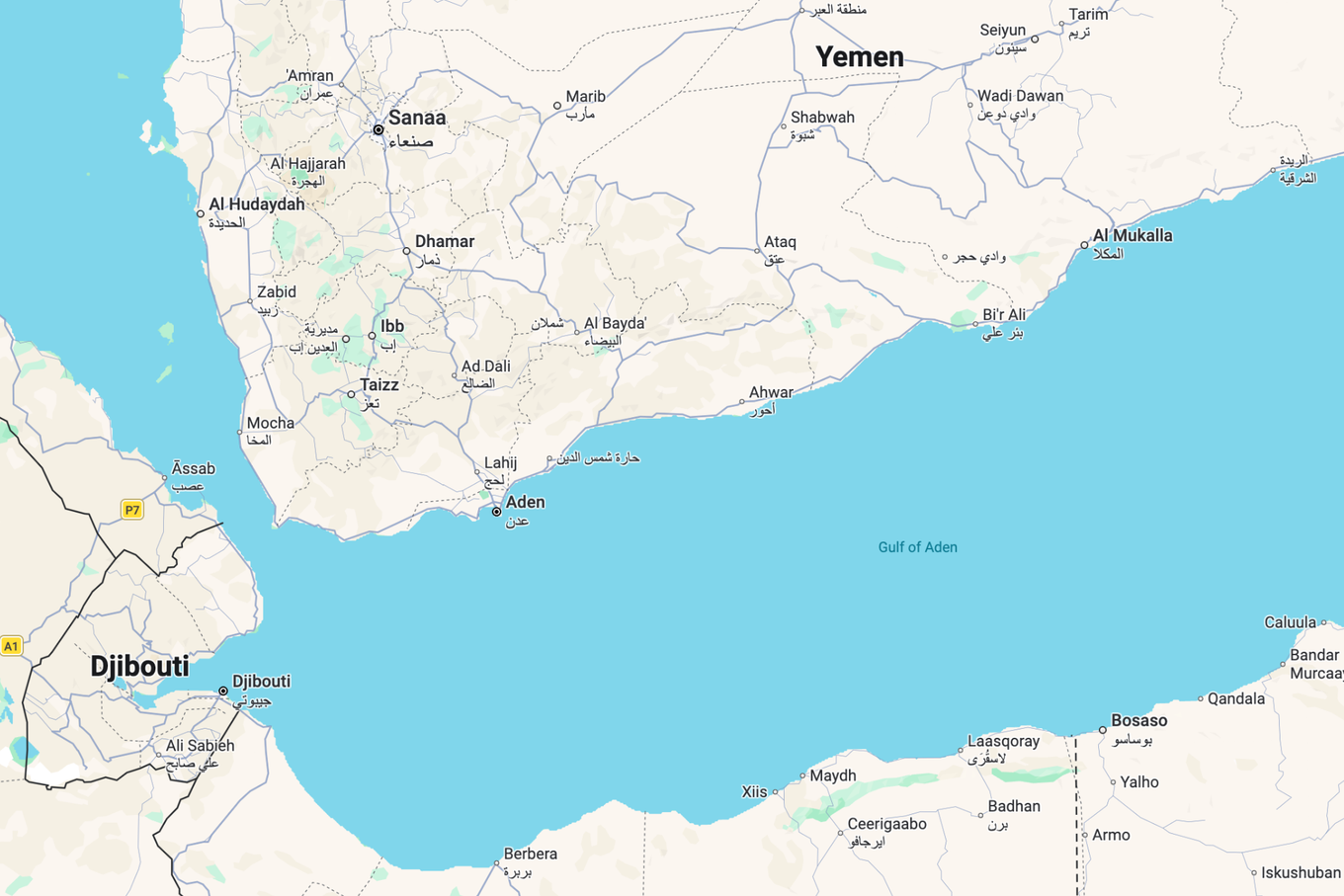
Seven armed gunmen boarded and seized the chemical tanker MT Asana in the Gulf of Aden on 17 July, roughly 65 nautical miles south of the Yemeni port city of Al Mukalla. The UK Maritime Trade Operations agency (UKMTO), which monitors commercial shipping safety across the region, confirmed the vessel had been boarded by unauthorised personnel and urged nearby ships to transit with caution.
According to British maritime security group Ambrey, the Asana issued a distress call at around 06:20 GMT before being boarded. The vessel had no armed security team on board. Vessel-tracking data reviewed by the Associated Press showed it moving at roughly two knots, an unusually slow speed, with its destination listed as Bosaso, Somalia. Its AIS signal, the automatic identification system used to track ships at sea, later disappeared entirely. The tanker is now reported to be held off Caluula in Puntland’s Bari region.
A new frontier for an old threat
This is the second hijacking in the Gulf of Aden since May, when the Togo-flagged MT Eureka was seized at anchorage near Yemen’s port of Qana. According to ICC International Maritime Bureau data, nine piracy incidents were recorded in the first half of 2026 alone, compared with three in the same period of 2025. The BBC reports that three Puntland security officials separately identified the attackers as Somali gunmen who set off from a remote area near the port town of Garacad before crossing into the Gulf of Aden.
The seafarers are being held aboard three detained vessels: the MT Honour 25, Eureka and Sward, which were hijacked in separate incidents between April and May off the coast of Somalia and in the Gulf of Aden.
The Asana’s seizure adds a fourth vessel to that count. Crews from earlier hijackings are reported to be running critically low on food and water. The International Maritime Organisation told reporters it had recorded 24 attempted and actual incidents of piracy and armed robbery in the region over the preceding three months alone, involving increasingly dangerous weapons.
Why the Gulf of Aden is now the softer target
The Indian Ocean is patrolled by the EU Naval Force’s Operation Atalanta, one of the longest-running counter-piracy missions in history. The Gulf of Aden, by contrast, receives lighter coverage. Security analysts note that naval resources have been stretched thin by overlapping crises: Houthi attacks on shipping in the Red Sea and rising tensions around the Strait of Hormuz have diverted warships and attention. The EU’s Aspides mission, active in the Red Sea and Gulf of Aden, confirmed it was working to assist the Asana and determine what had happened. A South Korean warship was also reported in the area.
The wider geopolitical backdrop complicates the picture further. A report from the American Security Project cited by analysts suggests that the Houthis may have brokered arms transfers and GPS tracking technology to Somali pirate groups, giving pirates both better reach and better intelligence on vessel movements. Separately, a sharp reduction in US development aid to Somalia, from $476 million in 2024 to roughly $3 million in the first quarter of 2026 according to the Center for Maritime Strategy, has removed economic alternatives for coastal communities historically linked to piracy networks.
Somali piracy has re-emerged as a material threat to commercial shipping in the Indian Ocean Region in 2026.
The Gulf of Aden feeds into the Red Sea and the Suez Canal, the fastest maritime link between Asia and Europe. Roughly 12 to 15 percent of global trade by value passes through the canal each year. A sustained resurgence of piracy along this corridor, at a moment when the Red Sea is already disrupted by Houthi activity, raises the stakes considerably for European importers, Asian exporters, and the insurers and shipowners caught between them. Between 2005 and 2012, Somali piracy cost the global economy an estimated $18 billion a year at its peak, according to the Center for Maritime Strategy. Few in the industry believe a return to those levels is imminent, but the trajectory of 2026 is giving maritime security planners reason for concern.
This article is free to read. It always will be — no paywall, no account, no tracking.