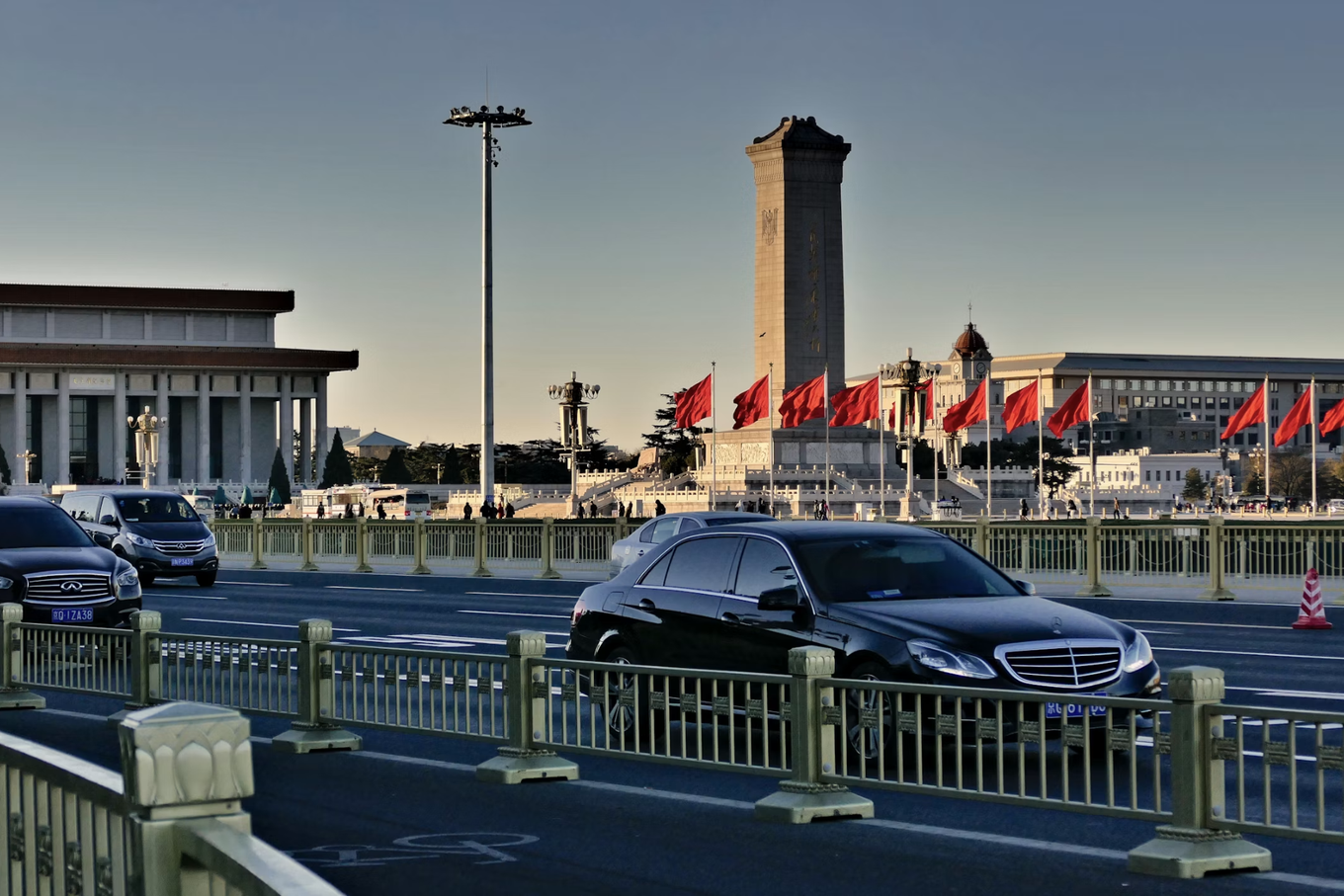
When Mark Carney stepped off the plane in Beijing in January 2026, he carried more than a diplomatic brief. He carried a message about where Canada sees its future. The visit, the first by a Canadian prime minister to China since 2017, signalled a fundamental shift in how Ottawa reads the global economy and its own place within it.
In Beijing, Carney met President Xi Jinping, Premier Li Qiang, and the chairman of the National People’s Congress, Zhao Leji. The two governments announced a new Canada-China Strategic Partnership, focused on energy, agriculture, and trade. According to Canada’s Prime Minister’s Office, the visit was described as “a turning point in the Canada-China relationship.”
Canola, lobster, and billions in trade relief
The most immediate outcome was a preliminary agreement on tariffs. China agreed to lower duties on Canadian canola seed to a combined rate of roughly 15% by March 2026, down from a punishing combined rate of approximately 85%. China is a $4 billion market for Canadian canola, and the change is expected to help unlock nearly $3 billion in export orders for Canadian producers. Canadian canola meal, lobsters, crabs, and peas were also set to be exempted from certain retaliatory tariffs, at least through the end of 2026.
The broader trade picture underlines why Ottawa sees China as a priority. Bilateral merchandise trade between the two countries reached close to $90 billion in 2025, a 4.9% rise on the previous year, with Canadian exports climbing 13.8%, according to figures reported by Newsy Today. China remains Canada’s second-largest export market, taking in canola, seafood, energy, minerals, and forestry products in exchange for machinery, electronics, and consumer goods.
Trump’s tariffs and the push to diversify
The diplomatic timing is inseparable from events in Washington. Canada sends approximately 67% of its exports to the United States, leaving its economy acutely exposed to American trade policy. With the Trump administration imposing tariffs and making territorial provocations toward Canada, the pressure to find alternative markets has become, as analysts at the Asia Pacific Foundation of Canada put it, a structural strategic liability rather than a manageable risk. The South China Morning Post has tracked Carney’s pivot, noting that where former Prime Minister Justin Trudeau once labelled China a “disruptive global power,” Carney’s government has moved to “recalibrate the relationship, so that it is constructive and pragmatic,” in the words of Foreign Affairs Minister Anita Anand.
“Canada and China have long shared strong economic complementarity and close people-to-people ties.” — Li Haidong, professor, China Foreign Affairs University, quoted by Global Times
Goodwill gestures and a diplomatic thaw
Beijing has moved quickly to match Ottawa’s overtures with gestures of its own. China lifted a five-year ban on group travel to Canada and agreed to introduce visa-free access for Canadian visitors. Chinese Foreign Minister Wang Yi then visited Ottawa in May 2026, the first such bilateral visit by a Chinese foreign minister in a decade, signalling, as Policy Magazine put it, that the thaw is now entering a more consequential implementation phase.
“Broad language about pragmatic engagement must begin to translate into sectoral choices, difficult trade-offs, and specific guardrails.” — Policy Magazine analysis, May 2026
The reset is not without friction. Analysts at the Asia Pacific Foundation of Canada warn that Washington’s own national security strategy places new constraints on Ottawa’s China policy at precisely the moment Canada is attempting to stabilise relations with Beijing. Several sectors where Ottawa sees opportunity, including clean technology, agri-food, natural resources, and Chinese electric vehicles, intersect with areas the United States now views as strategically sensitive. Meanwhile, observers across the political spectrum note that issues of foreign interference, arbitrary detention, and the treatment of diaspora communities cannot simply be set aside. Canada has committed to raising these concerns alongside its trade agenda, though how much of that process will be conducted transparently, and how much behind closed doors, remains an open question.
This article is free to read. It always will be — no paywall, no account, no tracking.