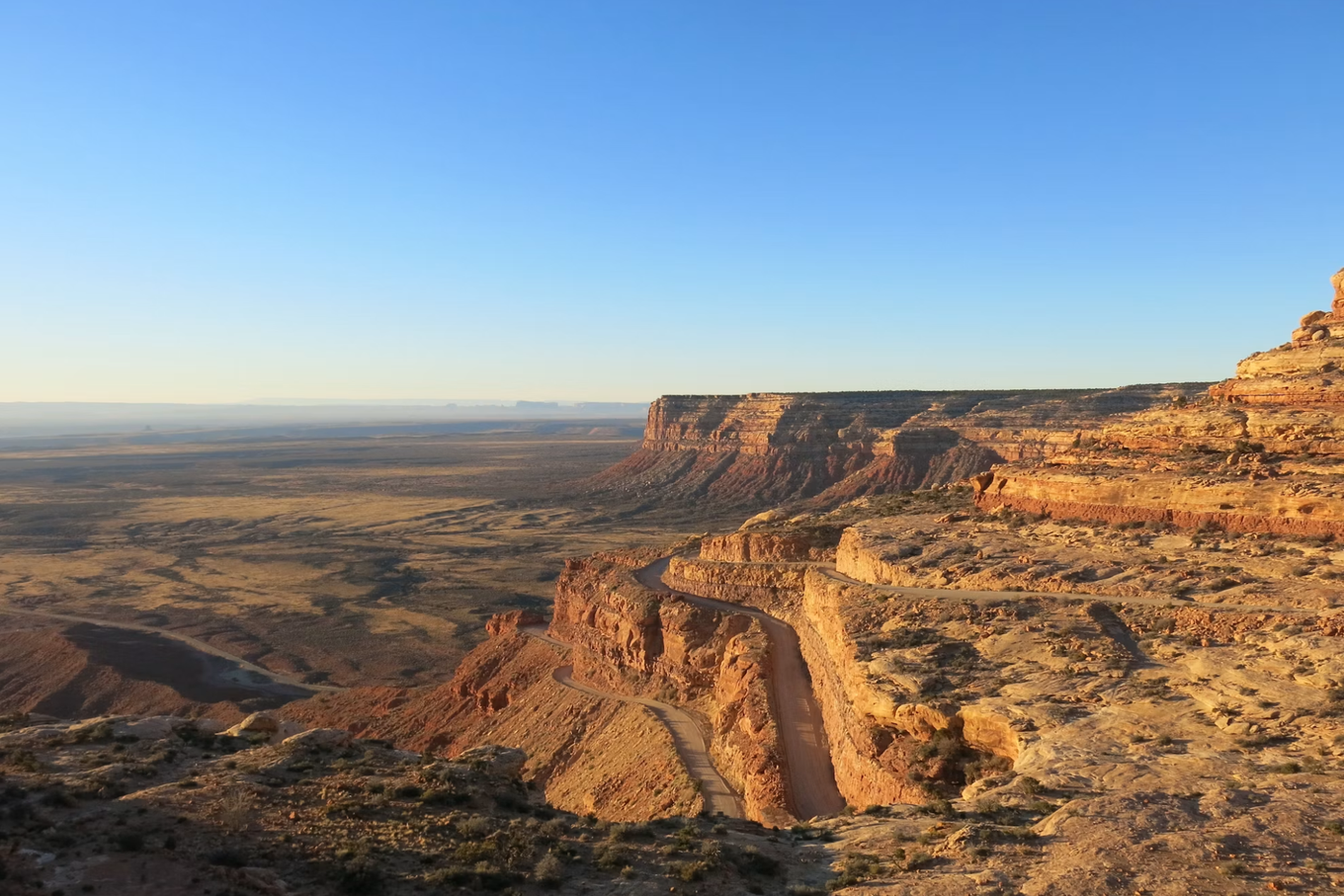
On Monday 13 July, President Donald Trump signed executive orders reducing Bears Ears and Grand Staircase-Escalante national monuments in southern Utah to a combined 303,000 acres, down from more than three million. The cuts run deeper than anything attempted before: each monument lost roughly 90 percent of its protected area.
The action directly reverses what Joe Biden did on his first full day in office in 2021, when he restored the monuments’ original boundaries and added 12,000 acres to Bears Ears. Trump had shrunk both sites during his first term in 2017, but courts had not yet ruled on the legality of that move before Biden undid it. According to the Associated Press, Trump issued the new proclamations under the 1906 Antiquities Act, the same law his predecessors used to create the monuments in the first place.
A dispute that has outlasted four administrations
Grand Staircase-Escalante was established by President Bill Clinton in 1996, making it the largest national monument created at that time. President Barack Obama created Bears Ears in 2016 at the direct request of five Native American tribes: the Navajo Nation, the Hopi Tribe, the Pueblo of Zuni, the Ute Mountain Ute Tribe, and the Ute Indian Tribe. The site holds more than 100,000 Indigenous archaeological and cultural sites, many considered sacred. Under Obama’s order, those tribes were given a formal co-management role, a first in US history.
Trump’s new orders dissolve that inter-tribal body. Tribal officials said they were not consulted before the decision was announced. Davina Smith-Idjesa, a citizen of the Navajo Nation and co-chair of the Bears Ears Inter-Tribal Coalition, described the area as more than federal land. “This is a living cultural site that holds our histories, our ceremonies, our traditional foods and medicines and our ancestors’ footprints,” she said.
“The administration is on the wrong side of history here, ignoring the voices of Tribal Nations, local communities, and the millions of Americans who want these places protected for future generations.” — Tracy Stone-Manning, Wilderness Society president and former Biden-era director of the Bureau of Land Management
Resources, recreation, and a contested legal question
Utah Republicans have long argued the monument boundaries restrict grazing, off-roading, and access to mineral deposits. Grand Staircase-Escalante sits above large coal reserves, while Bears Ears contains uranium. Trump told reporters at the White House, “They took the land from the people. We’re giving it back.” However, the Bureau of Land Management has previously found that Bears Ears and Grand Staircase hold relatively little oil and gas potential, according to reporting by the Deseret News. Uranium mining is considered more viable at Bears Ears, where one mine was reportedly reopened after Trump’s first cuts.
The fundamental legal question, namely whether any president has the authority to shrink or revoke a national monument established by a predecessor, has never been definitively settled by US courts. Axios reports that a June 2026 ruling by the Tenth Circuit Court of Appeals revived a Utah lawsuit challenging Biden’s restoration of the monuments, and legal experts expect Monday’s new orders to trigger fresh litigation. John Ruple, a law professor at the University of Utah’s Wallace Stegner Center, warned that the administration may now argue in court that the earlier Biden-era cases are simply moot, since every protected acre has been removed.
“He’s being honest: I’m doing this so that we can mine and drill and graze cows. We’ll see if the American people think those are the best uses of national monuments.” — John Ruple, University of Utah law professor
The broader pattern of reversals
The Bears Ears and Grand Staircase decisions fit a wider pattern in Trump’s second term. Danish public broadcaster TV2 reported on Monday that analysts see Trump’s rollbacks of Democratic land protections, including those set by Obama and Clinton, as a deliberate political signal. The monuments drew around 870,000 combined visitors in 2023 and 2024 according to Bureau of Land Management data, and conservation groups warn that reduced protections will affect outdoor tourism in southern Utah as much as they open the land to industry.
This article is free to read. It always will be — no paywall, no account, no tracking.