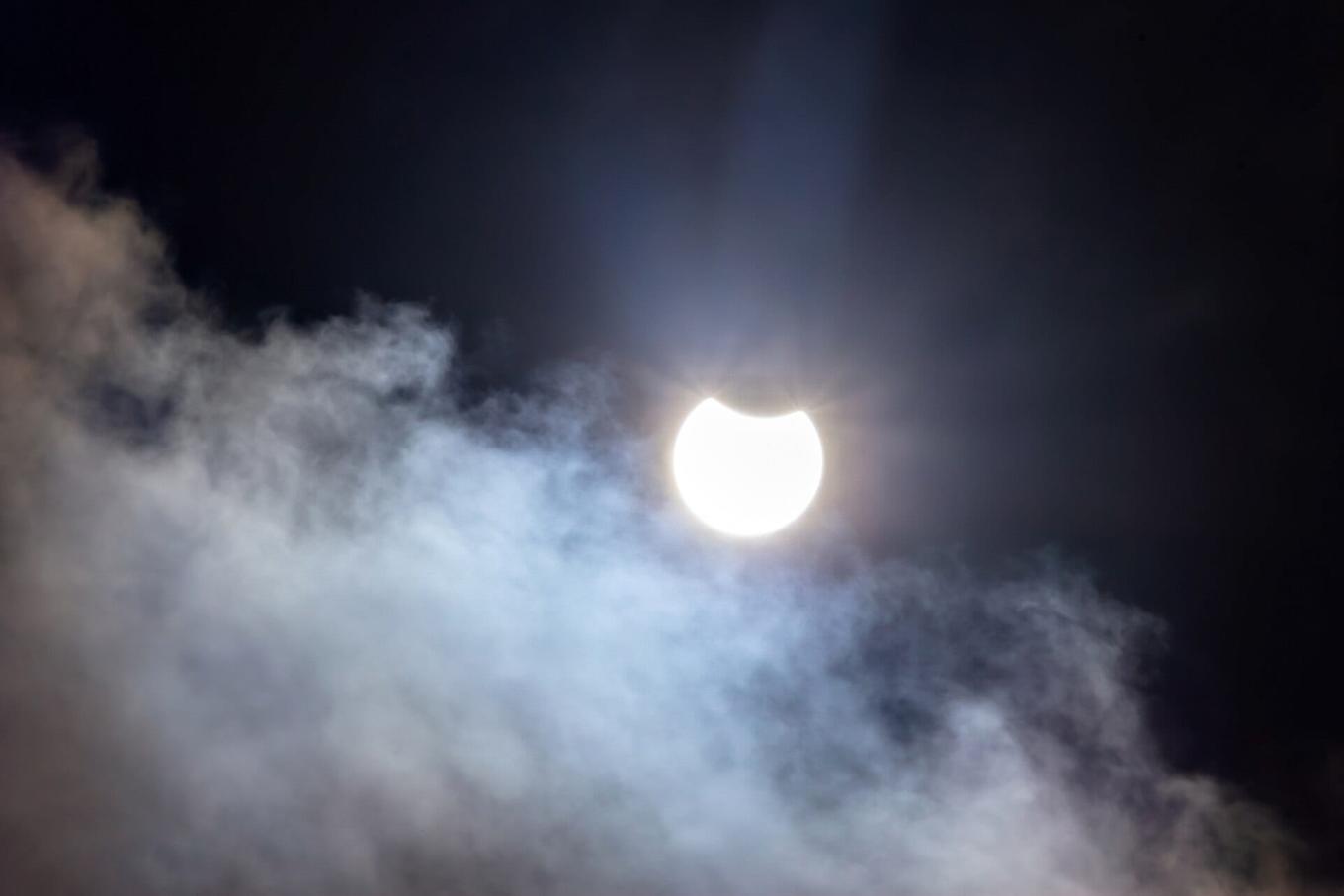
The Moon’s shadow swept across the Northern Hemisphere on Wednesday, producing the only total solar eclipse of 2026. The path of totality ran from Siberia across the Arctic, over Greenland and Iceland, and finally onto northern Spain and a corner of Portugal, according to NASA. Everywhere in between, millions more watched a partial eclipse from Toronto to Casablanca.
For a phenomenon governed entirely by celestial mechanics, the eclipse produced a remarkably human reaction: strangers gathering on beaches, hillsides and city rooftops to watch daylight dim together. Total solar eclipses occur somewhere on Earth roughly every 18 months, but any single location may wait centuries between them, CBS News notes, which is part of why crowds travelled long distances to stand in the path.
Spain’s first total eclipse since 1905
For Spain, Wednesday’s event was historic. The country had not experienced a total solar eclipse since 1905, CBS News reports, and the totality passed directly over the cities of A Coruña, Valencia, Zaragoza, Palma and Bilbao, according to Wikipedia’s eclipse records. Madrid and Barcelona sat just outside the path, meaning residents there saw a deep partial eclipse rather than full darkness.
Because the eclipse reached Spain in the evening, close to sunset, viewers there were treated to an unusual variant of the spectacle. The BBC’s Sky at Night Magazine explains that observers on the Iberian coast had a chance to see the ‘diamond ring’ effect, the flicker of sunlight around the Moon’s edge, appear low over the horizon as totality ended, rather than high in the sky as it does in most eclipses.
“Totality comes to an end in the western Mediterranean as the sun sets,” astronomer Catherine Pilachowski, of Indiana University, told Today.com.
In the extreme northeast of Portugal, near the Spanish border, the Montesinho Natural Park near Bragança was the only spot in the country to fall within the path of totality, according to the BBC. Most of Portugal, along with the rest of western Europe, saw only a partial eclipse.
Iceland and Greenland draw eclipse chasers to the Arctic
The point of longest totality, lasting two minutes and 18 seconds, fell just off Iceland’s western coast, according to Wikipedia’s eclipse data. Totality began over Greenland in the late afternoon local time before racing across the Atlantic to reach Spain by evening, Space.com reported, with the full spectacle unfolding over roughly 96 minutes from start to finish across the globe.
Travel operators had marketed the Arctic leg of the eclipse for months, pairing the rare sky event with Greenland’s ice sheets and Iceland’s volcanic landscapes. The eclipse-tracking site Eclipsophile described the itinerary on offer as running from Arctic icescapes in Greenland to volcanic drama in Iceland before finishing among Spain’s warmer, sub-tropical scenery.
Weather posed the biggest risk to that itinerary. Much of the path over Greenland and Iceland sits under frequent cloud cover even in August, forecasters noted, while Spain’s interior and the Balearic Islands, including Mallorca, offered better odds of clear skies for the sunset totality.
A partial eclipse shared far beyond the path
Totality itself lasted under two minutes for most viewers in its path, and slightly longer, up to about two and a half minutes, near the centre of the shadow over Greenland, Russia and the North Atlantic, NASA said. But the Moon’s fainter outer shadow, the penumbra, stretched across a vastly wider area, bringing a partial eclipse to most of Europe and northwestern Africa.
That wider shadow is why the eclipse became a shared European moment even for those far from Spain or Iceland. News agencies pictured residents testing eclipse glasses in Almelo, in the eastern Netherlands, the day before the event, CBS News reported, a scene likely repeated in cities across the continent as people prepared to watch safely rather than travel to the path of totality.
The partial eclipse also reached across the Atlantic. Northern parts of the United States and Canada saw a partial eclipse in the morning and early afternoon local time, with Toronto experiencing the deepest partial coverage in North America, according to CBS News. The view ended by mid-afternoon on the US East Coast, astronomer Catherine Pilachowski told Today.com, after which observers there needed no further eye protection because the eclipse was over.
“There’s nothing like a total eclipse,” Stephanie Abrams, an on-air meteorologist for the Weather Channel, told Today.com. “It goes fully dark, you can hear animals, and you can feel the temperature drop.”
Wonder tempered with caution
Even amid the celebration, safety guidance was repeated constantly by scientists and broadcasters alike. Looking directly at the Sun without certified eclipse glasses or a solar filter can cause permanent eye damage, NASA warns, and that risk applies throughout every partial phase of the eclipse. Only within the narrow band of totality itself, for the brief minutes when the Moon fully covers the Sun’s disc, could viewers safely remove their glasses and look up with the naked eye.
Total solar eclipses are visible from any single place on Earth only once every roughly 400 years, according to the US National Solar Observatory, one reason Wednesday’s event drew such crowds to Spain, Iceland and Greenland.
For readers who missed it, the wait for the next chance in Europe will again be long. The next total solar eclipse visible from the United States will not occur until 2044, and even then only across parts of Montana, North Dakota and South Dakota, CBS News reports. For now, the images and memories from Greenland’s ice, Iceland’s coastline and Spain’s sunset horizon will have to last.
This article is free to read. It always will be — no paywall, no account, no tracking.