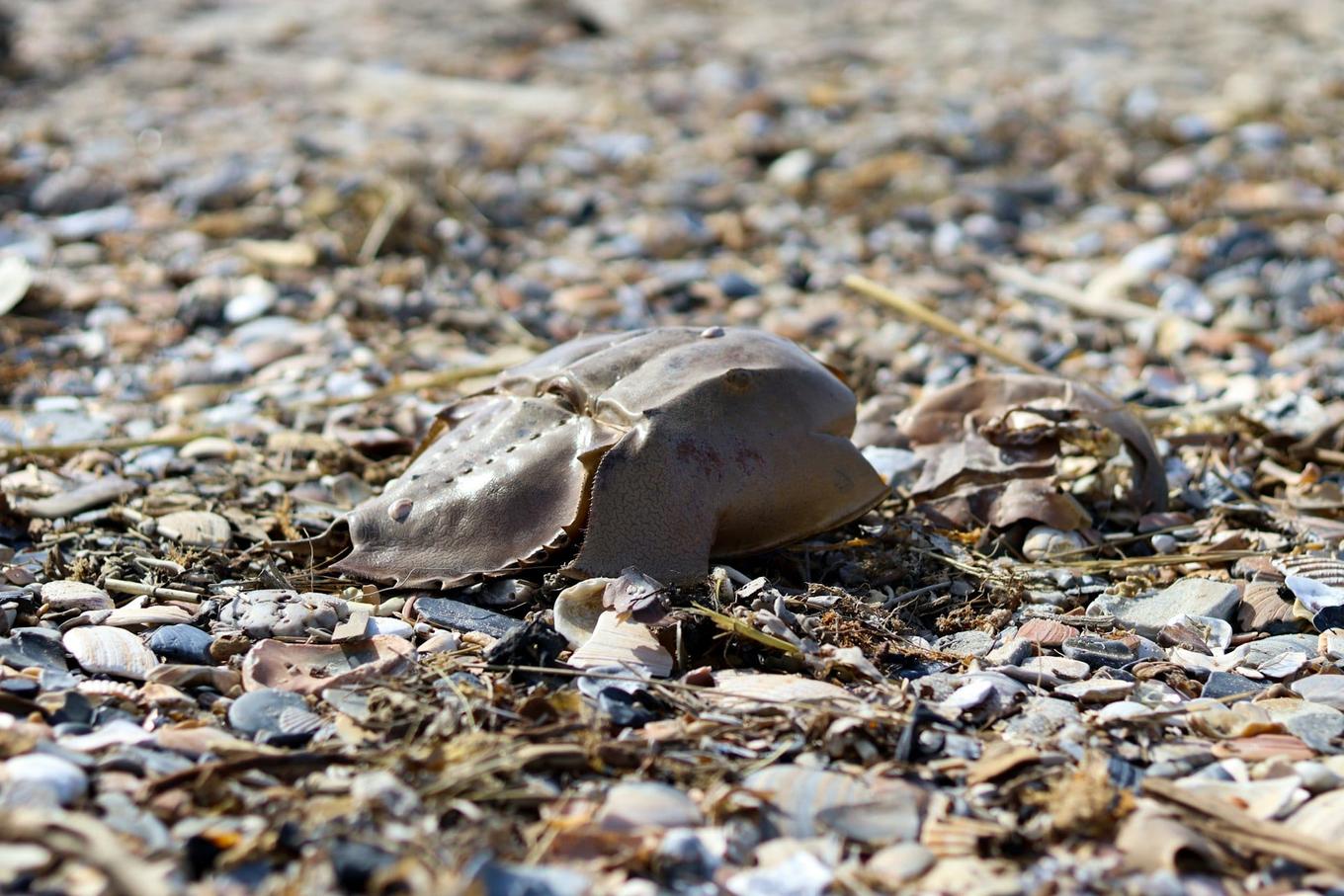
The horseshoe crab, an armoured sea creature that has barely changed in appearance for hundreds of millions of years, is one of ten finalists in the Guardian’s Invertebrate of the Year competition for 2026. The newspaper’s annual poll, now in its third year, invites readers to nominate and vote for their favourite spineless species from a group that makes up more than 1.3 million known animals worldwide.
This year’s shortlist also includes the squid, bumblebee, damselfly, stick insect, woodlouse, cicada, jellyfish, sea slug and bootlace worm, according to the Guardian. The winner is due to be announced on 17 August, following a vote among readers.
A body plan older than the dinosaurs
Horseshoe crabs are often described as living fossils because their distinctive helmet-shaped shell has changed little since the group first appeared in the fossil record. Researchers who compiled a comprehensive atlas of the group’s fossil and living forms note that Xiphosura, the order to which horseshoe crabs belong, has a fossil record reaching back to at least the Lower Ordovician period, roughly 480 million years ago.
Despite the name, horseshoe crabs are not true crabs or crustaceans at all. They belong to a different branch of arthropods called chelicerates, making them closer relatives of spiders and scorpions than of lobsters or shrimp. Four species survive today: one along the Atlantic coast of North America and the Gulf of Mexico, and three in Asian waters.
Blue blood and Europe’s pharmaceutical rulebook
The animal’s most consequential feature for humans is its blood, which runs a striking pale blue because it is built around copper rather than the iron found in human haemoglobin. When exposed to bacterial toxins, immune cells in the blood called amoebocytes trigger a rapid clotting reaction. Pharmaceutical companies have exploited that response for decades in a test, known as the Limulus amoebocyte lysate or LAL assay, to check that vaccines, injectable drugs and implanted medical devices are free of contamination.
“To see a horseshoe crab so vibrantly alive in its natural habitat, in such a hauntingly beautiful way, was astonishing,” said Kathy Moran, chair of the jury for the 2023 Wildlife Photographer of the Year award, of a winning image of the species.
That reliance on wild-caught animals has come at a cost. Populations have declined due to overharvesting for bait and blood extraction, alongside the loss of the coastal beaches where the crabs come ashore to spawn. In response, European regulators have moved to reduce that pressure. The European Directorate for the Quality of Medicines and HealthCare added a new chapter to the European Pharmacopoeia in 2020 permitting the use of recombinant factor C, a laboratory-made protein based on the horseshoe crab’s own gene sequence, as an alternative to blood-derived reagents in endotoxin testing.
That synthetic option is now used by pharmaceutical manufacturers across the continent, though the original blood-based test remains widely used elsewhere, including in the United States, where an estimated half a million crabs are bled each year according to conservation researchers.
An unusual way of eating and moving
Beyond its medical significance, the horseshoe crab has a genuinely odd way of feeding. Lacking jaws, it uses the bristled bases of its legs to grind up food such as worms and molluscs before pushing it toward its mouth, a method of eating that few other animals rely on. Adults migrate to shallow, muddy or sandy coastal waters and come ashore at high spring tides to lay their eggs along the tideline, a spectacle that also draws migratory shorebirds who feast on the eggs during their own long journeys.
Whether that combination of deep evolutionary history, medical utility and ecological quirkiness is enough to win over readers will become clear when the Guardian names its 2026 winner. Last year’s title went to the tardigrade, the microscopic “water bear” celebrated for its ability to survive extreme conditions.
This article is free to read. It always will be — no paywall, no account, no tracking.