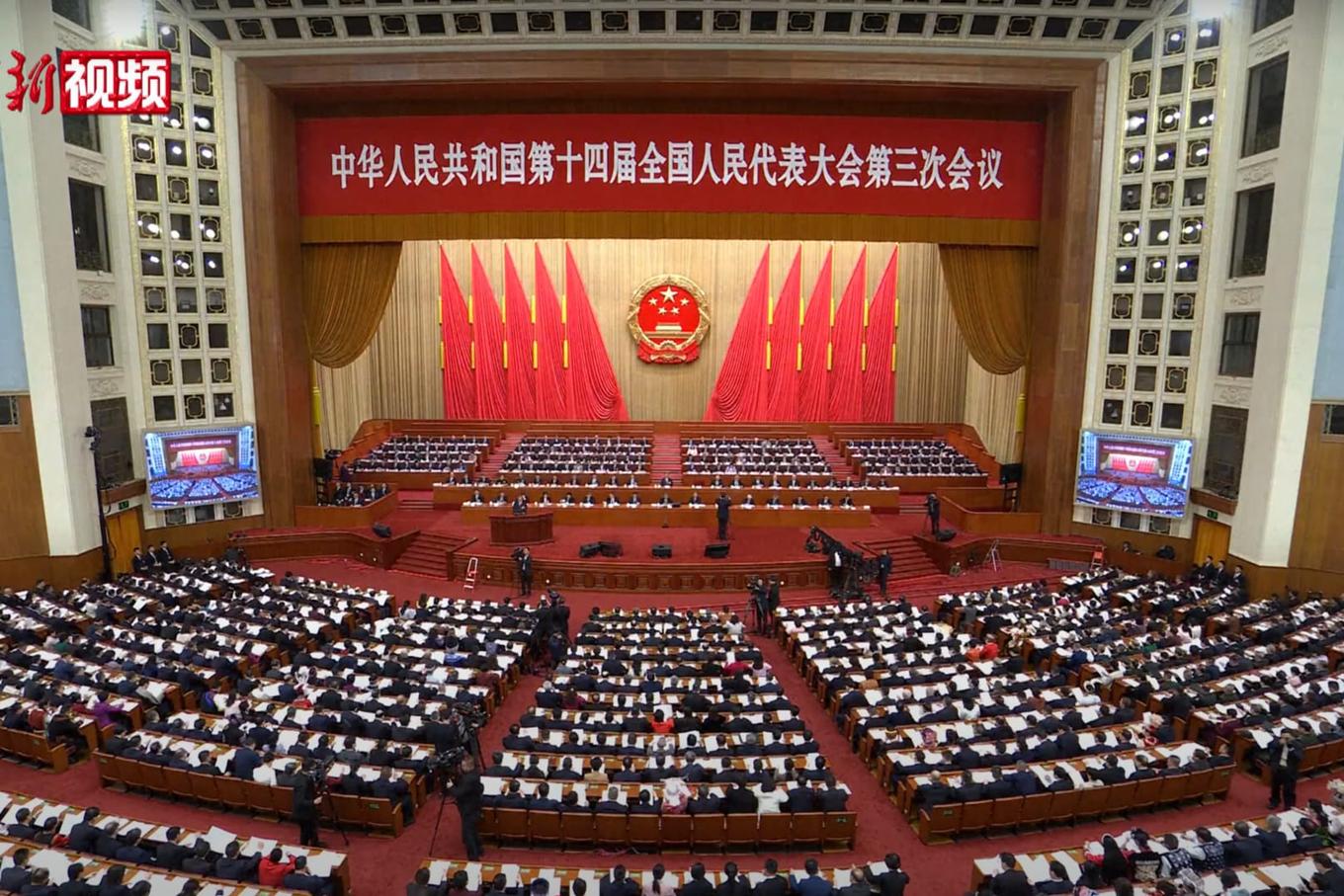
China’s top legislature has taken the first formal step toward a law designed to extend the country’s anti-corruption powers beyond its borders. The Standing Committee of the National People’s Congress (NPC) reviewed a draft Anti-Cross-Border Corruption Law during a session that ran from Tuesday to Friday, according to state media reports cited by the South China Morning Post.
The bill has not been made public in full, but according to Xinhua, the official state news agency, it runs to six chapters and 47 articles. These are said to set out core principles, define the law’s scope, and establish key institutional roles for tackling corruption that crosses national borders.
Closing gaps in fugitive and asset cases
Chinese officials have long acknowledged that pursuing corruption suspects and their money overseas is difficult. Evidence gathering abroad is slow, and repatriating assets or people often requires cooperation from foreign governments that may not share Beijing’s legal priorities. Xinhua described the draft law as intended to address exactly these problems, calling it a way to enrich the legal ‘toolbox’ for fugitive repatriation and asset recovery.
The scale of the effort is notable. Last year, Chinese courts recovered and confiscated 18.14 billion yuan, roughly $2.63 billion, through international operations targeting corrupt fugitives and their assets, according to figures cited by The Korea Times. The new law is meant to make such recoveries more systematic.
The draft would also clarify obligations for companies operating overseas, specifying compliance duties and legal consequences for violations. State media describe this as part of a broader push to align China’s business environment with international rule-of-law standards while protecting Chinese firms abroad.
A response to ‘long-arm jurisdiction’
Some Chinese legal experts frame the legislation as a counterweight to what Beijing calls the unfair extraterritorial reach of Western laws, such as the US Foreign Corrupt Practices Act and the UK Bribery Act, both of which allow prosecutors to pursue conduct occurring outside their countries. Chinese commentators argue those laws have sometimes been applied in ways that disadvantage Chinese companies operating internationally.
“[This] demonstrates China’s stronger determination and clearer goal to strengthen the fight against corruption through legislation,” said Yang Weidong, a law professor at the China University of Political Science and Law, quoted by China Daily’s Hong Kong edition.
The push for such a law is not new. China first flagged its intention to draft cross-border corruption legislation in 2023, when the NPC Standing Committee listed it in its legislative plan as an item for which conditions were ‘relatively mature.’ The Communist Party’s Central Committee reinforced the call during its third plenary session in 2024, and this year’s NPC work report confirmed that a law would be enacted, though without giving details.
The Central Commission for Discipline Inspection, the party’s top anti-corruption body, has been involved in drafting the legislation, according to state media. Officials expect the law to be finalised before 2027, when the current five-year term of the NPC Standing Committee concludes.
For now, the precise mechanisms the law will create, including how it might interact with foreign courts, financial intelligence units or extradition treaties, remain unclear because the draft text has not been released. Further readings by the NPC Standing Committee are expected before the bill can be adopted.
This article was researched and drafted with AI assistance and reviewed by Lasse Pedersen before publication. How we use AI
This article is free to read. It always will be — no paywall, no account, no tracking.