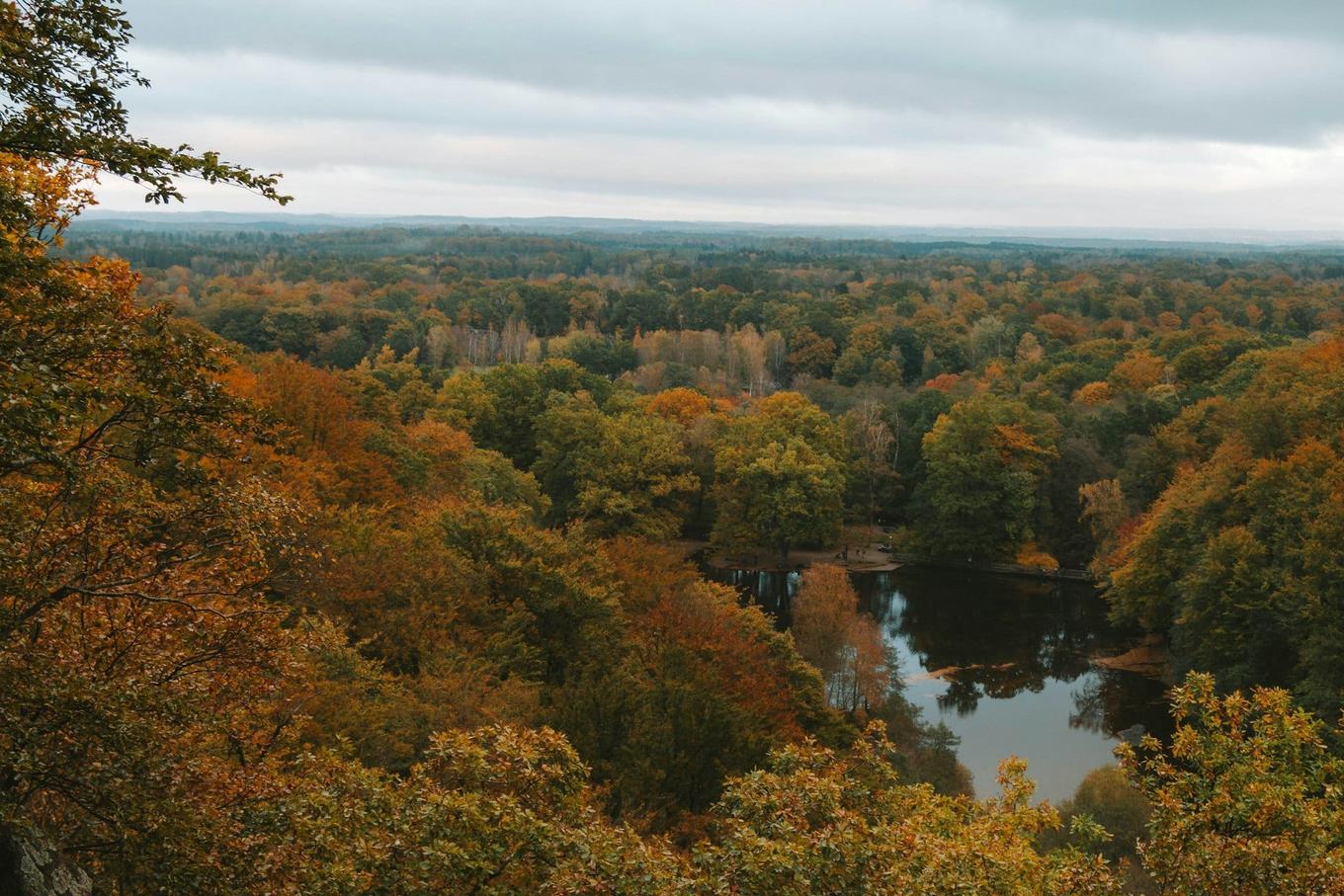
A wooded ridge rising out of the flat farmland of Skåne, Sweden’s southernmost province, is drawing renewed attention as a case study in ecological recovery. Söderåsen national park, roughly 30km east of Helsingborg, protects more than 1,600 hectares of the wider Söderåsen ridgeline, a landscape of steep valleys, fast streams and cliffs formed over millions of years.
From working forest to national park
For much of the 20th century, the ridge was managed for timber and grazing rather than conservation. According to Sweden’s national parks authority, Naturvårdsverket, commercial logging in the park’s deciduous forests only stopped in November 1989, when a felling operation was halted midway through. Land acquisitions continued through the 1990s, and the Swedish parliament formally created the national park on 10 May 2001, with King Carl XVI Gustaf inaugurating the 1,625-hectare site the following month.
That timeline matters because it means much of the mature-looking beech canopy visitors walk beneath today has regrown within roughly three decades, not centuries. The Guardian, which recently profiled the park, described it as offering “an inspiring story of regeneration” alongside its hiking trails and wild swimming spots.
One of Europe’s largest broadleaf refuges
Söderåsen sits on what geologists call a horst, a raised block of ancient bedrock flanked by fault lines, and reaches 212 metres at its highest point, Scania’s tallest ground. According to Sweden’s national parks website, the park protects a large section of the South Swedish horst landscape, with broadleaf forests of beech, oak, alder and birch, along with areas of planted spruce that are gradually being allowed to revert to native woodland.
Just east of Helsingborg, you step into a landscape of beech-covered ridges, dramatic valleys and fast-flowing streams.
The deep gorge at Skäralid, in the park’s north, is its most visited section, with a visitor centre, Naturum Söderåsen, offering exhibitions on the local geology and wildlife. Further south, the Nackarpsdalen valley and the near-circular Odensjön lake, land that did not pass into state ownership until November 2000, round out a network of marked trails covering the ridge.
For international visitors used to the manicured woodlands of much of lowland Europe, Söderåsen offers something rarer: a large tract of deciduous forest with fallen deadwood left in place to support insects, fungi and birds, alongside streams cool enough for wild swimming even in high summer. The Skåneleden long-distance trail network, Sweden’s regional hiking route, threads through the park, linking it to nearby towns such as Klippan and Röstånga for visitors travelling without a car.
The park’s recovery has not required active planting on a large scale. Once logging and heavy grazing stopped, forestry authorities note that woodland reclaimed much of the reserve on its own, with alder forests and bogs re-establishing in the wetter, low-lying ground. For a continent where old-growth forest is scarce and heavily fragmented, Söderåsen stands as a modest but concrete example of what unassisted regrowth can achieve within a single working lifetime.
This article is free to read. It always will be — no paywall, no account, no tracking.