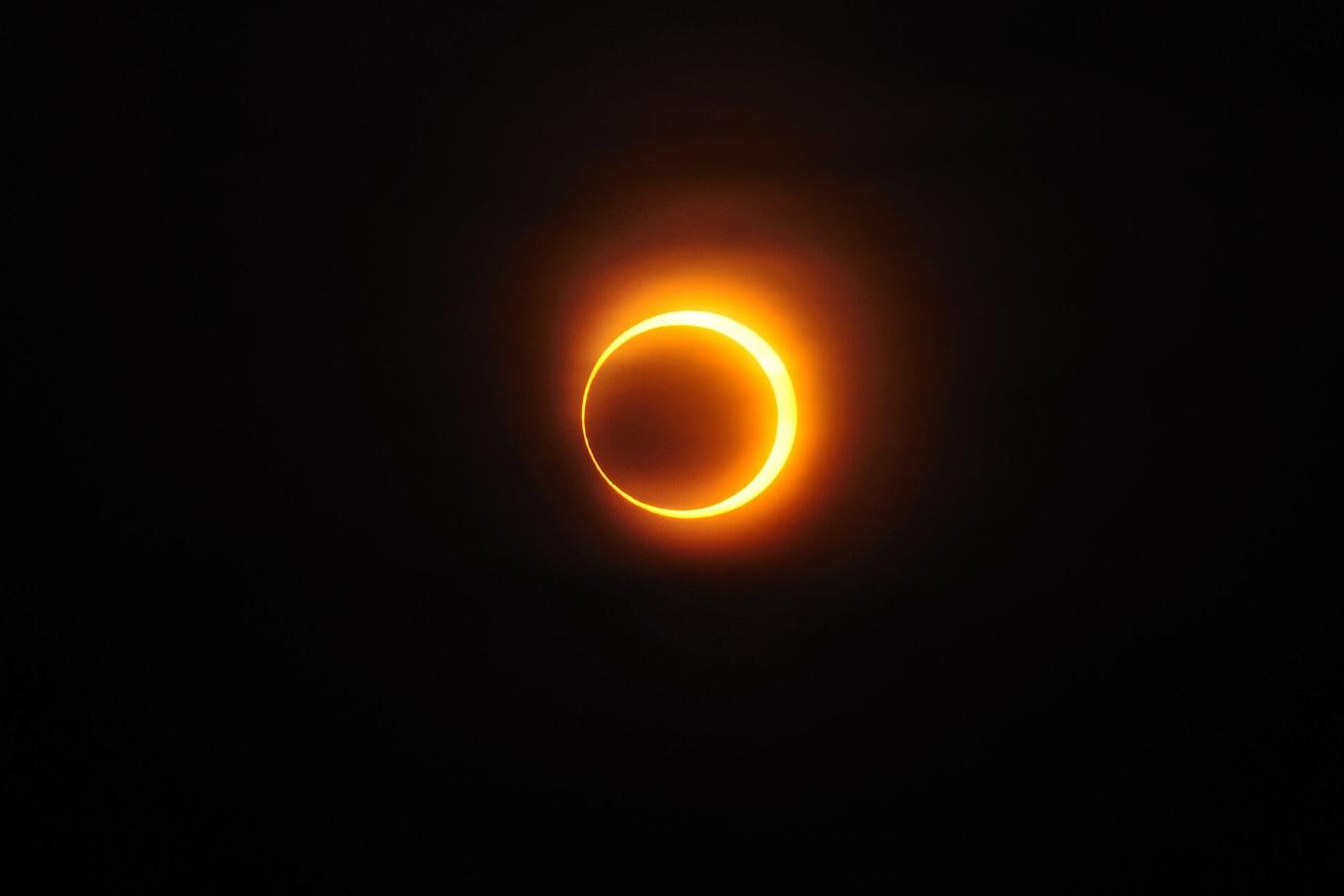
Millions of people across northern Spain looked to the sky on Wednesday evening as the country experienced its first total solar eclipse in more than a century. The path of totality, the narrow band where the moon fully blocks the sun, swept from west to east across the Iberian Peninsula, offering roughly two minutes of darkness to those in its way.
According to the Guardian, online forums had been buzzing for days beforehand as eclipse chasers debated cloud cover forecasts and traded tips on the clearest viewing spots. “It’s going to be spectacular,” César González, an astronomer and science communicator at the Madrid Planetarium, told the newspaper. “A total solar eclipse is one of the best spectacles in nature.”
A sunset eclipse unlike most others
What set this eclipse apart from most is timing. Spain sits near the far end of the eclipse’s path, which began at sunrise over Siberia and swept across Greenland and Iceland before reaching the Iberian Peninsula. That meant totality fell in the early evening, with the sun sitting just a few degrees above the western horizon, according to Spain’s National Astronomical Observatory. Skywatchers needed a clear, unobstructed view to the west rather than simply clear skies overhead.
The band of totality, roughly 300 kilometres wide, ran from Galicia in the northwest through cities including Oviedo, León, Bilbao, Burgos, Zaragoza and Valencia, before reaching the Balearic Islands. Residents of Madrid and Barcelona, home to some 12 million people between them, were not so fortunate: the two cities experienced a 99.9% partial eclipse, meaning the sun was almost, but not quite, fully obscured, according to BBC Sky at Night Magazine.
“The temperature drops. It can fall by as much as five degrees, and a slight breeze always starts to blow,” said César González, describing the moments of totality, according to Euronews.
First of three eclipses for Spain
Wednesday’s eclipse was also the first total solar eclipse visible from mainland Europe since 1999. It marks the start of an unusual run of three eclipses to cross Spanish skies within roughly 18 months: a second total eclipse is due on 2 August 2027, tracking across the Strait of Gibraltar towards North Africa and the Middle East, followed by an annular eclipse in January 2028.
Spanish tourism authorities have seized on the rare sequence. Travel industry outlet Skift reported that officials see the eclipses as a low-cost way to redirect visitor demand towards inland and lesser-known regions, at a time when Spain has faced anti-tourism protests in popular coastal destinations such as Mallorca. Hotels and campsites along the path of totality had reported strong bookings in the weeks before the event.
For many, though, the appeal was simpler than any tourism strategy. Eclipse watchers described plans to head into open countryside with a clear horizon, hoping for the fleeting alignment of sun, moon and Earth that briefly turns a summer evening into twilight, before the sun reappears and the day resumes.
This article is free to read. It always will be — no paywall, no account, no tracking.