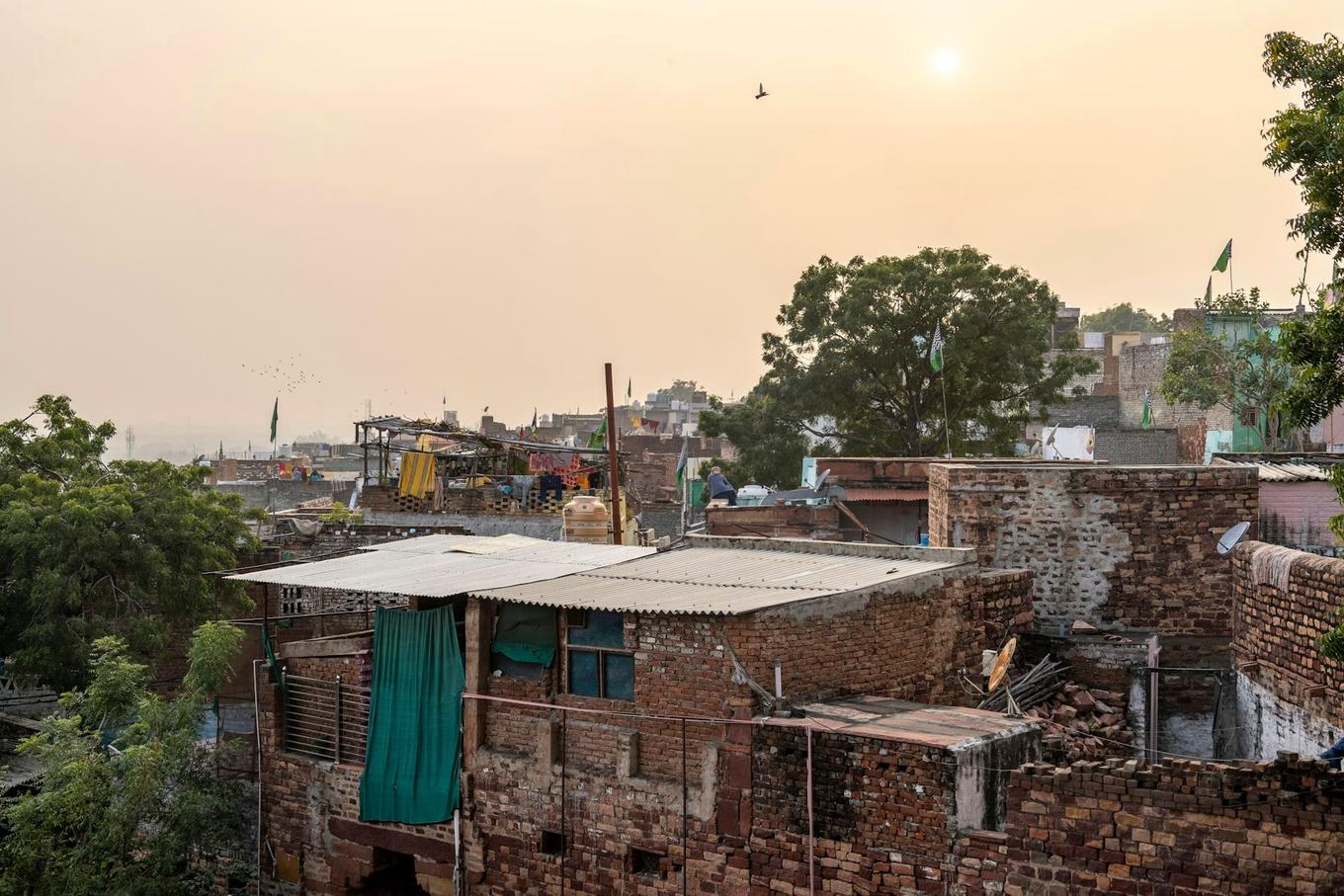
Every evening in her one-room home in Delhi, Gulshan washes the floor several times so it cools enough for her four children to sleep on. Last year the family saved enough to buy a desert cooler, a cheaper alternative to air conditioning that uses evaporation, but they run it sparingly to limit electricity costs, according to the Guardian, which featured her account in a wider project documenting how residents of India’s capital endure extreme summer temperatures.
The project is one of several efforts now under way to turn individual experience into evidence. Rather than relying only on weather station readings, researchers and campaigners are asking slum residents to keep records of how heat affects their sleep, health, income and household budgets, aiming to make an often overlooked crisis harder to ignore.
An ‘invisible disaster’ gets a name
Heat has long been described by researchers as an invisible disaster because, unlike floods or cyclones, it leaves no rubble behind, making its toll harder to count and its victims harder to identify. Rashee Mehra, a researcher who studies informal settlements in Delhi, told the environmental outlet Dialogue Earth that official data collection routinely misses the people most exposed to heat.
“When we talk about heat, the numbers often don’t exist for the most vulnerable... There is no real invisibility, only people we choose not to see.”
That gap matters because designating heat a formal disaster affects who is eligible for government compensation and emergency support. Analysts note that until recently, heat was not treated as a notified disaster in the way floods or earthquakes are, leaving affected families without a clear path to assistance.
A crisis concentrated in cramped housing
Delhi has about half its population living in informal settlements such as JJ (Jhuggi-Jhopdi) clusters and resettlement colonies, which researchers say are disproportionately vulnerable to heat because of cramped, poorly ventilated housing built from materials that trap warmth. Nationally, a 2025 report by the Council on Energy, Environment and Water, a Delhi-based think tank, found that 57% of Indian districts, home to more than three-quarters of the population, are now classified as being at high to very high risk from extreme heat.
Similar documentation efforts have emerged elsewhere in the city. According to the Indian outlet ThePrint, Greenpeace India has been collecting diaries from residents of Sunder Nagri, a slum area in east Delhi, to capture how heatwaves disrupt daily life. One entry described Pooja, a 25-year-old resident living with eight family members in a three-storey house with one room per floor and no ventilation, whose father, a mason, lost consciousness while cycling to work in the heat and could not afford medicine afterwards.
Government estimates of the human cost vary widely depending on definitions and reporting methods. Figures cited from national data show the National Disaster Management Authority recorded 17,767 heatwave-related deaths and the India Meteorological Department recorded 10,545 over the same two-decade period, a discrepancy researchers attribute to inconsistent classification of heat deaths rather than any single reliable count.
Small fixes, and a call for bigger ones
Some interventions are already under way. Groups such as Mahila Housing Trust have trained women in Delhi and other cities to apply solar-reflective paint and modular roofing to slum homes, measures that studies suggest can lower indoor temperatures. But a recent report by the Sustainable Futures Collaborative, a Delhi research organisation, found that most Indian cities focus on short-term emergency response to heatwaves rather than the structural changes, such as housing redesign and shaded public infrastructure, that would reduce long-term risk.
For readers in Europe, where summer heatwaves have also driven record temperatures and prompted debate over building codes and social protection for outdoor workers, Delhi’s slum diaries offer a stark comparison: the same rising temperatures produce vastly different risks depending on the quality of housing and the resources available to cope with them.
This article is free to read. It always will be — no paywall, no account, no tracking.