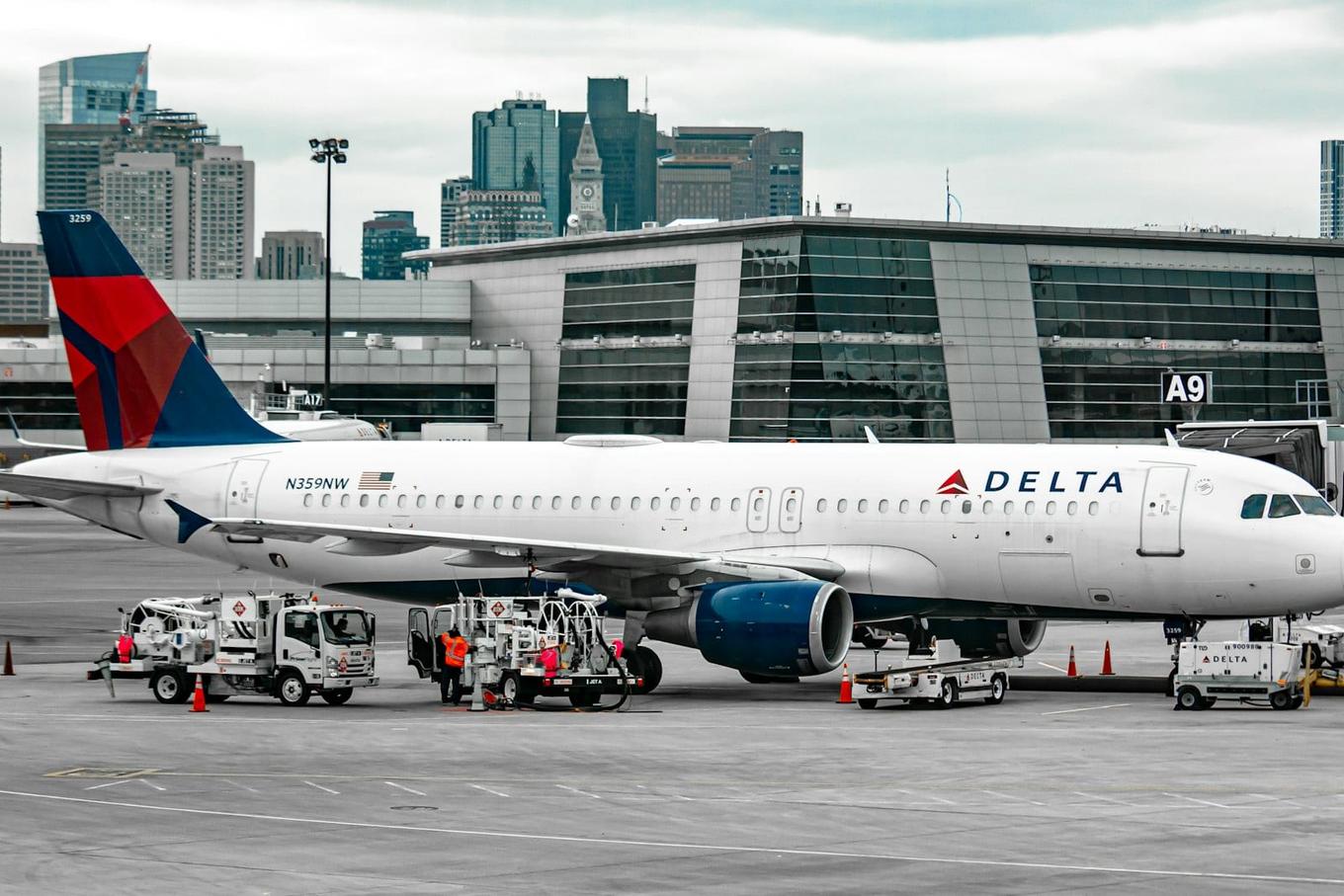
Delta Air Lines became the first major US carrier to report third-quarter earnings on Friday, and the numbers carried a warning for the rest of the industry: fuel costs are rising faster than airlines can pass them on to passengers.
The Atlanta-based airline cut its full-year 2026 adjusted earnings forecast to a range of $5.10 to $5.60 per share, down from the $6.50 to $7.50 range it had given in July. The new midpoint, $5.35, falls just below the $5.46 analysts had expected, according to data from LSEG, the London Stock Exchange Group.
Fuel bill outpaces fare increases
Delta’s third-quarter fuel expense rose 62% from a year earlier to $4.1 billion, more than $500 million above what the company had budgeted for just three months ago. Its adjusted operating margin, a measure of profitability on core operations, slipped to 9.4% from 11.1% a year earlier.
The airline now expects its full-year fuel bill to rise by about $6 billion compared with 2025, up from a prior estimate of $4 billion. Reuters and other outlets have linked the surge to disruption from the Iran war, which has hit global oil shipments and damaged refineries, pushing crude and refined jet fuel prices higher since the summer.
All of it’s fuel. — Erik Snell, Chief Financial Officer, Delta Air Lines
Delta’s all-in fuel cost averaged $3.61 a gallon in the third quarter, after savings from its own refinery near Philadelphia, which it bought in 2012. The company expects to pay about $4.25 a gallon in the fourth quarter. Snell said the refinery, which is expected to contribute roughly $700 million in profit this year, gives Delta a cushion competitors lack.
We have a refinery that gives us an offset, a partial offset to fuel prices that no one else does. — Erik Snell, Chief Financial Officer, Delta Air Lines
Demand holds up, but recovery will take time
Delta said travel demand remains strong despite the cost pressure, with almost 60% of fourth-quarter seats already booked and revenue expected to grow about 20% year-on-year. The company forecast fourth-quarter adjusted earnings of $1.15 to $1.65 per share, with a $1.40 midpoint roughly matching analyst expectations.
Chief Executive Ed Bastian noted the speed of the latest price swings. “We’ve seen $100 oil prices in the past, but not within the time horizon we’re seeing here so quickly,” he told the Atlanta Journal-Constitution.
Across the US industry, airlines spent $42.9 billion on fuel for scheduled flights in the first eight months of 2026, about $13.2 billion more than a year earlier, according to the Bureau of Transportation Statistics, despite using slightly less fuel overall. Fares have risen too: US airline ticket prices climbed about 25% year-on-year in the five months through August, Bureau of Labor Statistics data show. Deutsche Bank analysts expect airlines to recover a smaller share of the higher costs through fares in the fourth quarter, with full cost recovery not likely until early 2027.
Delta shares fell between roughly 2% and 5% in premarket trading following the announcement, depending on the timing and source of the report. United Airlines, American Airlines and Southwest Airlines are due to report their own third-quarter results later this month, offering the first broader picture of how the industry is coping with the fuel-cost shock.
This article is free to read. It always will be — no paywall, no account, no tracking.