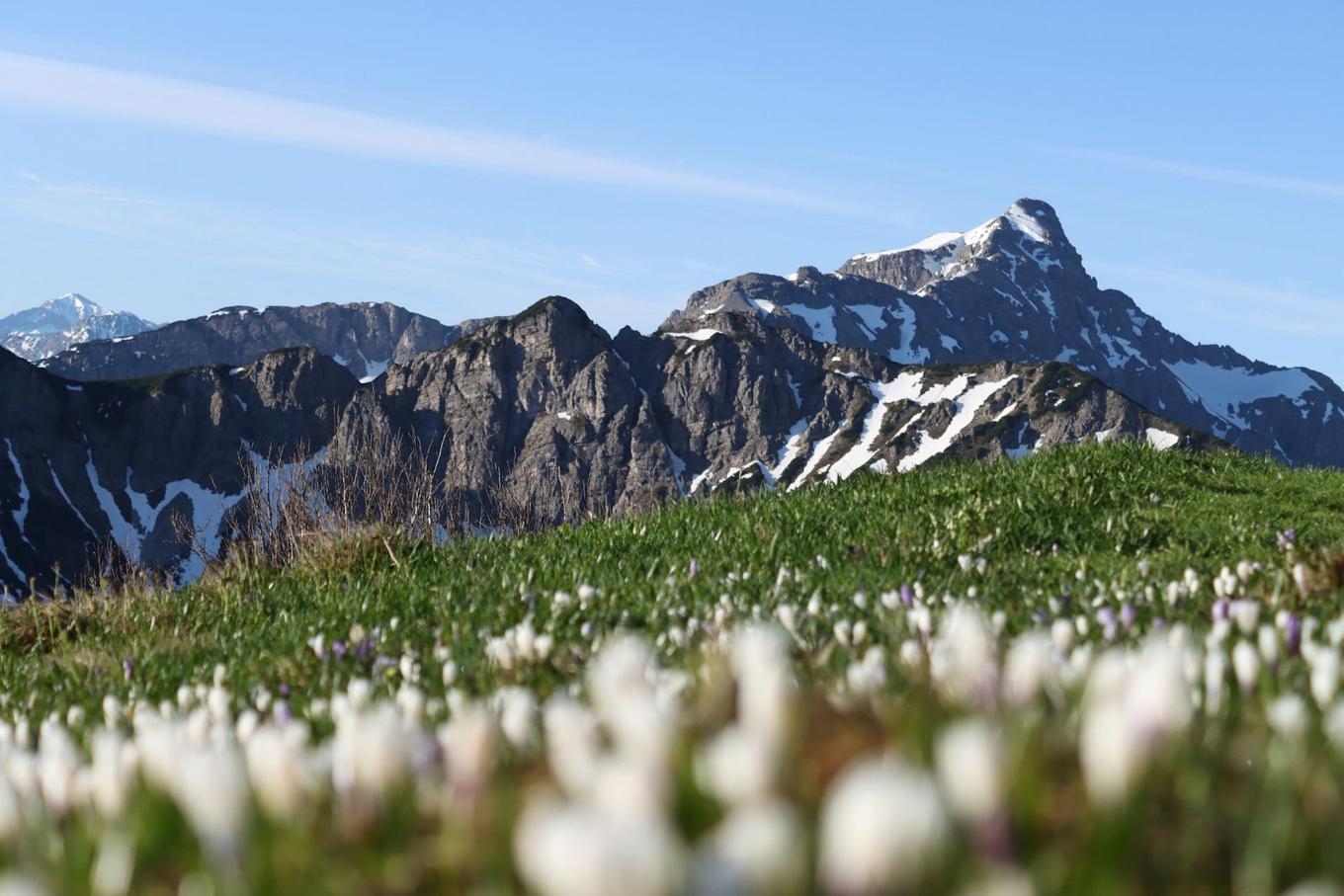
Mountain summits across Europe, from the Alps to the Pyrenees and the Scandinavian highlands, are gaining more warmth-loving plant species as the climate changes. But a new study shows that predicting exactly how fast this shift will happen on any single peak is far harder than scientists expected.
The research, led by teams from the University of Vienna, the Austrian Academy of Sciences and BOKU University, and published in Nature Ecology & Evolution, draws on one of the most extensive vegetation datasets ever assembled for high-altitude Europe.
Two decades of data from the continent’s peaks
The international team analysed 724 long-term monitoring plots spread across 53 mountain summits in all the major European mountain ranges. The plots were surveyed four times over 21 years as part of the GLORIA global monitoring network, described by the researchers as the most comprehensive programme tracking climate effects on summit vegetation to date.
The results confirm a trend biologists have watched build for years: species adapted to warmer conditions are steadily displacing cold-tolerant alpine specialists, a process scientists call thermophilization. At the same time, air temperatures recorded at the surveyed summits have risen.
“Our data clearly show that vegetation on European mountain summits is changing and that warmth-associated species are becoming more common,” said Johannes Hausharter, a biodiversity researcher at the University of Vienna and the study’s lead author.
A surprisingly weak local signal
What surprised the researchers was how poorly local warming explained the pace of change at any given monitoring plot. A summit that warmed sharply did not necessarily show a correspondingly large shift toward warmth-loving plants, and vice versa. Hausharter noted that the rate of change does not appear to depend solely on rising temperatures.
The pattern only becomes clear once the data are combined across wider areas. Mountain ranges that have warmed more overall tend to show, on average, a bigger shift toward warmth-associated vegetation, even though individual summits within those ranges can respond quite differently. Hausharter explained that summarising the data at a larger spatial scale shows that more warming tends to mean more warmth-associated species, even though each summit reacts slightly differently, according to a statement carried by Newswise.
The researchers argue this points to a web of local factors, including bedrock type, snow cover duration, soil moisture and competition between species, that can speed up, slow down or mask the effects of a warming climate at any one location. Similar complexity has been flagged in earlier GLORIA-linked work, including a 2021 study in Frontiers in Ecology and Evolution that found vegetation on siliceous and calcareous summits in the Alps responded differently to warming depending on bedrock chemistry.
Why this matters beyond the summits
Alpine plant communities are considered an early warning system for climate change because they exist in a narrow band of cold-tolerant conditions with limited room to retreat further upslope. Earlier GLORIA-based research, including a landmark 2012 study in Nature Climate Change, established thermophilization as a continent-wide pattern; this new analysis adds nuance by showing the process unfolds unevenly from peak to peak.
For European countries that rely on Alpine and sub-Alpine ecosystems for water supply, tourism and biodiversity, from Austria and Switzerland to France and Italy, the findings underline that national or regional climate adaptation plans cannot simply extrapolate from average warming figures. The research team says the results reinforce the value of sustained, long-term monitoring, since short-term or single-site data can give a misleading picture of how mountain ecosystems are actually changing.
The team cautions that predicting outcomes for any individual summit, or other landscapes, remains difficult given how much local conditions can modulate the broader warming trend. That uncertainty, they say, is itself a useful finding for conservationists and policymakers trying to protect Europe’s cold-adapted mountain flora.
This article is free to read. It always will be — no paywall, no account, no tracking.