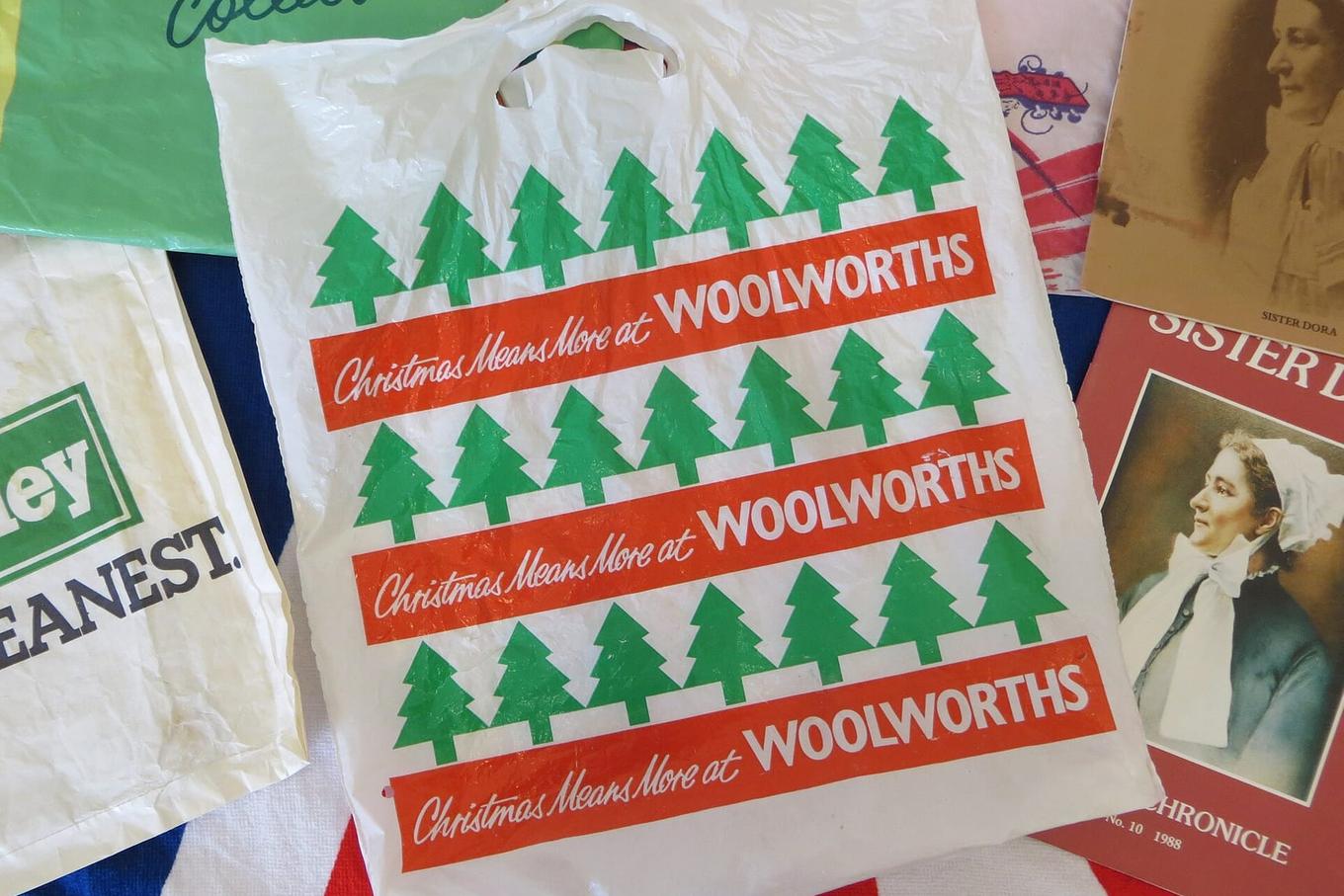
A plastic bag once destined for a kitchen drawer or a bin is now, for a growing number of collectors, a small piece of retail history worth paying for. According to the Guardian, old carrier bags from British retailers including Marks & Spencer, Tesco, Netto and Waitrose are being resold online for around £10 each, a striking markup for items that were originally handed out for free at the till.
From landfill to collectors’ market
The trend has taken hold on secondhand marketplaces popular across Europe, including eBay, Vinted and Depop. Vinted, the Lithuania-founded resale platform now widely used in Britain, France and Germany, told the Guardian that searches tied to this category have risen by 35% in 2026 compared with the previous year.
Bags from Woolworths, the British high street chain that closed its doors in 2009, are among the most prized, since the retailer no longer exists to produce more of them. Listings on eBay show worn Woolworths carriers marketed explicitly as advertising memorabilia, alongside bundles of vintage bags from Harrods and Selfridges pitched at collectors and prop buyers rather than shoppers.
The appetite has even spawned its own social media following. An Instagram account called Carry a Bag Man, dedicated entirely to documenting old carrier bags, has built an audience of more than 15,000 followers, evidence that what looks like a niche curiosity has a genuine community behind it.
A wider return to physical objects
Jeremy Leslie, founder of the London magazine shop MagCulture, told the Guardian he sees the bag boom as part of a broader consumer pattern rather than an isolated quirk.
“We see it with magazines,” he said. “People want real things in their lives. These are nostalgic items that take people back to when they were growing up, as a reassuring totem.”
That reasoning echoes what resale platforms have observed more broadly this year. Vinted has separately reported strong growth in searches for 1990s and 2000s fashion, as shoppers on second-hand marketplaces go hunting for what one industry commentator has described as “hidden gems” from earlier decades rather than newly manufactured goods.
Retailers are taking notice
Marks & Spencer, one of Britain’s oldest department store chains, has moved to capture the nostalgia directly. The retailer is launching a collaboration on 20 August with the London streetwear label Aries that includes a £90 leather tote bag deliberately styled to resemble an old St Michael carrier bag, M&S’s historic in-house clothing label.
Lisa Illis, head of womenswear design at M&S, said the project was designed to turn something ordinary into something worth keeping. “Turning an everyday carrier bag into a collectable leather accessory perfectly captures what this partnership is about, celebrating the cultural relevance of St Michael while introducing it to a new audience,” she said, adding that the design “takes something deeply familiar and reimagines it through a completely contemporary lens.”
Aries founder Sofia Prantera said the collaboration drew on her own memories of the brand. “Growing up, M&S was part of family life,” she said, calling M&S “a true British institution that has played a role in so many people’s lives and memories.”
For readers outside Britain, the trend offers a small window into how a country’s most ordinary retail relics, packaging most people never think twice about, can become charged with meaning once they are no longer around. It is a pattern likely to feel familiar well beyond the UK, wherever shoppers are rediscovering an appetite for objects with a physical history attached to them.
This article is free to read. It always will be — no paywall, no account, no tracking.