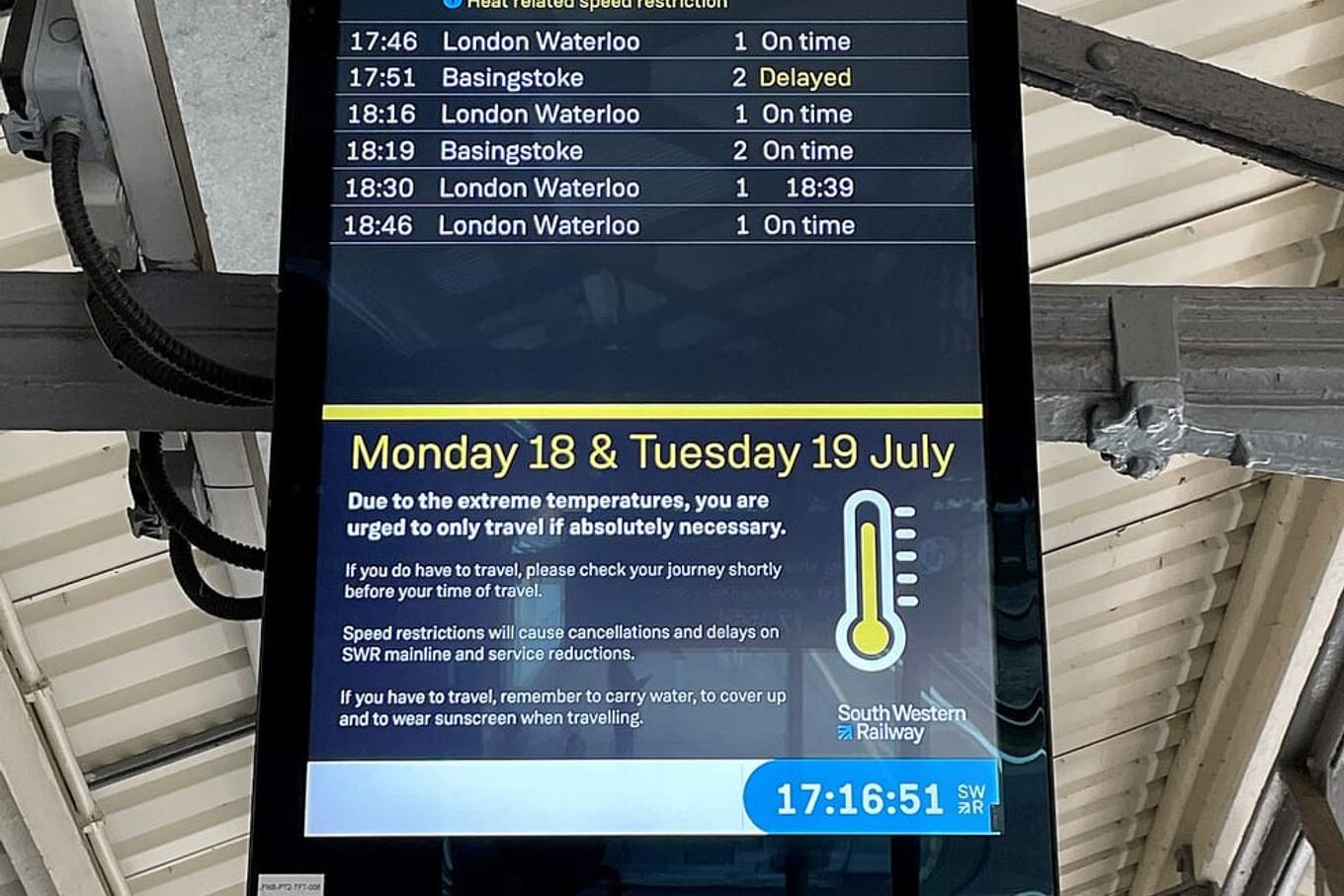
The UK economy has lost an estimated £4.4bn in output so far this year due to repeated heatwaves, according to new analysis from the green think tank Verdant. The figure covers the period from May to the end of July, a stretch that included three separate heat episodes across Britain and much of western Europe.
Verdant had previously suggested June’s unseasonally hot weather had an economic cost of £2.36bn. Updating its assessment to include last month’s high temperatures, it finds a £4.4bn hit to output.
Why heat hits output
Verdant’s mapping tracks the number of days each UK local authority area spent above 30C, a threshold the think tank treats as a tipping point beyond which worker productivity drops sharply. Direct economic costs arise because workers across many industries become less productive in heatwaves, while infrastructure and equipment overheats and has to be shut down.
Crucially, Verdant’s estimates exclude indirect losses such as the cost of fighting wildfires, and additional electricity consumption from running fans and air conditioning, meaning the true economic toll is likely higher.
“The economic costs of climate change are already with us, and set to worsen in future years. Action by the government to protect workers and businesses from the severe effects of extreme heat is well overdue.” — James Meadway, director of Verdant
Independent research points the same way
Verdant’s figures are not the only estimate in circulation. A separate study by the London School of Economics’ Grantham Research Institute on Climate Change and the Environment, working with the Euro-Mediterranean Center on Climate Change, surveyed nearly 2,000 UK adults about the June heatwave specifically. It found the heatwave led to 24 million lost hours of work and a £1.15 billion hit to the UK economy, with an average reported reduction of 0.47 hours worked per person during the last week of June.
The two think tanks use different methods, one modelling productivity loss across local authorities, the other surveying households directly, but both point in the same direction: heat is now a measurable and repeated drag on British economic activity, not an occasional anomaly.
Verdant warns the trend will accelerate. If heatwaves keep intensifying at the pace seen over the last decade, the think tank projects cumulative losses of at least £25.6bn a year by 2030, more than five times this year’s estimated hit.
Calls for a maximum working temperature
To limit future damage, Verdant is calling for the government to implement a maximum working temperature, and to be ready to step in to compensate workers when they are forced to cut their hours because of extreme heat. Some reports suggest the compensation scheme could be financed through a levy on fossil fuel investments.
The think tank also points to the need for investment in urban redesign, to create more cooler green spaces in the UK’s towns and cities, alongside mandatory passive cooling in new builds and renovations. Unlike much of southern Europe, British homes and offices have historically been built to retain heat rather than shed it, leaving the country’s building stock comparatively exposed as summer temperatures climb.
For an economy still adjusting its infrastructure and labour rules to a hotter climate, the figures from Verdant and the Grantham Research Institute add a concrete price tag to a trend that scientists say is set to become a permanent feature of British summers.
This article is free to read. It always will be — no paywall, no account, no tracking.