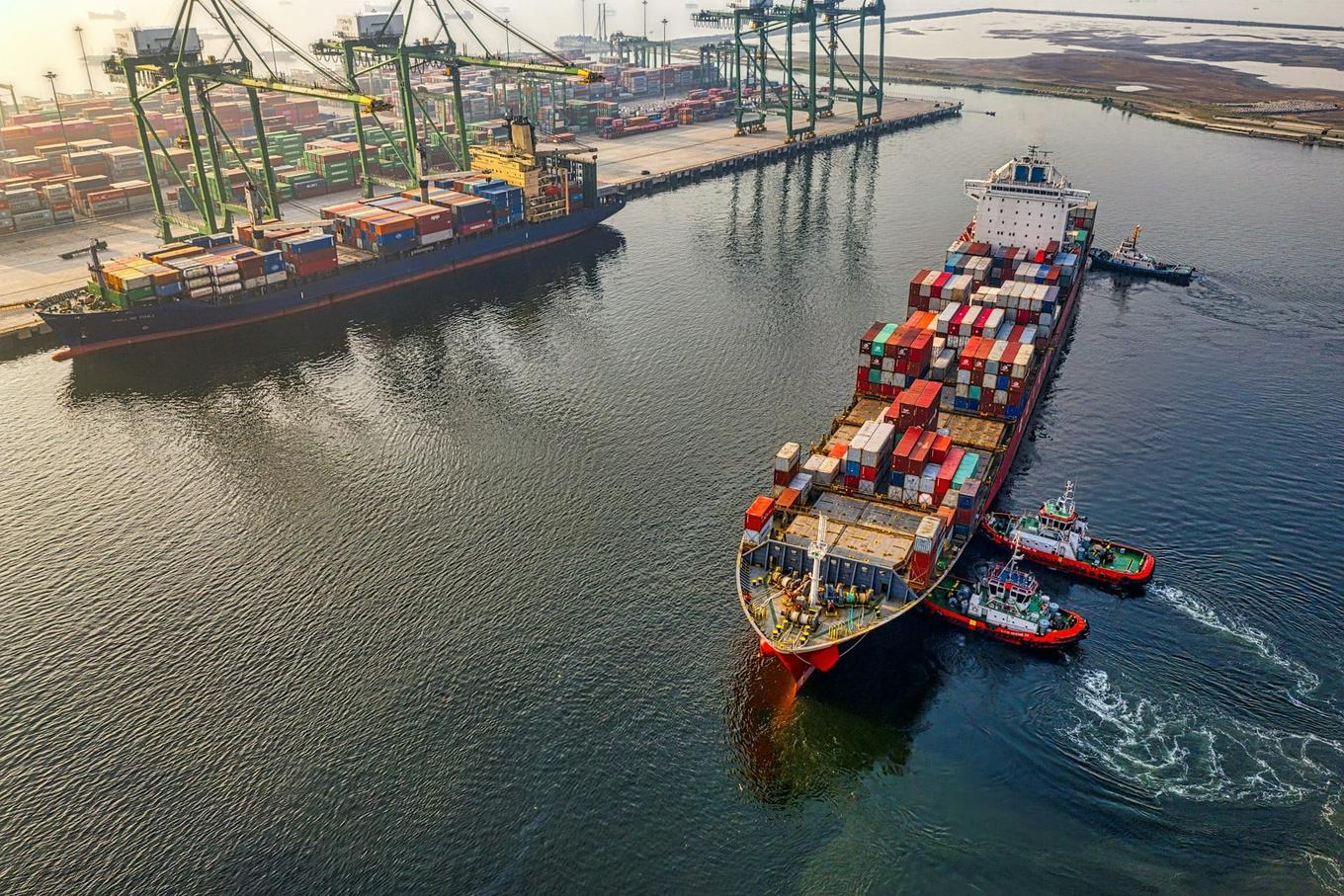
When Donald Trump unveiled sweeping tariffs on trading partners in April 2025, many economists predicted a sharp contraction in global commerce. Instead, world trade has proved unexpectedly durable. The World Trade Organization’s latest estimate puts global merchandise trade growth at 2.4% for the year, more than double its earlier forecast of 0.9% and a dramatic reversal from projections of outright decline made in the immediate aftermath of the tariff announcements.
A system built for shocks
The resilience is not a sign that tariffs failed to bite. Rather, it reflects how quickly companies, governments and shipping networks adapted around them. Businesses in the US rushed to bring forward orders before tariff deadlines took effect, temporarily inflating import volumes. US imports surged 11% year-on-year in the first half of 2025, according to WTO data, with a particularly sharp spike in the first quarter as firms stockpiled goods ahead of anticipated tariff hikes.
WTO Director-General Ngozi Okonjo-Iweala has credited this adaptability, along with the multilateral trading system’s underlying stability, for cushioning the blow. She said a “measured response to tariff changes in general”, increased trade among emerging economies and the potential of AI “helped ease trade setbacks in 2025”.
“Trade resilience in 2025 is thanks in no small part to the stability provided by the rules-based multilateral trading system. Yet complacency is not an option.” — Ngozi Okonjo-Iweala, WTO Director-General
AI hardware and rerouted Chinese exports
A second, less predictable driver has been artificial intelligence. Global shipments of chips, servers and other AI-related hardware rose sharply through 2025, according to McKinsey Global Institute figures reported by Axios, with US imports of such equipment climbing particularly fast. The WTO found that AI-related goods, though still under a tenth of global trade, accounted for nearly half of overall trade growth in the first half of the year.
China, the primary target of Trump’s highest tariffs, offers a striking case study in adaptation. US imports from China fell sharply as new tariffs made Chinese consumer goods more expensive there. Yet overall Chinese exports held broadly steady, as manufacturers redirected higher-value products such as electric vehicles and industrial components toward Europe and emerging markets instead. Chinese shipments of intermediate goods like memory chips rose as exports to Europe and developing economies increased.
Europe hedges its bets
For European exporters, the tariff shock has accelerated a longer-running push to diversify away from dependence on any single trading partner, particularly the US, which has kept a baseline 10% tariff on goods from allies including the UK despite negotiated deals. Brussels has pressed ahead with the long-delayed EU-Mercosur agreement covering Argentina, Brazil, Paraguay and Uruguay, while simultaneously deepening trade frameworks with Mexico and Chile and pursuing faster talks with Canada, Japan and South Korea.
European Commission President Ursula von der Leyen had hoped to formally sign the Mercosur pact in Brasília, after European farm groups secured additional safeguards during 2025 negotiations. The strategy reflects a broader European calculation, that reducing reliance on Washington offers insurance against future rounds of tariff volatility.
A more fragile 2026
The WTO is careful to note that this year’s strength should not be mistaken for immunity. Much of the boost came from one-off factors, including US firms frontloading imports that will not be repeated, and the organisation has already slashed its 2026 forecast from an earlier estimate of 1.8% growth down to just 0.5%. It cites a cooling global economy, weakening business and consumer confidence in developed markets, and the full, delayed impact of higher tariffs finally working through supply chains.
Additional risks are emerging beyond tariffs themselves. Okonjo-Iweala has flagged that the WTO’s baseline forecast for continued trade growth is now also under pressure from tensions in the Middle East, given that major agricultural exporters such as India, Thailand and Brazil depend on fertiliser shipments passing through the Persian Gulf. For a trading system that has so far proven more adaptable than many predicted, 2026 looks set to test that resilience more severely.
This article is free to read. It always will be — no paywall, no account, no tracking.