Greenland’s government has forced a US oil company with ties to Donald Trump to delay drilling in the Arctic territory, dealing a setback to predictions from the president’s own envoy that American crews could be pumping crude within a year.
Officials in Nuuk said on Thursday that the necessary regulatory review could not be finished in time for Greenland Energy to begin drilling as scheduled, according to The Guardian, which first reported the delay. The government and the company now expect that, if permits are eventually granted, work is unlikely to start before winter 2027.
Equipment landed without permission
The postponement follows weeks of friction after Greenland Energy, a Texas-based company founded last year, moved containers of drilling equipment onto a remote stretch of Greenland’s east coast in July without the required approval. Greenland’s mineral resources authority responded with what it called a “strong warning”, stating that all future logistical steps must be cleared with regulators in advance, according to reports by France 24 and Mediaite.
The company has proposed exploring the Jameson Land basin, an area it says could hold vast oil reserves, with Greenland Energy chairman Larry Swets pointing to estimates of up to $1 trillion in potential crude value, Mediaite reported. Swets has maintained that the project is separate from Trump’s broader ambitions for the territory.
“All future logistical matters must be advised and approved by the mineral resources authority, before they are carried out,” Greenland’s government said in its statement.
Envoy’s timeline unravels
The delay contradicts an upbeat forecast from Jeff Landry, the Louisiana governor whom Trump named as his envoy to Greenland. Landry, who has said his goal is to help make Greenland part of the United States, suggested after a visit in May that oil beneath the island could help ease an energy crunch linked to tensions with Iran.
Any drilling would also require Greenland’s authorities to weigh the environmental cost of extraction in a wetland area that supports rare bird species and musk oxen, animals that local hunters rely on for subsistence. Greenland stopped issuing new oil exploration licences in 2021 over climate and environmental concerns, making the current standoff a test of how far that policy can bend under political pressure.
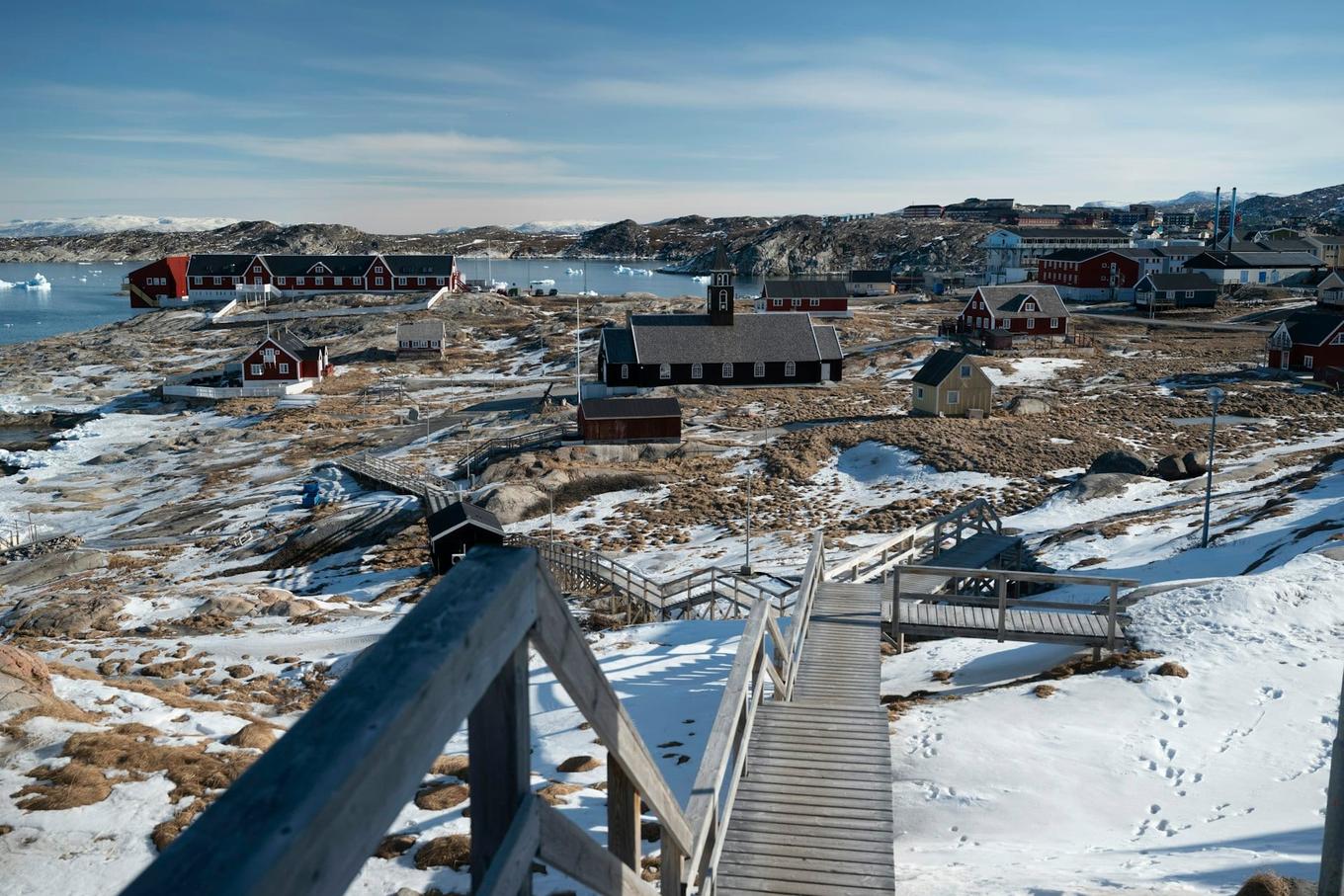
The episode is playing out against the backdrop of Trump’s repeated calls to bring Greenland, a semi-autonomous territory of Denmark, under American control. Trump has previously declined to rule out using military force to do so, prompting Denmark, a fellow NATO member, to call such threats unacceptable. He recently posted an AI-generated image of himself overlooking a Greenlandic settlement on his Truth Social platform.
Analysts say the standoff over drilling rights could become a proxy for the wider dispute over sovereignty. A researcher cited by France 24 has described the situation as one with political, economic and technical implications playing out between the company and Greenland’s government, with the question of how far Washington might go to back the project still unresolved.
For now, Greenland’s government appears to be holding firm on procedure rather than making a broader political statement, insisting the company simply lacks the permits required under existing law. But with Greenland Energy having already shipped equipment to the island and Trump continuing to press his territorial claims, officials in Nuuk face a delicate balancing act between enforcing their own regulations and managing relations with Washington.
This article is free to read. It always will be — no paywall, no account, no tracking.