For two days, European leaders gathered in Dublin to settle a question that had hung over the continent’s diplomacy for months: who speaks for Europe when Ukraine’s war finally reaches the negotiating table. By Friday, they had an answer, but it was not decided in the conference rooms where officials had spent hours debating it.
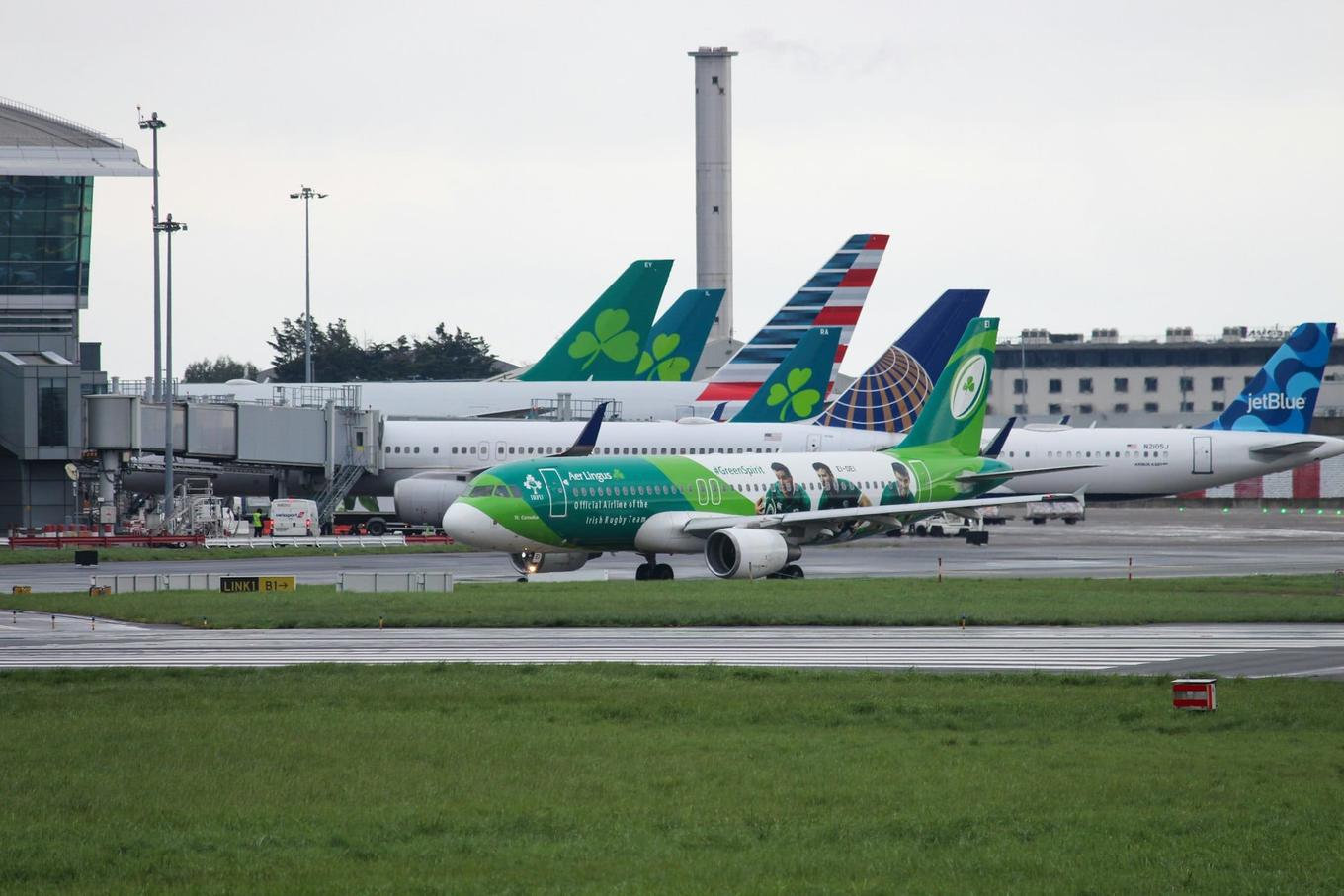
According to Danish public broadcaster DR, the matter was effectively resolved on Thursday night at Casement Aerodrome, a military airbase outside Dublin, while a plane carrying US special envoys Jared Kushner and Steve Witkoff was being refuelled. The two men had just flown in from Moscow, where they met Russian President Vladimir Putin, after earlier talks in Abu Dhabi with Russian and Ukrainian representatives.
A meeting away from the summit
Kushner and Witkoff used the stopover to brief Ukrainian President Volodymyr Zelenskyy, who had arrived in Dublin ahead of the formal summit. Their meeting, held away from the main venue at the Convention Centre Dublin, lasted just under an hour, according to the Irish Times, but was treated by observers as a bigger geopolitical moment than the European Political Community summit taking place nearby.
We cannot conclude this deal without the Europeans being at the table.
That remark, from Kushner, set the tone for what followed. Zelenskyy said afterwards that Europe would take part in the next round of talks as part of a negotiating team rather than from the sidelines. “This is important for us because the war is in Europe,” he told RTÉ.
No single envoy, but a team of five
The following day, European Council President António Costa announced that Europe’s representation would take the form of a ‘European Team’: EU institutions working alongside the so-called E5, Britain, France, Germany, Italy and Poland, drawn from the Coalition of the Willing. “Europe must speak with one clear and united voice,” Costa said.
The arrangement papered over a dispute EU leaders could not resolve themselves: who should be the single face of Europe at the table. Kushner had suggested such clarity would be an achievement in itself. “If Europe could identify one person to speak on their behalf, that would be a bigger achievement than getting the Russians to include them in the negotiation,” he said, according to Al Jazeera.
EU foreign policy chief Kaja Kallas argued she held the mandate to represent the bloc. “I’m the one who is representing Europe in the foreign and security policy,” she said, adding elsewhere, “I do not represent myself. I represent the 27, as I have done for two years.” Costa, however, pointed to EU treaties governing external representation, and the E5 format prevailed instead.
German Chancellor Friedrich Merz backed the inclusion of European voices, saying, “There will be no discussions on Ukraine without Ukraine and on Europe without Europe,” while cautioning, “Please, no surprises.” The E5 countries are expected to send national security advisers rather than heads of government, alongside representatives of the European Commission and Council, with NATO also expected to attend.
Spain left out, Russia non-committal
Spain, an EU member and vocal Ukraine supporter, was notably excluded from the E5 group. Kremlin spokesperson Dmitry Peskov said Russia had not made a final decision on including Europe at all, insisting Europe must first name its representative, a condition the Dublin announcement was meant to satisfy.
The scale of the diplomacy on display was matched by the security surrounding it. Irish police and defence forces deployed sniper teams and anti-drone units for what was described as the largest security operation ever mounted in Ireland, for a summit many had not expected to produce the week’s most consequential moment.
This article was researched and drafted with AI assistance and reviewed by Lasse Pedersen before publication. How we use AI
This article is free to read. It always will be — no paywall, no account, no tracking.