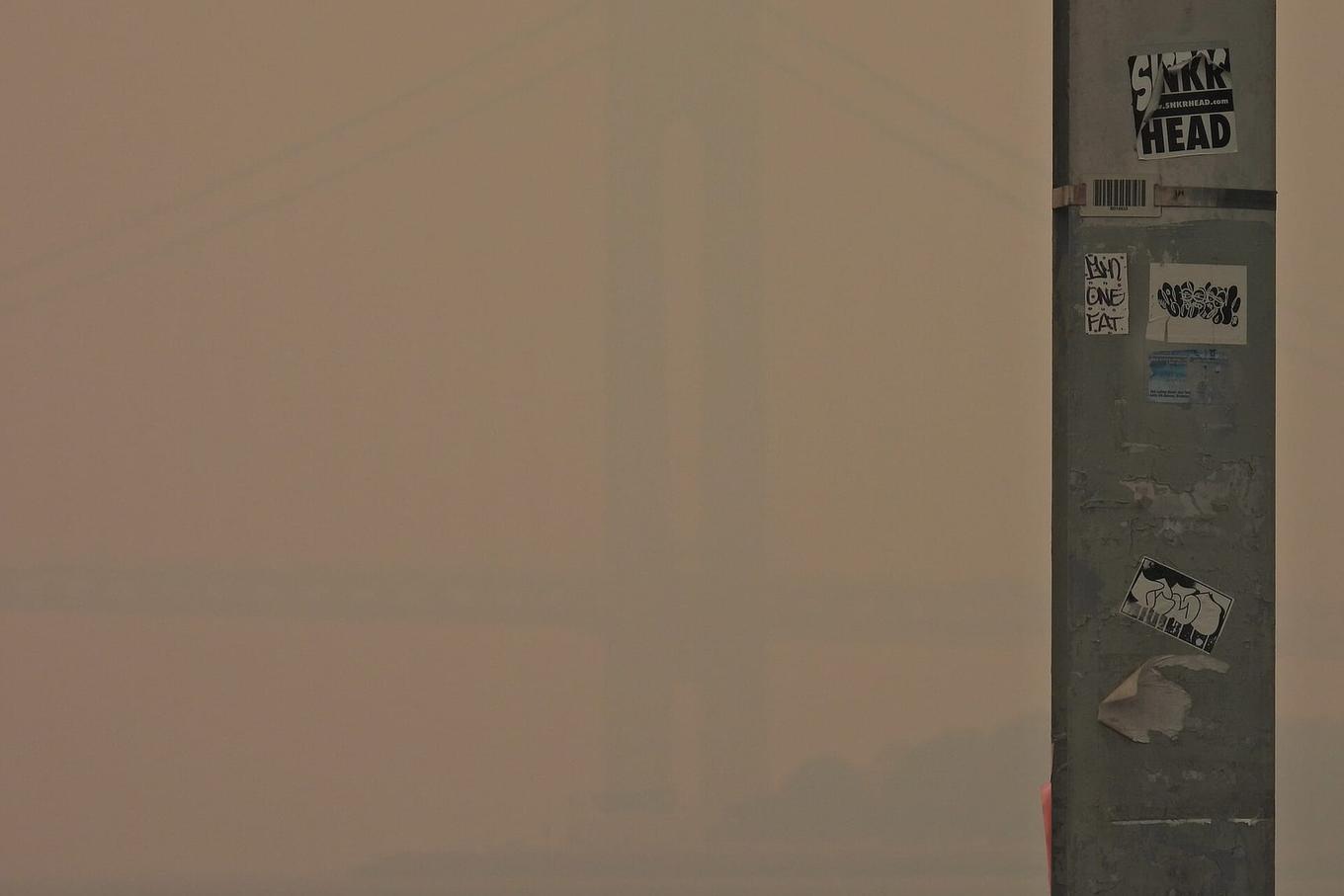
Indonesia has kept dozens of schools closed for a second straight day as smoke from wildfires spreads across the archipelago, marking the start of what officials fear will be a prolonged and severe dry season. The disruption comes as an El Nino weather pattern, a naturally occurring climate cycle that brings drier conditions to Southeast Asia, intensifies fire risk across the country’s western islands.
Schools shut as smoke blankets Borneo city
In Pontianak, the capital of West Kalimantan province on the island of Borneo, mayor Edi Rusdi Kamtono ordered schools closed after smoke from fires elsewhere drifted over the city. According to AFP, the city’s tens of thousands of public school pupils will learn from home for as long as air quality remains poor.
“We have started to feel it, especially at night and in the morning, as haze has already blanketed the city of Pontianak,” Kamtono said.
Borneo is shared between Indonesia, Malaysia and Brunei, and the smoke has not stayed within Indonesian borders. In Malaysia’s Sarawak state, 11 areas recorded unhealthy air-quality readings, according to reporting cited by ESG Times, prompting education authorities there to advise schools to suspend outdoor activities when pollution levels turn unsafe. For readers familiar with London’s air quality index during past pollution episodes, the readings in parts of Borneo have reportedly climbed well beyond levels considered safe by public health standards.
Cloud seeding and a worsening dry season
Indonesia’s security minister, Djamari Chaniago, said on Monday that the government has deployed 43 helicopters and up to 15 fixed-wing aircraft, some for firefighting and others for cloud seeding, a technique in which planes spray particles such as silver iodide and salt into clouds to encourage rainfall. The method only works if rain clouds are present, and officials have said the current lack of them is complicating the operation.
The scale of the fires this year is significant. More than 107,000 hectares (about 264,000 acres) of land were damaged by fires between January and June, according to Forestry Ministry data reported by ESG Times, a rise of 110% compared with the same period in 2023, the last time El Nino affected the country. Six provinces have been designated priorities for firefighting efforts: Riau, Jambi and South Sumatra on Sumatra, and West, Central and South Kalimantan on Borneo.
Indonesia’s disaster management agency has said that El Nino and dry weather do not themselves start fires but make it far easier for them to spread once ignited. Officials attribute many outbreaks to human activity, including the burning of peatland to clear land for agriculture, as well as unattended fires. The environmental group WALHI has gone further, arguing that deforestation linked to palm oil plantations and mining has left landscapes drier and more vulnerable during extended dry spells.
A crisis with a familiar shape
The current haze has revived memories of 2015, when fires in Indonesia produced a regional pollution crisis that closed schools and grounded flights across Malaysia, Singapore and southern Thailand for weeks. Indonesia’s meteorological agency, BMKG, has also flagged a separate warning sign for the wider climate picture: average air temperatures in July reached 27C, above the long-term average of 26.2C and the largest such jump for that month since 1991, according to AFP.
El Nino conditions were also a factor behind 2023 and 2024 becoming the two hottest years on record globally. With fires in Indonesia already burning roughly double the area lost in 2023 by this point in the year, officials and environmental groups alike are bracing for the haze to intensify further before the dry season eases.
This article is free to read. It always will be — no paywall, no account, no tracking.