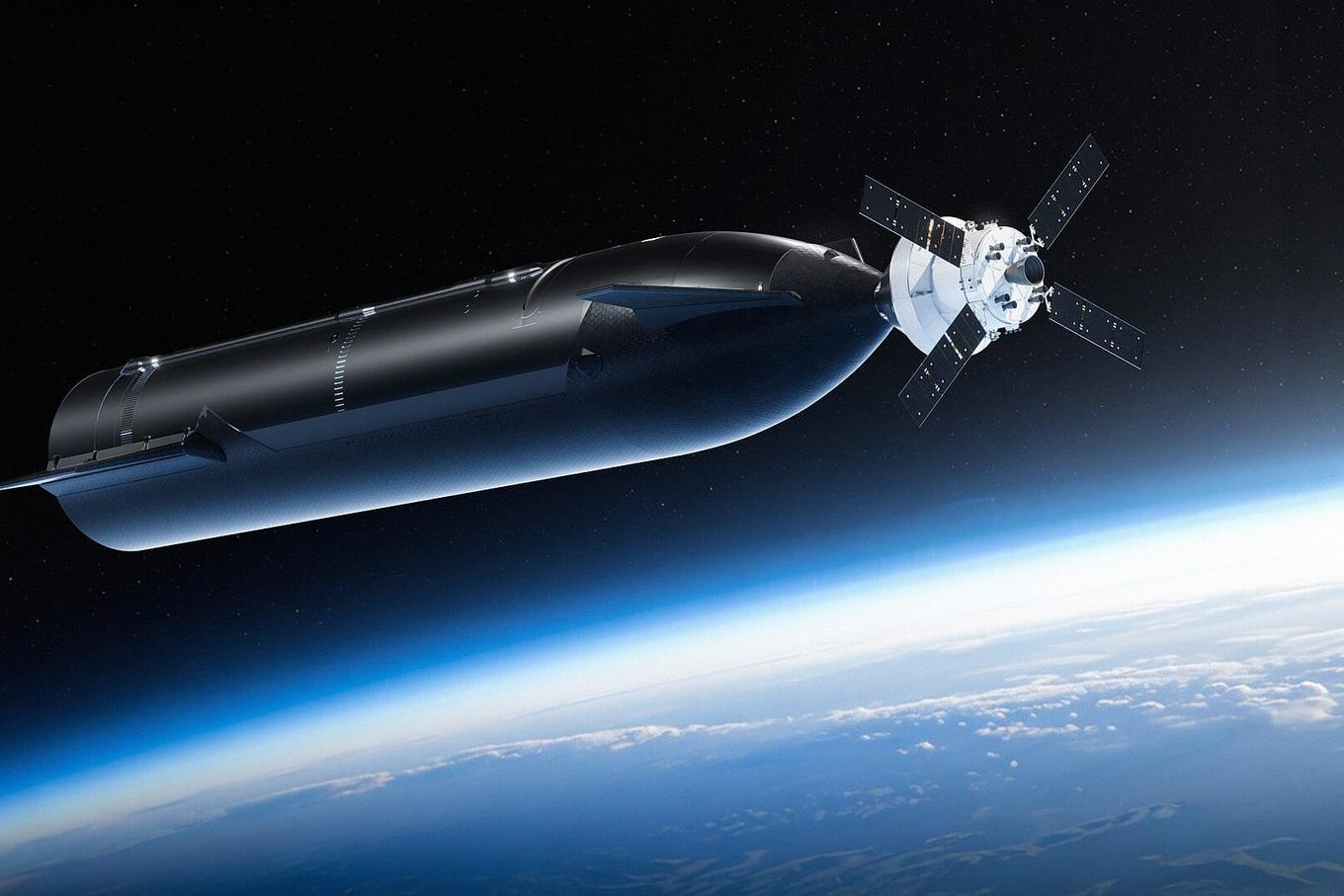
A SpaceX Starship upper stage that splashed down in the Indian Ocean nearly a month ago has finally reached sheltered waters, after a recovery operation that took the company’s teams across thousands of miles of open sea. The vehicle, known as Ship 40, is now anchored off Christmas Island, an Australian external territory closer to Indonesia than to mainland Australia.
A rare intact splashdown
Ship 40 flew as the upper stage of Starship’s 13th integrated test flight, which lifted off from SpaceX’s Starbase facility in South Texas on 24 July. According to Space.com, the launch produced the vehicle’s first successful intact ocean splashdown, a milestone the company had been chasing through years of test flights that mostly ended in explosions.
Along the way, the mission notched several other firsts. Wikipedia’s entry on the flight test notes that the upper stage carried 20 next-generation Starlink satellites, six of which were equipped with advanced cameras to inspect S40 in space, mirroring the Space Shuttle’s rendezvous pitch maneuver. The ship then performed an in-space Raptor relight before executing a targeted splashdown and landing flip maneuver in the Indian Ocean, and remained intact and operational after tipping over, a first.
The Super Heavy booster that launched the spacecraft had a rougher time. Coverage of the flight reported that the booster’s landing burn saw only five of thirteen planned engines fire before it came down hard in the Gulf of Mexico.
Weeks of towing through rough seas
Because the ship stayed afloat rather than sinking or breaking apart, SpaceX attempted something it had never done before: tow an entire Starship upper stage back toward shore. Space.com reports that SpaceX said in an Aug. 7 update that the recovery team faced “challenging conditions and increasingly rough seas” during the operation.
SpaceX confirmed on 18 August that the tow had succeeded. The company said its recovery team had guided Starship to a location off Christmas Island after roughly 24 days at sea, and that engineers were travelling to the site to inspect the vehicle in calmer waters before attempting to bring it back to Starbase.
“At the moment it’s just kind of hanging around off the sheltered side of the island and everyone’s driving along to little vantage points to try and get a view of it.”
That description came from Chris Bray, a Christmas Island-based wildlife photographer, who told the Australian Broadcasting Corporation that the sight of the ships towing the rocket had become the talk of the town on the small island.
Australian officials involved from the start
The recovery has required cooperation from Australian authorities, since Christmas Island falls under Australian jurisdiction despite sitting far closer to Indonesia than to the Australian mainland. According to the ABC, a spokesperson for the Australian Space Agency said the Australian government was coordinating with SpaceX to recover the Starship, and an exclusion zone has been placed around the vessel and its support ships while inspections continue.
Records released under Australian freedom of information laws, reported by Defence Connect, indicate that SpaceX did contact the Space Agency in July to seek permission to land and recover Starship off Australia’s coast, with officials noting that the activity was discussed at a high level with Defence and advised that an approval process could take around six months. The scale of the operation, and its proximity to Australian territory, has drawn attention from local media well beyond the space industry press that normally follows Starship’s test flights.
For SpaceX, the successful tow adds another data point to a programme built on visible, sometimes spectacular failures followed by incremental fixes. Whether Ship 40 yields useful engineering data after its ocean crossing will depend on what the inspection team finds once it reaches the vehicle, and on whether the company judges a return tow to Texas worth the additional weeks at sea.
This article is free to read. It always will be — no paywall, no account, no tracking.