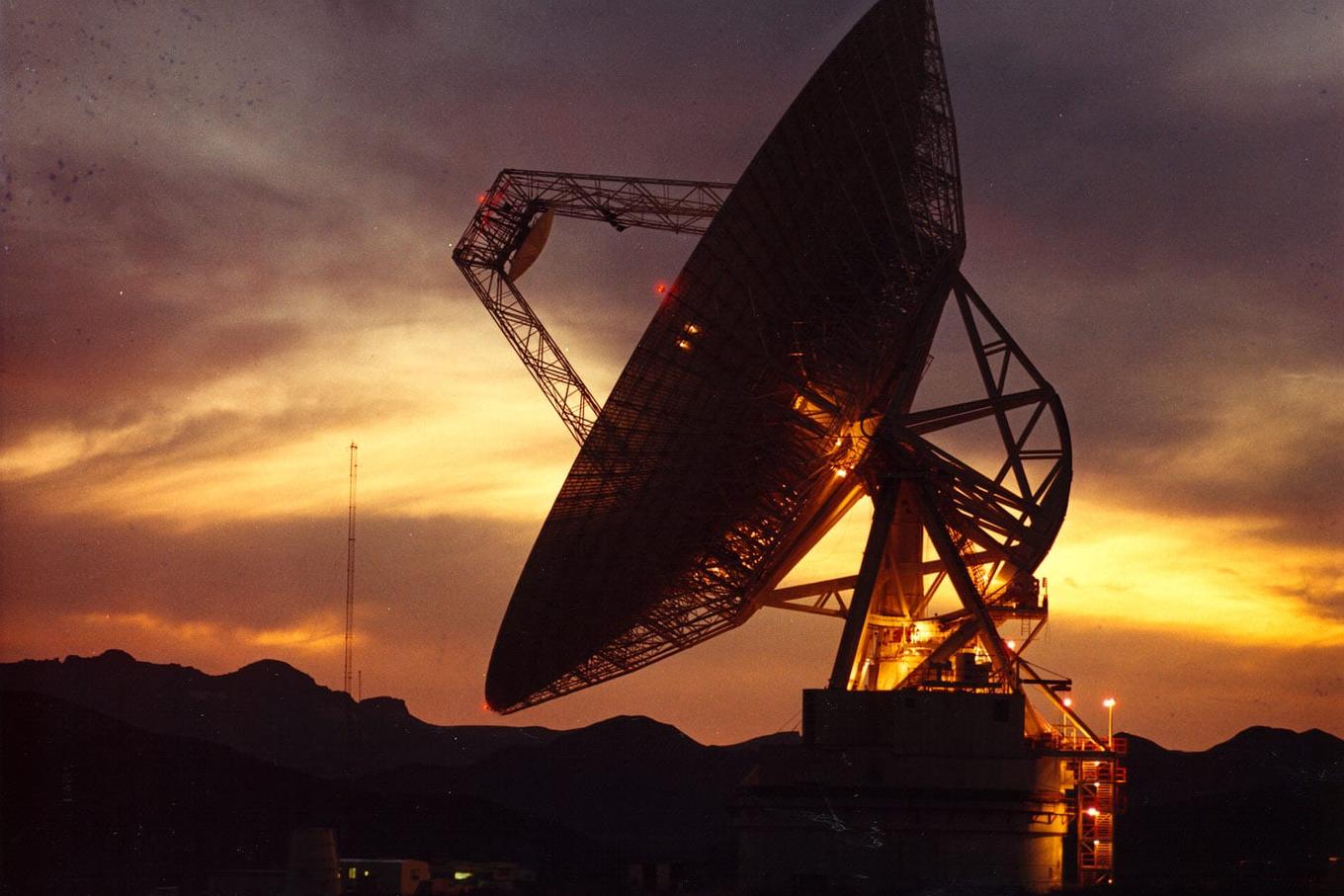
NASA has switched on a new radio antenna in the California desert as it tries to keep its ageing deep-space communications network from being overwhelmed by demand. The 34-metre-wide (114-foot) dish, named Deep Space Station-23 or DSS-23, began working with spacecraft on 3 August 2026 at the Goldstone Deep Space Communications Complex near Barstow, California, according to Space.com and NASA’s Jet Propulsion Laboratory (JPL), which manages the site.
Its first job was tracking the Chandra X-ray Observatory. A formal ribbon-cutting ceremony followed on 25 August, attended by NASA leadership and JPL staff.
Part of a global network, and a European link
The Deep Space Network, established in December 1963, is NASA’s system for communicating with more than 40 spacecraft exploring the solar system and beyond, including both Voyager probes, New Horizons, Perseverance, Psyche and Europa Clipper. It relies on three complexes spaced roughly evenly around the globe, at Goldstone in California, near Madrid in Spain, and at Canberra in Australia, each anchored by a large 70-metre antenna alongside smaller dishes.
DSS-23 is the fifth of six new 34-metre antennas being added under the network’s Aperture Enhancement Project, which began in 2009. The Madrid complex, which serves European missions and is a key node for agencies working alongside NASA, has received comparable upgrades under the same programme. The sixth and final dish, DSS-33, is due to come online at Canberra in 2029, completing the project two decades after it started.
A network under strain
The upgrade has not been cheap or quick. A 2015 estimate by NASA’s Office of Inspector General put the project’s cost at $362.4 million; by fiscal year 2023 that had risen to an expected $706 million, a 68% increase, with the work running nearly five years behind schedule, according to Time News, which cited the inspector general’s findings.
Even with the new capacity, NASA officials say the network is struggling to keep up with demand, particularly as the Artemis programme prepares for crewed missions to the Moon, which require priority access over robotic missions.
We’re trying to add capacity and more antennas, but we can’t keep up with the demand that’s currently out there, so missions should expect to be getting less availability. — Brad Arnold, Deep Space Network manager, NASA Jet Propulsion Laboratory
Arnold said the strain from crewed missions would inevitably ripple outward. “That ultimately will affect our ability to service the rest of the missions,” he said.
DSS-23 is also built to support optical, or laser-based, communications in addition to standard radio frequency, using mirrors and a specialised receiver. NASA officials see this as important groundwork for future human missions to Mars. Suzanne Dodd, director of the Interplanetary Network at JPL, said the technology could transform how much data missions can send home: “Lasers can increase your data rate from Mars by about 10 times what you get from radio.”
Kevin Coggins, deputy associate administrator of NASA’s Space Communications and Navigation programme, called the new dish “a crucial communication upgrade for the agency,” while colleague Badri Younes framed the expansion in simple terms: “The more we explore, the more antennas we need to talk to all our missions.”
This article is free to read. It always will be — no paywall, no account, no tracking.