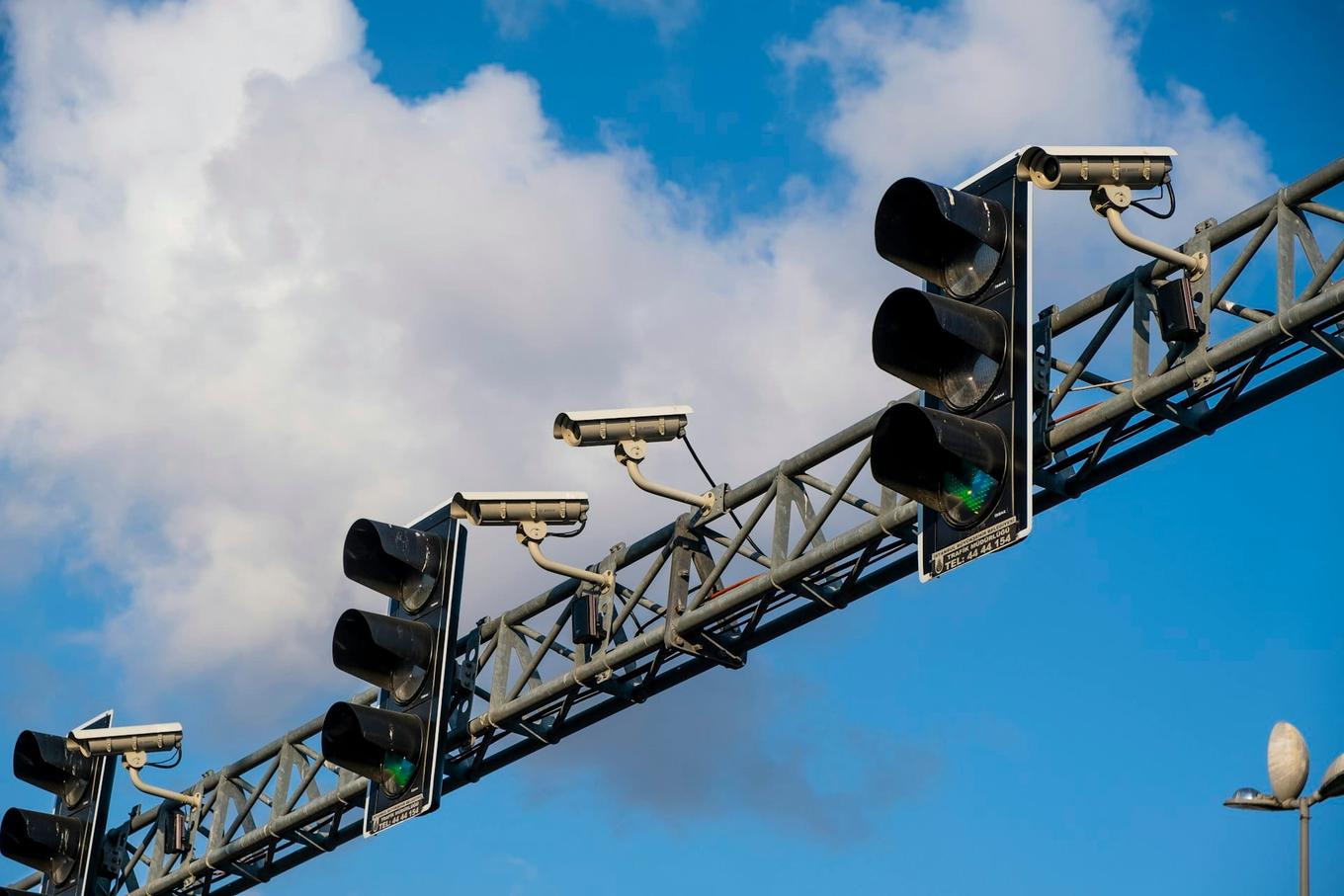
A camera bolted to a motorway bridge that reads number plates is a familiar sight across Europe and the United States. A new product from the Italian defence and technology conglomerate Leonardo aims to make those same cameras do far more: identify the phones, smartwatches and headphones travelling inside the car as well.
The system, called SignalTrace, is built by Leonardo US Cyber and Security Solutions, the American arm of Rome-based Leonardo S.p.A. It clips onto existing automatic licence plate reader (ALPR) hardware, the roadside cameras police already use to log passing vehicles, and adds sensors that pick up Bluetooth, Wi-Fi and RFID signals from nearby devices.
How the system works
The technology was first reported by 404 Media, whose journalist Joseph Cox obtained a Leonardo product sheet describing the capability, with Ars Technica among the outlets that followed up on the story. According to reporting drawn from that document, the system is designed to correlate device-captured identifiers, such as those from phones, Bluetooth wearables and vehicle electronics, with plate recognition data to build a combined profile of a vehicle and the people travelling with it.
In practice, that means a phone’s Bluetooth signature could become as identifying as a number plate. If the same cluster of nearby devices repeatedly appears alongside a particular car, the system is built to link that pattern to the vehicle’s timestamped location, according to product materials cited by multiple outlets covering the story.
“When multiple devices consistently move together with a vehicle, SignalTrace’s algorithms link them to that vehicle’s licence plate and time-stamped location data.”
Leonardo has said the system captures only signals that devices broadcast openly, such as Bluetooth beacons used to pair headphones or smartwatches, and does not decrypt or read message content. The company frames this as no different, in principle, from photographing a plate in a public place. Coverage of the story has noted that privacy advocates have been relatively slow to respond publicly, likely because the product is still new and not yet confirmed to be in wide use.
Why it matters beyond America
The story so far centres on American police departments, which have used ALPR networks for years without the kind of national data protection framework that governs Europe. The American Civil Liberties Union has long argued that plate readers alone already create detailed records of people’s movements. Adding device fingerprints, campaigners say, risks exposing far more sensitive information, including where someone lives, works or receives medical treatment, without a warrant.
For European readers, the twist is that Leonardo is not a Silicon Valley start-up but one of the continent’s largest defence and aerospace groups, part-owned by the Italian state. Its ELSAG plate-reading systems already have a global footprint, with earlier versions used by thousands of customers across more than two dozen countries. That reach means the underlying hardware, if not this exact configuration, is not unfamiliar to European police forces and transport authorities.
The European Union has moved in the opposite regulatory direction in recent years. The GDPR treats location and device data as personal data requiring a lawful basis for collection, and the EU’s AI Act restricts real-time biometric identification and certain forms of mass surveillance in public spaces by law enforcement, subject to narrow exceptions. Any attempt to deploy a comparable Bluetooth-and-plate-fusion system within the EU would likely face scrutiny from national data protection authorities long before it reached the street.
Still, the episode is a reminder that surveillance capabilities developed for one market rarely stay contained there. As roadside cameras across the world grow more capable, the gap between what a device can technically do and what a country’s laws permit it to do is likely to remain one of the defining privacy questions of the next decade.
This article is free to read. It always will be — no paywall, no account, no tracking.