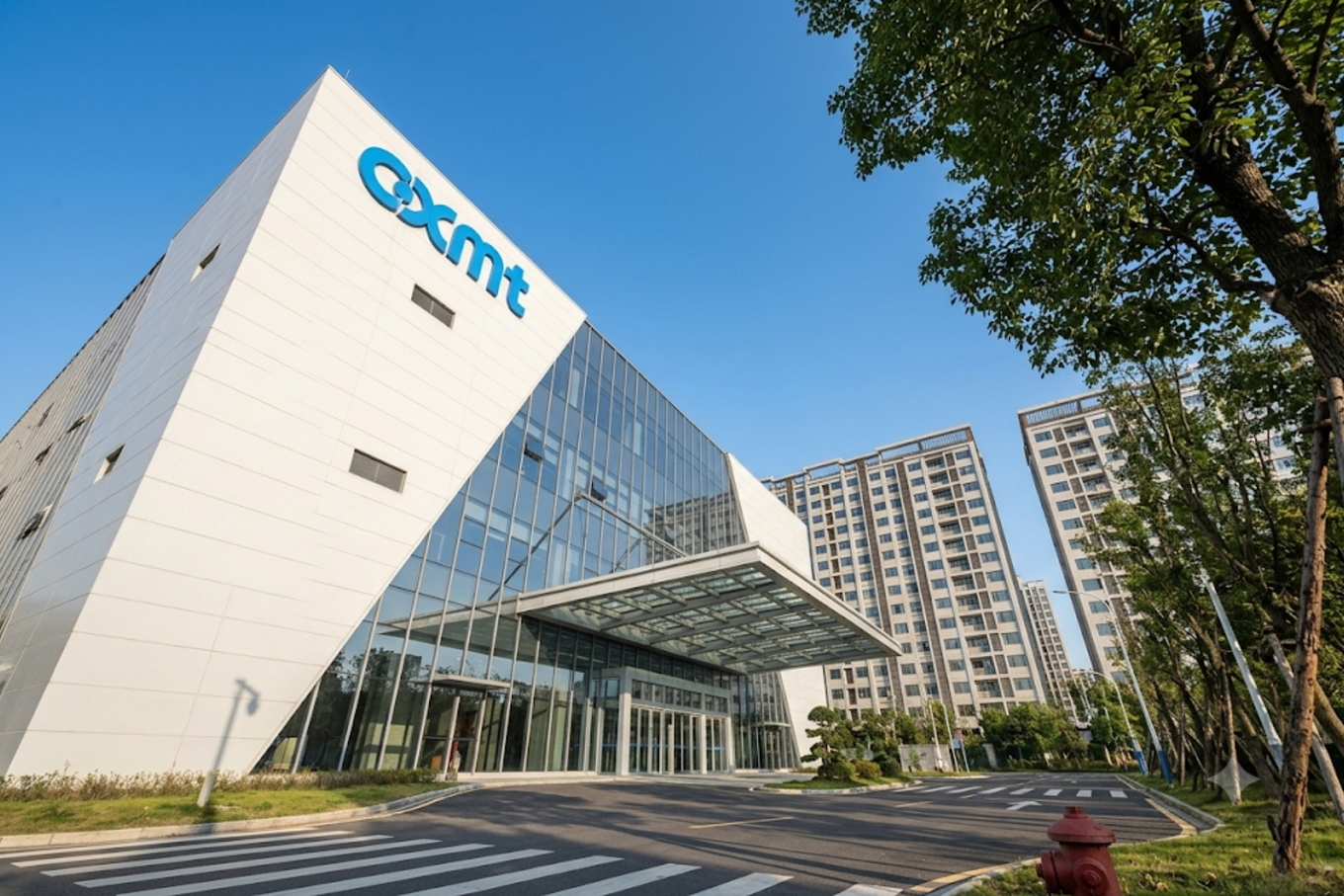
Chinese memory chipmaker CXMT Corp began trading on Shanghai’s STAR Market on Monday after completing Asia’s largest initial public offering of 2026. The stock opened at 49.50 yuan, more than 470% above its IPO price, and was trading at around 52 yuan by mid-session, giving the company a market capitalisation of roughly 3.5 trillion yuan, or about $487 billion. That surpassed state-owned banking giant Industrial and Commercial Bank of China to make CXMT the most valuable company listed on a mainland Chinese exchange.
CXMT, formally known as ChangXin Memory Technologies, raised 57.92 billion yuan ($8.6 billion) by pricing shares at 8.66 yuan each, according to its listing documents. The IPO beats SMIC’s $7.5 billion Shanghai share sale in 2020 to become the largest ever by a mainland Chinese semiconductor company. Total proceeds could rise to 66.61 billion yuan if an overallotment option is fully exercised.
What CXMT makes, and why it matters
CXMT produces DRAM chips, short for dynamic random-access memory, the type of semiconductor that temporarily stores data in electronic devices ranging from smartphones and personal computers to AI servers. The Hefei-based company, founded in 2016, holds roughly 7.7% of the global DRAM market and ranks fourth worldwide, behind South Korea’s Samsung Electronics and SK Hynix and the US firm Micron Technology.
Demand for DRAM has climbed sharply as the global AI infrastructure buildout accelerates. Data centres running large language models require vast quantities of high-speed memory, and suppliers have struggled to keep pace. CXMT said in its prospectus that AI demand helped drive the latest DRAM upswing, though it cautioned that the market could weaken if AI investment slowed or rivals added too much capacity.
“CXMT plays a critical role in China’s AI push, particularly in the face of U.S. export controls.” — Kyle Chan, fellow at the Brookings Institution
Geopolitics and the technology gap
The listing arrives against a backdrop of intensifying US export restrictions on advanced chip technology. Washington has barred Chinese companies from importing high-bandwidth memory, or HBM, a specialised form of DRAM used in cutting-edge AI accelerators. That has made domestic memory production a strategic priority for Beijing, and CXMT’s capital raise is widely seen as a direct response to that pressure. Reuters and CNBC both reported that the IPO proceeds are earmarked primarily for expanding memory wafer production and research and development.
Morningstar analyst Jing Jie Yu, writing ahead of the debut, noted that CXMT was well-placed to benefit from rising domestic AI demand, while flagging that its technology still trails global memory leaders. The research firm added that Chinese internet companies driving AI development would likely adopt CXMT’s chips as Beijing pushed for semiconductor self-sufficiency, even if the company’s products cannot yet compete at the highest performance tiers.
“Its technology gap with global leaders could limit its share of the market for memory chips used in AI systems.” — Jing Jie Yu, analyst, Morningstar
Market dynamics and what comes next
Investor appetite for the offering was extraordinary. Retail demand was oversubscribed by more than 200 times, while institutional demand exceeded the available allocation by more than 500 times, according to multiple reports. At the same time, only 6.73% of CXMT’s enlarged share capital will be freely tradable at listing, as the vast majority of shares are subject to lock-up restrictions. That thin free float amplified Monday’s opening surge and is likely to sustain volatile trading in the days ahead.
The debut also drew attention to risks beyond CXMT itself. Analysts noted that a company of this size raising fresh capital tends to pull cash out of the broader Chinese equity market as retail investors liquidate existing positions to fund IPO allocations, a well-documented dynamic in China’s lottery-based IPO system. Meanwhile, memory-chip rivals Micron and SK Hynix sold off in recent sessions on concerns that CXMT’s expanded capacity could eventually add to a global supply glut. The company’s first-half results, which it expects to show revenue rising more than sevenfold to between 110 billion and 120 billion yuan, will be the next test of whether its growth story can hold.
This article is free to read. It always will be — no paywall, no account, no tracking.