Beneath the rolling hills and vineyards of southern Tuscany, scientists have found an enormous reservoir of magma that gave no outward warning of its existence. A team led by the University of Geneva, working with Italy’s National Research Council (CNR-IGG) and the National Institute of Geophysics and Volcanology (INGV), estimated the reservoir’s volume at roughly 6,000 cubic kilometres, buried between 8 and 15 kilometres below the surface.
According to ScienceDaily, which reported on the findings, the discovery reveals how enormous volcanic systems can remain hidden and could transform the search for geothermal energy and critical minerals. The study was published in the journal Communications Earth & Environment.
A supervolcano-sized body with no visible clues
Volcanologists usually spot large magma systems through obvious surface evidence: old eruption deposits, craters, ground that rises or sinks, or gas seeping from the earth. Famous examples include Yellowstone in the United States, Lake Toba in Indonesia and Lake Taupo in New Zealand, all of which betray themselves through visible geology.
Tuscany offered almost none of these signals, despite its long history of geothermal activity and hot springs. Lead researcher Matteo Lupi said the scale of the find caught the team off guard. “We knew that this region, which extends from north to south across Tuscany, is geothermally active, but we did not realize it contained such a large volume of magma, comparable to that of supervolcanic systems such as” Yellowstone, he told researchers, according to Daily Galaxy.
“These results are important both for fundamental research and for practical applications, such as locating geothermal reservoirs or deposits rich in lithium and rare earth elements, which are used, for example, in electric vehicle batteries.” — Matteo Lupi, University of Geneva
Listening to the Earth instead of drilling into it
To find the hidden body, researchers used a technique called ambient noise tomography. Rather than relying on earthquakes or explosive test blasts, the method reads faint, constant vibrations that travel naturally through the ground, picked up by a dense network of seismic sensors. Because magma and partially molten rock slow down seismic waves, mapping those delays across depth lets scientists reconstruct the shape and size of what lies beneath, without drilling.
The team found the hot material sitting beneath the Larderello and Monte Amiata geothermal areas, spreading laterally through the mid-crust rather than forming a single narrow channel of rock. That broad, dispersed structure likely explains why the region has shown so little surface disruption despite the volume of molten material below it, per Earth.com’s reporting on the study.
Why it matters for Europe’s energy transition
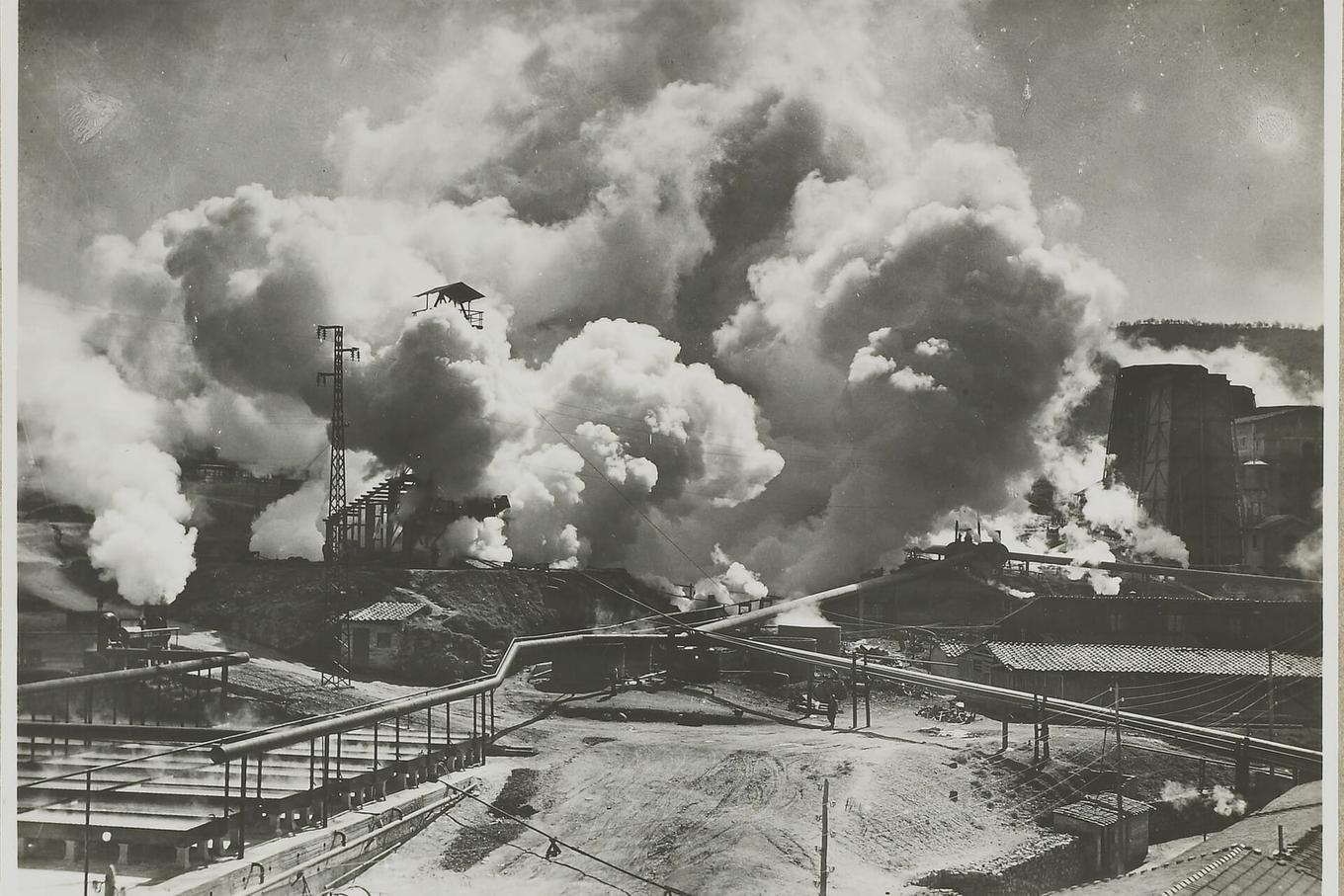
Tuscany is no stranger to geothermal power. The Larderello plant in the region, commissioned in the early twentieth century, is widely credited as the world’s first geothermal power station, and the area still hosts one of Europe’s most productive geothermal fields today.
The newly mapped magma body helps explain what powers that system’s unusually high heat output, known to geologists as a high-enthalpy geothermal field. Italy’s National Institute of Geophysics and Volcanology said the research opens new perspectives for the energy transition, pointing to possibilities for using geothermal heat and locating deposits of critical metals such as lithium and rare earth elements, both vital to batteries and other clean energy technology in demand across the European Union.
Researchers were careful to stress that the find does not signal any imminent volcanic threat. Magma at this depth typically exists as a slow-moving mixture of melt and crystals, sometimes called a magma mush, that can persist for long geological periods without erupting. The team’s broader point is methodological: ambient noise tomography offers a faster, cheaper way to survey the subsurface across Europe, whether for monitoring dormant volcanic hazards or scouting the raw materials the continent’s green transition will require.
This article is free to read. It always will be — no paywall, no account, no tracking.