Two powerful earthquakes struck Venezuela’s northern coast in rapid succession on Wednesday evening, killing at least 32 people and injuring around 700 in what seismologists are calling the country’s most destructive seismic event in more than a century. The quakes collapsed buildings across the capital, Caracas, sent residents fleeing into the streets, and triggered a national state of emergency.
The first earthquake, measuring magnitude 7.2, struck at around 6:04 p.m. local time (22:04 GMT), with its epicentre near the town of Morón on Venezuela’s Caribbean coast, roughly 168 kilometres west of Caracas. Just 39 seconds later, a second and larger quake — magnitude 7.5 — hit at a depth of only 10 kilometres near the town of Yumare in Yaracuy state. The shallow depth of the second quake amplified the destruction at the surface.
Caracas hit hard as rescue teams work through the night
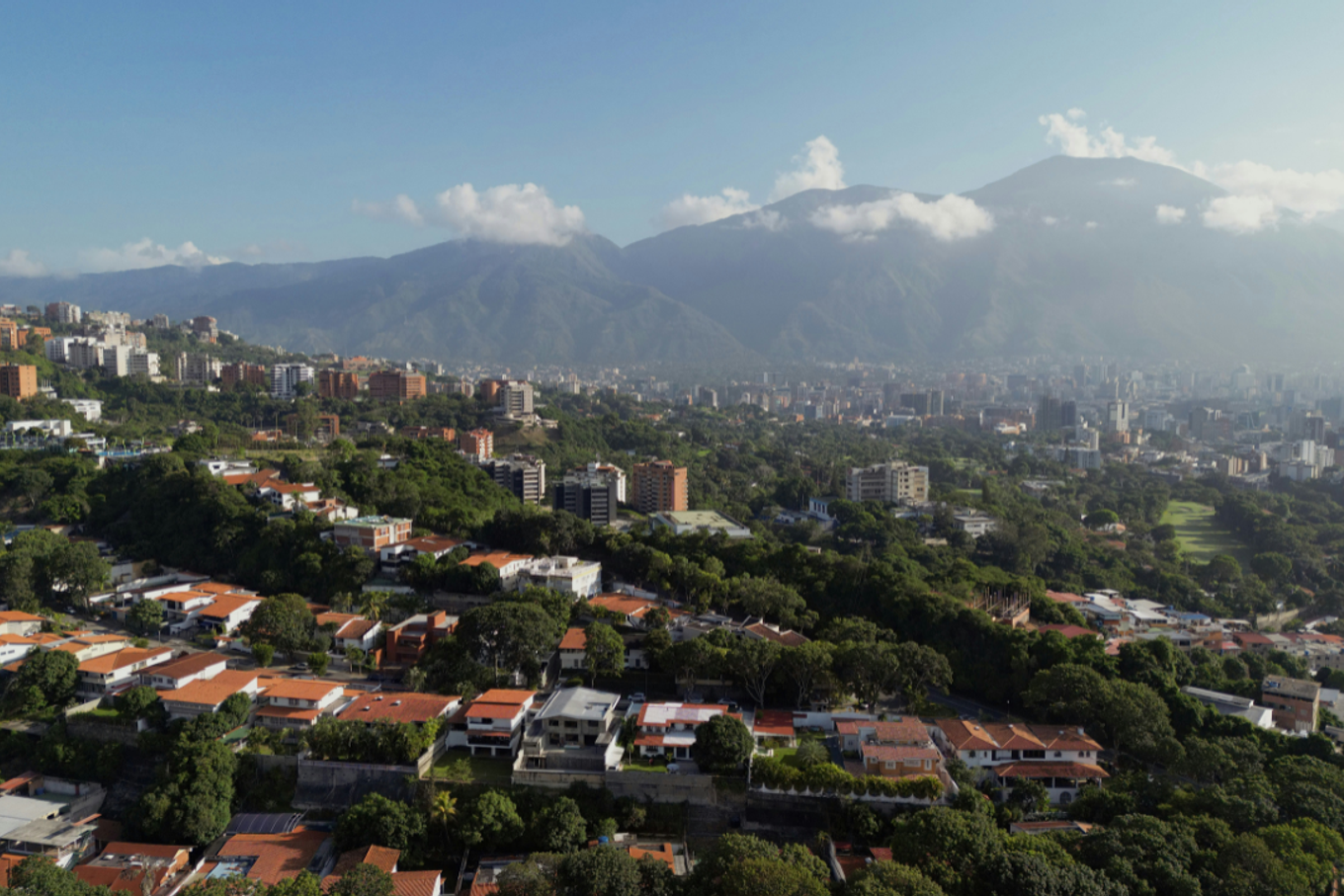
Buildings collapsed or were severely damaged across several Caracas neighbourhoods, with the Altamira and El Paraíso districts among the worst affected. In the coastal state of La Guaira — declared a disaster zone by authorities — a large waterfront hotel in Macuto was reduced to rubble, while multiple high-rises in the town of Catia La Mar were badly damaged. Tremors were felt as far away as Colombia and Brazil’s Amazon region, more than 1,700 kilometres from the capital.
“Search and rescue teams working through the night in Caracas can still hear people trapped alive under the rubble,” said Gustavo Duque, mayor of the Chacao municipality, adding that 23 people had been rescued so far.
Acting President Delcy Rodríguez — who assumed the role after former President Nicolás Maduro’s capture — declared a state of emergency across the entire national territory, mobilised security forces and health workers, and announced a special search-and-rescue task force. Simón Bolívar International Airport in Caracas was closed due to structural damage. Schools have been suspended nationwide for a week and rail services temporarily halted. Authorities also cut gas supplies to certain buildings as a precautionary measure while engineers assess structural integrity.
Why the death toll could climb much higher
The United States Geological Survey (USGS) warned that “high casualties and extensive damage are probable” across a wide area. Seismologists highlighted a particularly alarming risk factor: a large proportion of residential buildings in the affected region are constructed from unreinforced brick masonry and adobe — materials highly vulnerable to strong seismic shaking. Venezuela’s years-long economic crisis, which has left infrastructure chronically underfunded and building maintenance neglected, is expected to compound the disaster’s human toll.
“This is one of the really great, very difficult, very damaging earthquakes, because you combined a very large event with residences of a lot of people,” said seismologist Lucy Jones of the California Institute of Technology.
International aid mobilises, but questions remain
Offers of assistance poured in from across the Americas and beyond. The United States said it was immediately deploying search-and-rescue teams, medical resources, and humanitarian aid; Venezuela expects the first US teams to arrive on Thursday. Colombia, Mexico, Turkey, Qatar, China, Brazil, the Dominican Republic, El Salvador, and several Caribbean nations have also pledged support or dispatched rescue teams. Ecuador’s president ordered the immediate delivery of humanitarian aid, while Chile expressed readiness to provide rescue assistance.
The disaster strikes a country already in acute crisis. Venezuela’s roughly 28 million people have endured years of hyperinflation, collapsing public services, and widespread poverty. The earthquakes — among the strongest to strike the country since 1900 — risk deepening an already severe humanitarian emergency, with early reports pointing to damaged hospitals and disrupted critical infrastructure. International aid organisations, including World Vision, have activated emergency response teams and are assessing needs on the ground. The full scale of the destruction will take days to establish.
This article is free to read. It always will be — no paywall, no account, no tracking.