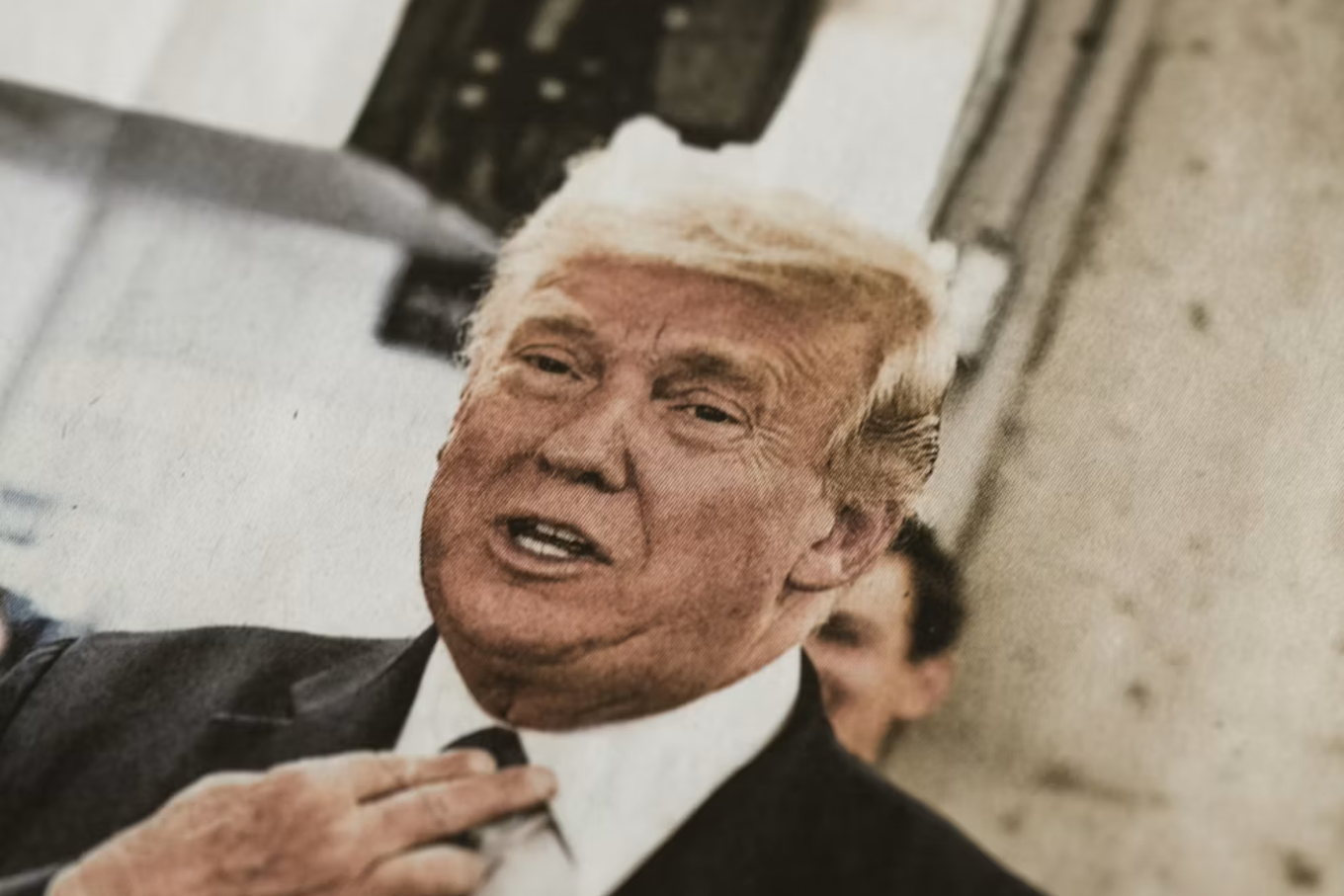
US President Donald Trump reported more than $1.4 billion in income from his family’s cryptocurrency ventures in 2025, according to his annual financial disclosure filed with the US Office of Government Ethics on Tuesday. The 927-page document is the first to lay out the full scale of a sitting American president’s personal crypto business, and it shows that digital assets have now overtaken real estate as Trump’s dominant income source.
Almost $800 million of that total came from World Liberty Financial (WLF), a decentralised finance firm co-founded by Trump and his sons Eric and Donald Jr. That sum included more than $520 million from the sale of WLF’s crypto tokens and more than $250 million from the sale of interests in the business itself. A year earlier, WLF token sales had yielded just $57 million, meaning that income line grew roughly nine-fold in a single year.
Meme coins and stablecoins: the anatomy of the windfall
Trump reported a further $635 million from the sale of his $TRUMP meme coins, a class of speculative digital token tied to his personal brand. A meme coin carries no underlying asset or utility; its value is driven almost entirely by sentiment and celebrity association. The $TRUMP coin was launched days before his inauguration in January 2025 and briefly traded above $74 before collapsing. According to blockchain analytics firm Chainalysis, roughly 764,000 wallets that bought the coin are currently sitting on losses, while just 58 addresses banked more than $10 million each.
“President Trump proudly made the United States the crypto capital of the world through executive actions.” — White House spokesperson Anna Kelly
The disclosure lands against a backdrop of sweeping deregulation. In July 2025, Trump signed the GENIUS Act, the first comprehensive US federal framework for stablecoins, the class of cryptocurrency pegged to the dollar. WLF’s own product, USD1, is a stablecoin designed to comply with that law. Under his administration, the Justice Department and the Securities and Exchange Commission also rolled back Biden-era enforcement efforts against the crypto industry, and banking regulators eased restrictions on banks’ crypto activities.
Conflict of interest concerns mount in Washington and beyond
Congressional Democrats have argued the arrangement is untenable. Senator Elizabeth Warren and others raised formal concerns with the Office of Government Ethics earlier this year over a deal involving WLF and MGX, a state-backed Emirati investment firm, warning it could represent a foreign-influence risk and potentially violate the Constitution’s Emoluments Clause, which bars presidents from receiving payments from foreign states. Senator Richard Blumenthal separately opened a Senate subcommittee investigation into WLF’s ownership structure and foreign investor ties.
“There is clearly a perception that in order to get favorable policies from the administration, a company needs to provide a financial benefit to the president.” — ethics expert at the Campaign Legal Center
The White House rejected all such characterisations. Spokesperson Anna Kelly stated that neither the president nor his family had ever engaged in conflicts of interest and that his business interests are managed through a revocable family trust overseen by Donald Trump Jr. Crucially, under US law, the president and vice president are required to disclose their finances but are not subject to the ethics statutes that prohibit conflicts of interest for most other federal employees. Trump himself has cited that legal distinction. His traditional businesses, including the Doral Golf Club in Florida ($122 million) and Mar-a-Lago resort ($77 million), continued to generate substantial income, though for most of his commercial real estate holdings, earnings were flat or lower than a decade ago.
Reuters has estimated that the Trump family has made at least $2.3 billion from crypto-related ventures since Trump returned to the White House in January 2025. Forbes calculates that his net worth has nearly tripled over the same period, from roughly $2.3 billion to $6.5 billion, with digital assets accounting for the bulk of that gain. For international observers accustomed to stricter separation between executive office and commercial interests, the disclosures represent an unprecedented test of how far American ethics rules stretch.
This article is free to read. It always will be — no paywall, no account, no tracking.