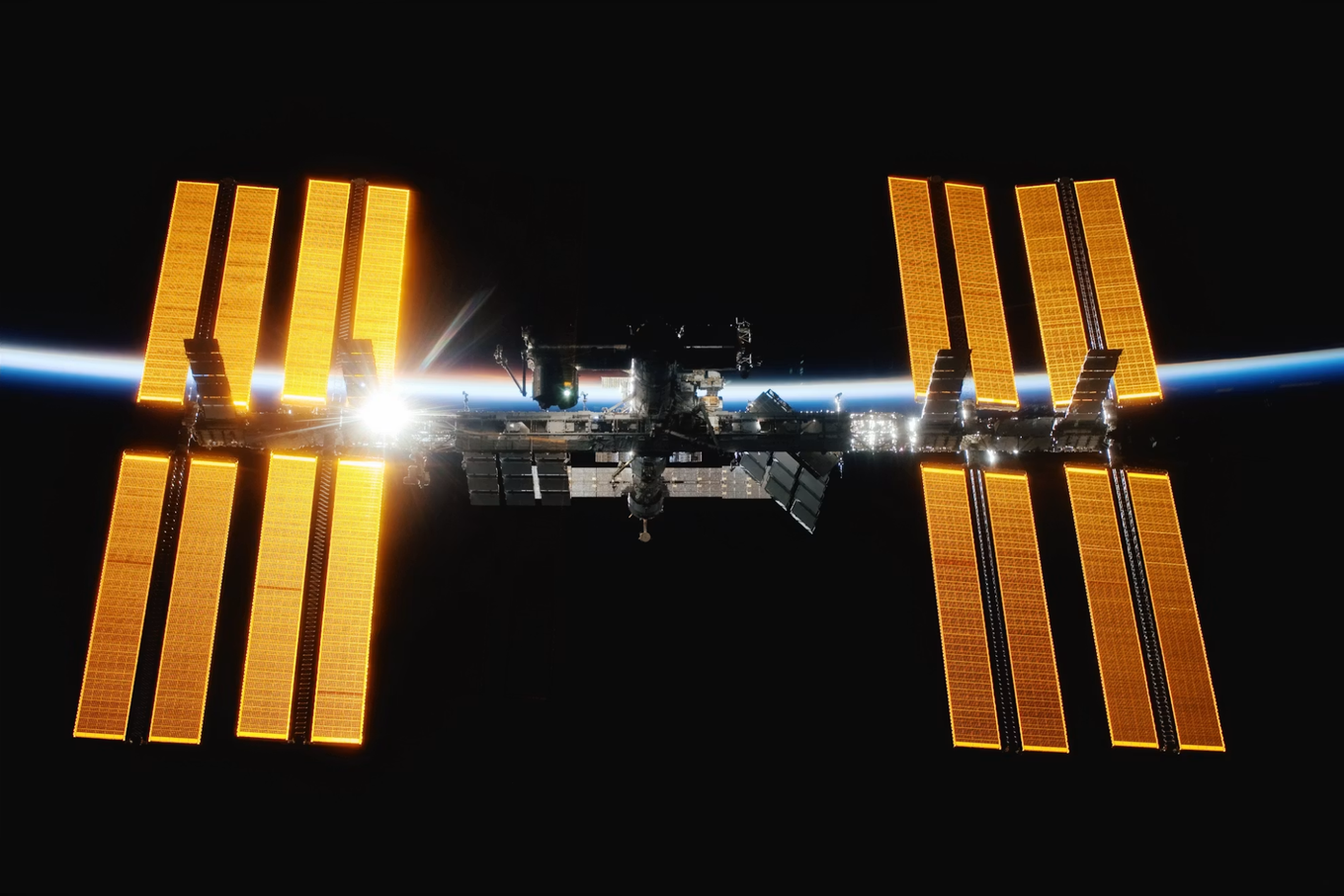
A robotic spacecraft named LINK lifted off over the Pacific Ocean on 3 July, beginning an audacious mission to save NASA’s Neil Gehrels Swift Observatory from burning up in Earth’s atmosphere. Reuters reports that the half-ton vehicle, built by Arizona-based startup Katalyst Space Technologies, was released from the belly of a Lockheed TriStar aircraft at 40,000 feet (12,200 metres) above the Marshall Islands, before a Northrop Grumman Pegasus XL rocket carried it into low-Earth orbit.
Swift, a gamma-ray and X-ray telescope that has been scanning the cosmos since 2004, is sinking. The sun reached solar maximum in 2024, releasing intense flares and coronal mass ejections that caused Earth’s upper atmosphere to expand, dramatically increasing the drag on the observatory. Without propulsion of its own, Swift faced a 90% chance of falling completely out of orbit before the year was out, according to Katalyst.
A refrigerator-sized saviour
LINK is roughly the size of a refrigerator. It carries three ion thrusters, three robotic arms fitted with hand-like grippers, and five sensor systems to help it navigate autonomously in the demanding environment of low-Earth orbit. Because Swift was designed in the early 2000s with no provision for on-orbit servicing, LINK must latch on to the observatory without damaging its aged thermal insulation — a layer of material no one has seen up close in two decades.
By late July, if all goes to plan, LINK will close to within about 9.6 kilometres of the observatory and begin final proximity operations. Once it has secured its grip, it will spend a further 60 days firing its thrusters to tow Swift up to a target altitude of roughly 600 kilometres — double the height at which the telescope will have sunk by the time LINK arrives, according to Katalyst.
“A normal mission like this might have taken five years to put together, and we did it in under a year.” — Ghonhee Lee, CEO, Katalyst Space Technologies
More than a rescue: the geopolitics of orbital grappling
The mission carries significance well beyond the preservation of one telescope. It marks the first time a commercially built robotic spacecraft has attempted to capture an uncrewed US government satellite that was never designed to be serviced in space, according to NASA. The technology at its core — the ability to rendezvous with, grab, and manoeuvre another object in orbit — sits at the heart of an intensifying US-China rivalry in space. China demonstrated two satellites orbiting in close proximity last year, and in 2022 a Chinese satellite grappled onto another and moved it to a different orbit, an act that alarmed US officials who saw obvious military applications.
Katalyst CEO Ghonhee Lee told Reuters that US Space Command views the capability as central to American strategic interests. The Pentagon has been seeking similar skills for its own satellites, though most of its efforts in this area remain classified. The $30 million cost of the LINK mission, set against the $500 million value of the observatory it aims to save, has been highlighted by the company as evidence of the economic case for satellite servicing as a routine commercial service.
“The U.S. Space Command cares a lot about this, because ultimately this is a core element of space superiority.” — Ghonhee Lee, Katalyst CEO, speaking to Reuters
What comes next
If LINK completes its primary mission with propellant to spare, Katalyst plans to use Swift itself as a test subject for additional close-proximity manoeuvres — effectively rehearsing techniques that future servicing missions will depend on. CBS News reports that NASA’s Hubble Space Telescope, also losing altitude due to solar-driven atmospheric expansion, could be a candidate for a Katalyst boost mission as early as 2028. Katalyst’s next-generation servicing vehicle, still in development, is designed to reach satellites as high as 22,300 miles (35,900 km) above Earth. The Swift mission also marked the final flight of the Pegasus XL, an air-launched rocket that first flew in 1990 and became known for reaching orbital inclinations difficult to access from conventional ground-based launch sites.
This article is free to read. It always will be — no paywall, no account, no tracking.