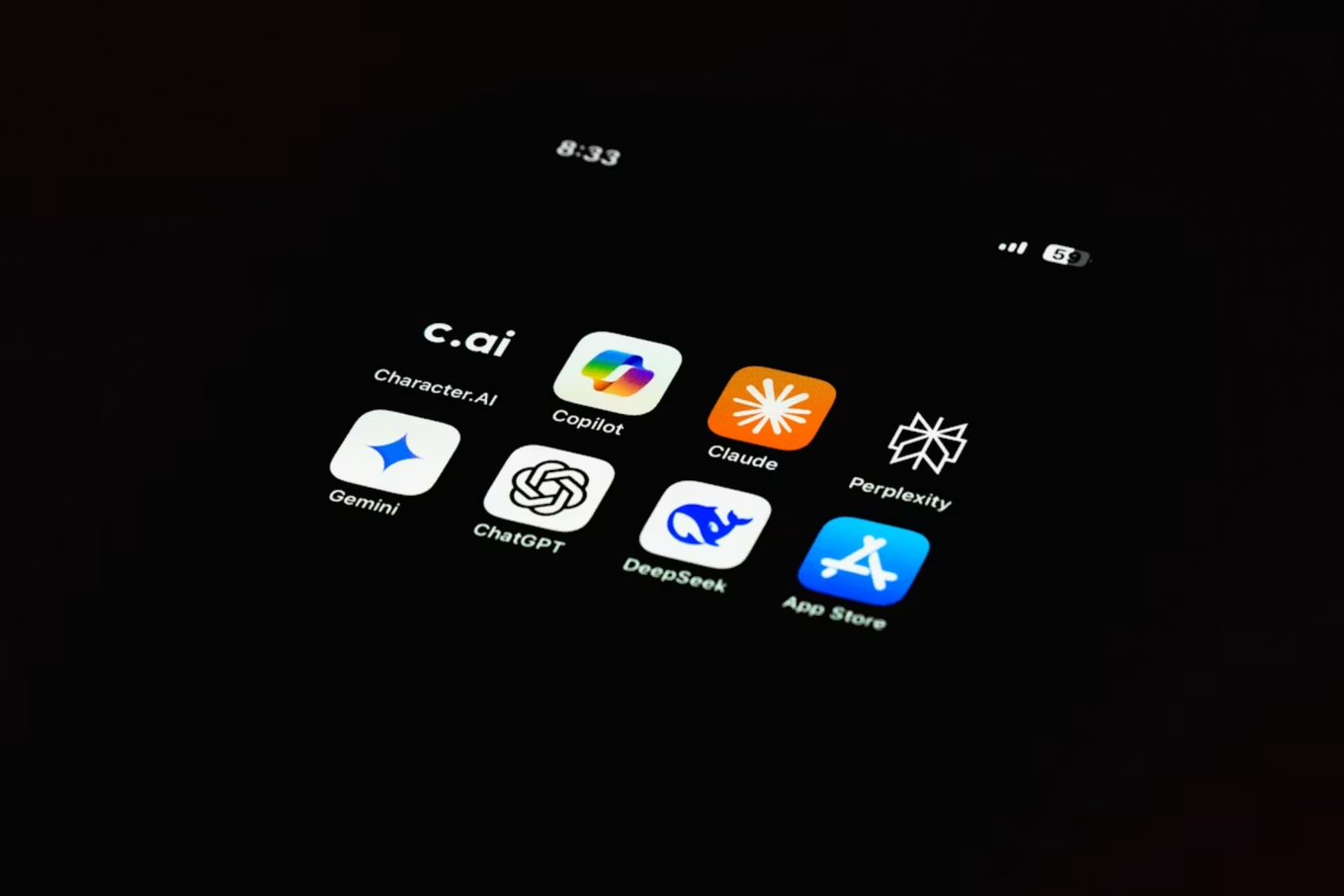
Since DeepSeek rattled financial markets in early 2025 with a powerful model built on a tight budget, businesses and developers worldwide have faced a recurring trade-off: cheaper Chinese AI with some capability compromises, or the full performance of US giants such as Anthropic and OpenAI at a steep price. A new model is making that trade-off considerably harder to justify.
GLM-5.2, released last month by Beijing-based startup Z.ai, is generating the kind of attention in global developer circles that its predecessor DeepSeek once commanded. According to Reuters, the model’s coding and agentic capabilities — its ability to execute complex, multi-step tasks with minimal human prompting — are drawing serious comparisons to the leading US offerings.
Benchmarks that are hard to ignore
The numbers behind the buzz are striking. CNBC reports that GLM-5.2 now sits within a single percentage point of Anthropic’s Opus 4.8 on a closely watched agentic benchmark, at roughly a fifth of the cost. Developer traffic on OpenRouter, a platform that routes API calls across AI providers, is climbing faster than it did after DeepSeek’s V4 launch in April, suggesting genuine adoption rather than speculative interest.
“GLM 5.2, you’re seeing the first model where it’s really competitive with some of these closed-source frontier models.” — Gabe Pereyra, co-founder of AI legal startup Harvey, speaking to CNBC
Jefferies strategist Christopher Wood, citing industry sources, wrote in a client report that GLM-5.2 “is almost equal to Anthropic as a competitor for the corporate market and is just one quarter of the cost in terms of cost per token.” Former Trump administration AI adviser David Sacks described the model on the All-In podcast as “just a tick below Opus 4.8 and right up there with GPT 5.5,” warning that the US “cannot afford to do things that slow our companies down.”
Washington’s own restrictions amplify the pressure
The timing has proved significant. In mid-June, the Trump administration ordered Anthropic to restrict access to its most capable models, citing national security. OpenAI separately moved to limit its latest GPT-5.6 to trusted partners. Although the White House subsequently allowed Anthropic to restore limited access to its Mythos 5 model for around 100 vetted organisations focused on critical infrastructure, its publicly available Fable 5 model remains offline, according to TheStreet. For international enterprises that had built workflows around these tools, the episode exposed a fragility that a freely downloadable model cannot share.
“Many smart people and AI insiders are saying GLM-5.2 is the first Chinese AI model to match and often beat the American big lab public AI models with no compromises” — venture capitalist Marc Andreessen, posting on X
An open-weight model nobody can revoke
GLM-5.2’s open-weight design — meaning the underlying model parameters are freely available to download, adapt, and run on an organisation’s own servers — is central to its appeal. For European and other international companies operating under strict data-residency requirements, or simply wary of geopolitical supply shocks, the ability to run AI infrastructure without dependence on a US or Chinese cloud provider is commercially valuable. A RAND Corporation analysis cited in industry reporting frames such open Chinese model releases as a form of technology soft power: by making competitive models freely available, Chinese labs build developer dependency and influence in markets where US models are restricted or unaffordable.
Caution remains warranted, however. Experts note that large companies in regulated industries, including finance, healthcare, and defence, are likely to remain reluctant to use Chinese-origin models due to concerns about data security, potential censorship of outputs, and longer-term geopolitical exposure. Many businesses that do adopt open-weight Chinese models choose to run them via US-based cloud intermediaries rather than routing data directly to Chinese infrastructure. Whether GLM-5.2 sustains its momentum or fades as a passing benchmark result — as some dismissed DeepSeek before it — will depend on whether enterprises commit to it in production environments, not just in developer experiments.
This article is free to read. It always will be — no paywall, no account, no tracking.