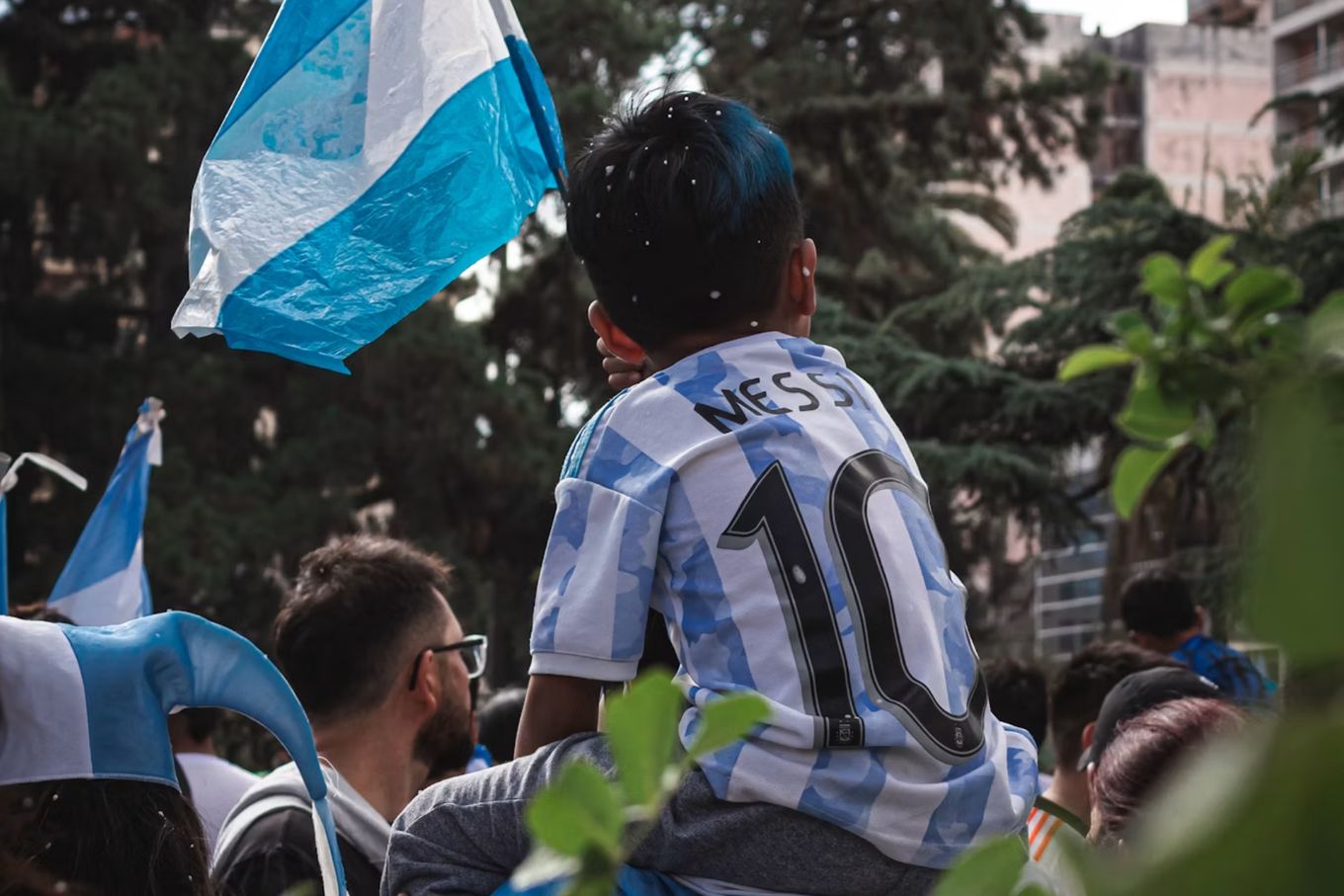
Lionel Messi has done many things for the first time. On Saturday night in Arlington, Texas, he did something no footballer has ever done at all. Coming off the bench as a second-half substitute against Jordan, the 39-year-old scored his sixth goal of the 2026 World Cup to become the first player in history to score in seven consecutive World Cup matches.
Argentina won the game 3-1, finishing the group stage with a perfect record of nine points from three matches. The defending champions were already assured of top spot in Group J before kick-off, which is why head coach Lionel Scaloni made nine changes to his starting line-up. The crowd of 70,649 at AT&T Stadium, home of the NFL’s Dallas Cowboys, was not especially interested in the team sheet. They were waiting for Messi.
A free-kick that split the net and broke the record
Fans began chanting Messi’s name from the start of the second half. They cheered when he went through his warm-up. They roared when he stepped onto the field in the 60th minute, replacing Lautaro Martinez. Twenty minutes later, he was taken down just outside the penalty area. What followed was almost inevitable.
Messi struck the free-kick low, barely above the grass, splitting two Jordan defenders and finding the left corner of the net. It was his 72nd career free-kick goal and his 12th for Argentina, taking his all-time World Cup tally to 19, a men’s record he set earlier in this tournament when he surpassed Germany’s Miroslav Klose.
“I am very happy for him, for the moment he is having. Seeing him every day excites and infects a lot.” — Giovani Lo Celso, Argentina midfielder
A record rooted in two World Cups
Messi’s seven-match scoring streak began at the 2022 World Cup in Qatar. He found the net against Australia in the round of 16, then against the Netherlands and Croatia before scoring twice in the final against France. At this tournament he opened with a hat-trick against Algeria and added two more against Austria. The streak surpasses a record held jointly for decades by France striker Just Fontaine, who scored in six consecutive matches at the 1958 World Cup, and Brazil’s Jairzinho, who matched that feat in 1970.
Before Messi scored, Argentina had already built a comfortable lead. Lo Celso curled a free-kick into the net in the 19th minute, becoming the first Argentine other than Messi to score at this tournament. Martinez then converted a penalty after a chaotic sequence involving a crossbar, a blocked shot and a foul. Jordan offered a moment of genuine quality when substitute Mousa Al-Tamari swept in a sharp cross from Ehsan Haddad to pull one back, but the contest was never seriously in doubt.
What comes next for the champions
Argentina face Cape Verde in Miami on 4 July in the round of 32. The Cabo Verdeans advanced as runners-up from Group H after holding Saudi Arabia to a draw, making them a modest but not negligible opponent. For Scaloni, managing a squad with an older average age than most contenders will be a priority. Sky Sports noted that Argentina face a tighter schedule than some rivals, with only four days between knockout matches if they advance deep into the tournament.
“Argentina have much bigger ambitions at this tournament.” — Sky Sports match report
Messi currently leads the tournament’s Golden Boot race with six goals, two clear of Kylian Mbappé, Vinicius Junior and Erling Haaland. He has 123 international goals in 202 appearances, second all-time to Cristiano Ronaldo’s 145. The numbers are staggering. Yet in Dallas on Saturday, it was the simplicity of the moment that lingered: a crowd willing him onto the field, a free-kick fizzing along the turf, and a record that may never be broken.
This article is free to read. It always will be — no paywall, no account, no tracking.