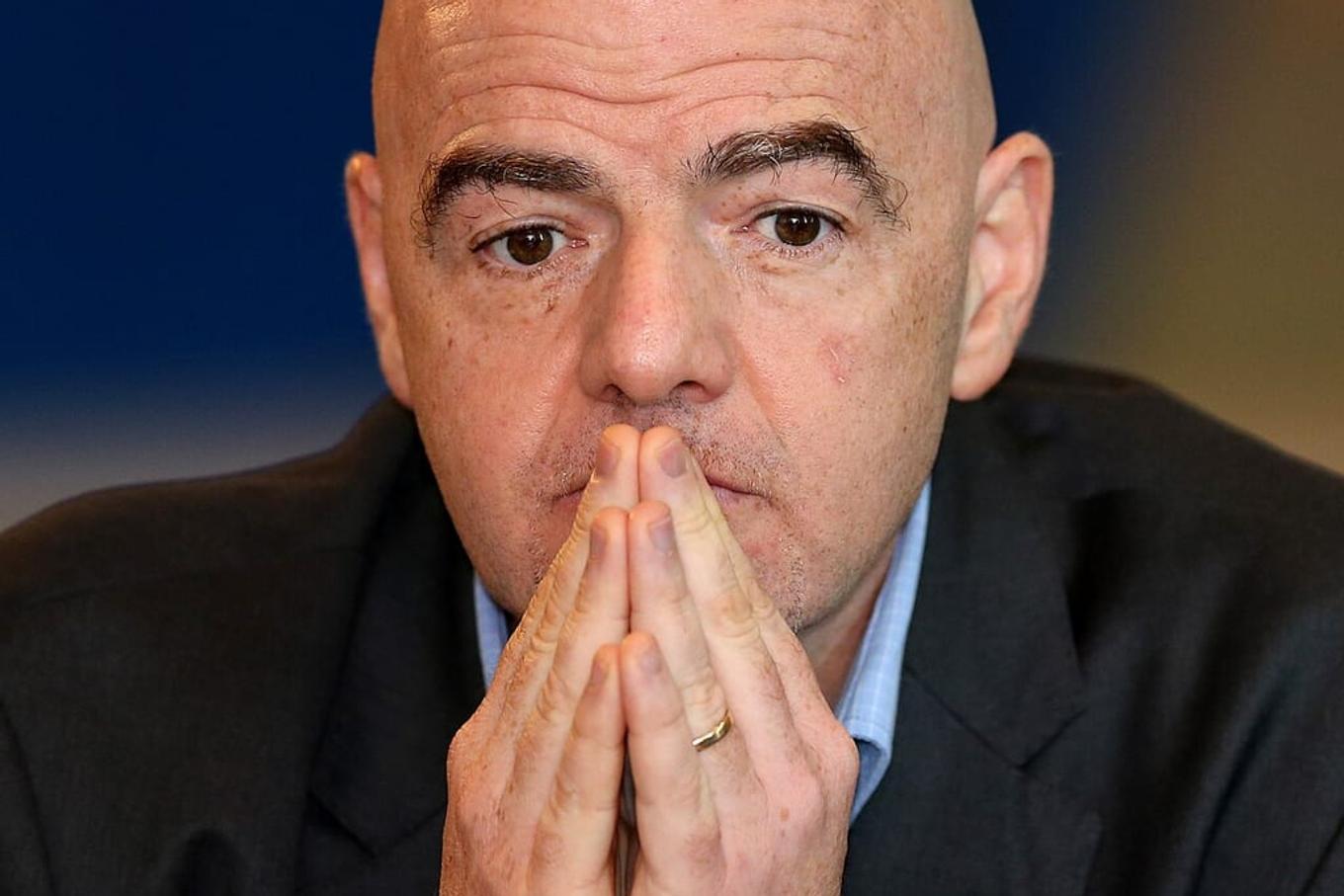
Three of world football’s regional governing bodies are quietly building a blueprint to replace the way Fifa is run, according to the Guardian. Uefa, Concacaf and the Asian Football Confederation (AFC) are said to be in the early stages of drafting an alternative framework, which could either be put to Fifa itself or used as the basis for a challenger campaign in next year’s presidential election.
The confederations argue that Fifa under Gianni Infantino has become a system of patronage rather than collective governance since he succeeded Sepp Blatter as president a decade ago. Their frustration has been building for months, but it boiled over after Infantino’s proposal to sell a 21% stake in World Cup commercial rights to outside investors became public knowledge.
A World Cup sell-off that backfired
Fifa’s plan would have brought private capital into a new entity controlling the World Cup and other Fifa competitions. The proposal collapsed within days once its details emerged, and it drew fierce criticism from national federations and politicians alike. New British prime minister Andy Burnham said the idea was “outrageous” and questioned whether Infantino was fit to lead the organisation, according to CBS Sports.
Infantino’s own senior adviser, Carlos Cordeiro, a former banker and ex-US Soccer president, resigned in protest, stating plainly: “I cannot stand by while FIFA considers selling a stake in the World Cup... it is a bad deal for FIFA’s Member Associations, a bad deal for football.”
With Uefa’s 55 members, Concacaf’s 41 and the AFC’s 47 all opposed, the three confederations alone would mean 143 now stand against it, a majority of Fifa’s 211-strong membership. That arithmetic effectively killed the sell-off plan, but it has not resolved the deeper dispute over how Fifa is governed.
Boycott threats and a leadership vacuum
“Leadership in football is not a possession. It is not about holding, or demanding, power to be held.”
That warning came in a joint letter from Uefa, Concacaf and the AFC, reported by Al Jazeera, which declared that football “belongs to no individual” and accused Infantino of placing himself above the game’s collective interests. Uefa has gone further, saying its members will boycott Fifa competitions, potentially including next month’s Under-20 Women’s World Cup, unless Fifa launches an independent review of the sell-off affair and provides binding guarantees it will not be repeated.
Not every confederation is on board. Africa’s governing body, CAF, backed Infantino on behalf of its 54 members, and Mexico’s federation, along with Argentina, Paraguay, Ecuador and Bolivia, also declined to join the rebellion. Fifa itself has pushed back hard, accusing critics of mounting “a concerted and ongoing effort by some to undermine” the organisation and its president.
Who could replace Infantino
Speculation is mounting over who might challenge Infantino when Fifa’s presidential election is held next year. Concacaf president Victor Montagliani, a Canadian who has spent two decades as a football executive, is widely regarded as the frontrunner, according to ESPN and the Globe and Mail. He has not declared his candidacy, but his confederation’s central role in drafting the new governance framework has fuelled speculation that he is positioning himself for a run.
For international football fans, the standoff matters well beyond boardroom politics. A prolonged dispute over World Cup governance, or a boycott by European teams of a Fifa tournament, would be unprecedented in the sport’s modern history and could reshape how the world’s most-watched sporting competition is organised and financed for years to come.
This article is free to read. It always will be — no paywall, no account, no tracking.