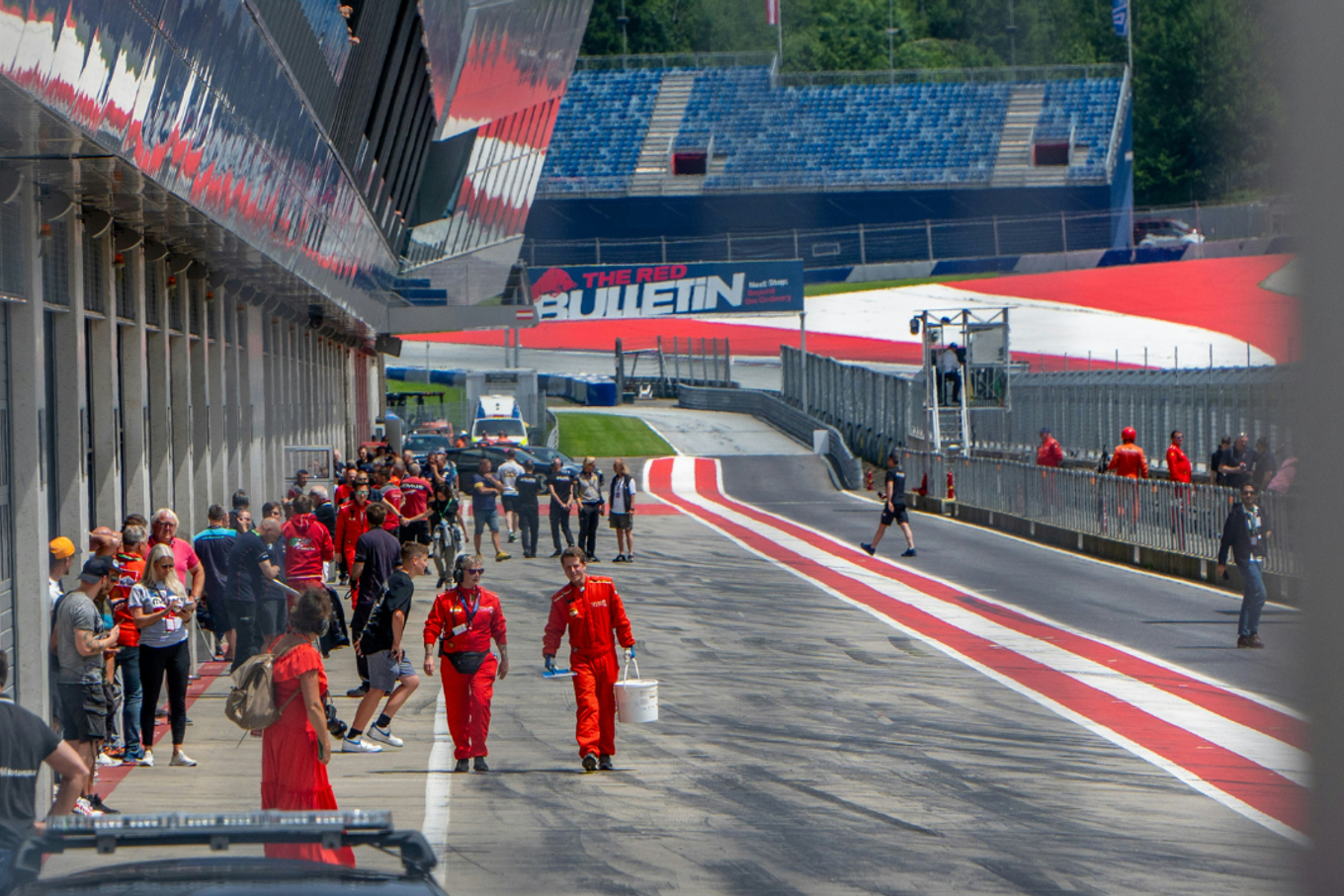
Formula 1’s governing body, the FIA, has formally declared a heat hazard for this weekend’s Austrian Grand Prix at the Red Bull Ring in Spielberg. The declaration was triggered after the official weather service forecast a heat index — a measure combining air temperature and humidity — exceeding 31°C during the race. It marks the first heat hazard declaration of the 2026 season.
What a heat hazard declaration actually means
The heat hazard protocol, introduced by the FIA ahead of the 2025 season, requires teams to fit their cars with advanced driver cooling systems once the threshold is crossed. The minimum car weight is also raised to account for the additional equipment. Drivers are encouraged to wear cooling vests, a measure that generated debate last season when some chose not to.
The rule exists for good reason. At the 2023 Qatar Grand Prix, several drivers required medical attention after suffering heat exhaustion. Lance Stroll was taken to the medical centre post-race, and George Russell said he came close to losing consciousness. Many drivers called it the most physically punishing race of their careers — a wake-up call that prompted the FIA to act.
“In accordance with Article B1.5.10 of the FIA F1 Regulations, having received a forecast from the Official Weather Service predicting that the heat index will be greater than 31.0°C at some time during the race at this competition, a Heat Hazard is declared.” — FIA Race Director Rui Marques
A continent baking in record June heat
The declaration is not taking place in isolation. Mainland Europe is enduring its first major heatwave of the summer, with Austria among several countries breaking June temperature records. GeoSphere, Austria’s national meteorological service, has issued orange alerts — indicating high risk to public safety — for both qualifying day Saturday and race day Sunday. Temperatures in Spielberg are forecast to peak at 36°C, while track surface temperatures could climb as high as 53°C. Vienna, some 200 kilometres to the northeast, is expecting highs of 38°C on race day.
The conditions will test far more than driver fitness. The 2026 season has introduced entirely new power unit regulations, and this weekend will be the first time those engines face temperatures of this magnitude. Teams will need to carefully manage cooling strategies, tyre degradation, and brake wear across a circuit that, despite its short lap, places heavy and repeated demands on machinery. Clear skies, zero rain chance, and minimal wind across all three days leave no natural relief in sight.
“I just think it should be an option — that you can choose for yourself whether you want to wear it or not.” — Max Verstappen, on cooling vests, comments now back in the spotlight
Heat as a sporting variable
Beyond the safety dimension, extreme heat reshapes the race itself. Higher temperatures accelerate tyre wear, alter pit stop windows, and demand more aggressive thermal management from engineers. At a circuit where the Red Bull Ring’s elevation changes already stress cooling systems, the heat adds a significant strategic variable that could influence the outcome as much as raw pace. For fans in the grandstands — and there will be many, given the race’s popularity in the heart of F1 country — orange-level heat warnings are in place for them too, with hydration and shade strongly advised.
The Austrian Grand Prix, the eighth round of the 2026 season, runs from 26 to 28 June, with the race starting at 15:00 local time on Sunday. The championship battle adds further intrigue: Mercedes leads both standings, but Ferrari’s Lewis Hamilton arrives on a wave of momentum after his first win in Ferrari colours at the Barcelona Grand Prix. Whether the heat favours or hinders any particular team remains one of the weekend’s open questions.
This article is free to read. It always will be — no paywall, no account, no tracking.