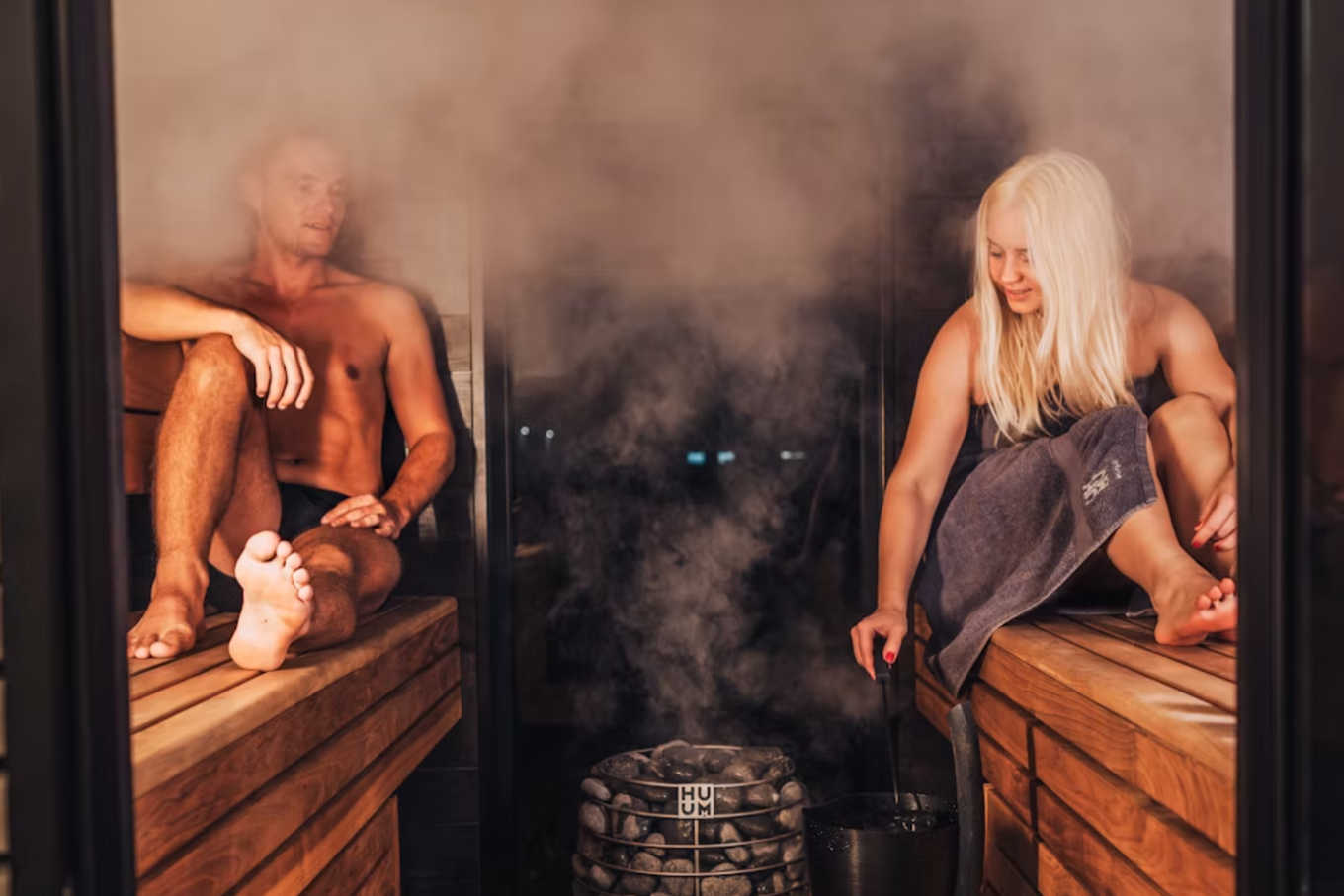
As Europe endures a summer of punishing heat, a question is gaining traction among physiologists: could regular sauna use train the human body to withstand extreme temperatures more safely? Scientists are cautiously optimistic, though they are careful to distinguish between long-term adaptation and short-term relief.
The context is urgent. According to the World Health Organization, data from five European countries already shows nearly 10,000 excess deaths linked to extreme heat this summer. Only around 20% of European homes have air conditioning, and much of the continent’s housing stock was built to retain warmth rather than shed it. Western Europe recorded its hottest June on record, and the UK’s Health Security Agency issued heat health alerts across much of England as the country experienced its fourth heatwave of the year, The Guardian reports.
What happens to the body in the sauna
The science of heat acclimatisation is well established in sports physiology, where athletes use repeated heat exposure to prepare for competing in hot environments. Professor Jari Laukkanen, a cardiologist at the University of Eastern Finland whose research focuses on sauna use and cardiovascular health, says similar physiological adaptations are likely to occur with passive heat exposure such as sauna bathing. According to The Guardian, he notes that heat adaptations include earlier and more efficient sweating, improved skin blood flow, expansion of plasma volume, and reduced cardiovascular strain during subsequent heat exposure.
“In other words, regular heat exposure may help the body regulate temperature more efficiently.” — Prof. Jari Laukkanen, University of Eastern Finland
Those benefits go beyond thermal comfort. A landmark Finnish cohort study, which followed more than 2,300 men for roughly 20 years and was published in JAMA Internal Medicine, found that using a sauna four to seven times per week was associated with a 40% to 60% lower risk of cardiovascular disease and death compared to once-weekly users. Subsequent research has reinforced those findings, showing improvements in blood pressure, cholesterol, and arterial stiffness. A 30-minute Finnish sauna session has also been shown to mobilise immune cells independently of fluid loss through sweating, according to a study published in the journal Temperature in July 2026 by researchers at the University of Eastern Finland.
Acclimatisation is not the same as protection
Experts are firm on one point: stepping into a sauna during a heatwave is not a sensible strategy, and may be actively harmful. Laukkanen told The Guardian there is currently limited evidence that sauna use during a heatwave protects people from heat-related illness. The benefits, he stressed, are more likely the product of long-term, consistent practice built up over weeks and months.
“Heat acclimation is a preparation strategy for the mild months, not a coping strategy for the hottest day of the year.” — Dr. Jessica Mee, University of Worcester
Dr. Jessica Mee, of the University of Worcester, who is currently recruiting participants to study whether regular hot water immersion can improve the body’s heat response, told The Guardian that regular heat exposure also changes how people perceive and behave in heat. People accustomed to heat tend to pace themselves more carefully, hydrate more consistently, and recognise warning signs earlier. But she cautions that on an already hot day, using a sauna adds one thermal challenge on top of another, with no meaningful recovery period for a body already dealing with accumulated heat stress. Dr. Heather Massey, an expert in extreme environments and physiology at the University of Portsmouth, adds that the physiological adaptations behind heat acclimatisation rely heavily on the body’s capacity to increase sweating and skin blood flow, meaning the benefits may not be evenly distributed across all people.
As climate change drives more frequent and severe heatwaves across a continent warming at roughly twice the global average, the question of how populations can build resilience has become a pressing public health concern. Personal physiology is only one piece of a much larger puzzle that includes housing design, urban planning, and public cooling infrastructure. But for those with access to regular sauna facilities, the emerging research suggests that the habit, built over time during cooler months, may offer a meaningful edge when the heat returns.
This article is free to read. It always will be — no paywall, no account, no tracking.