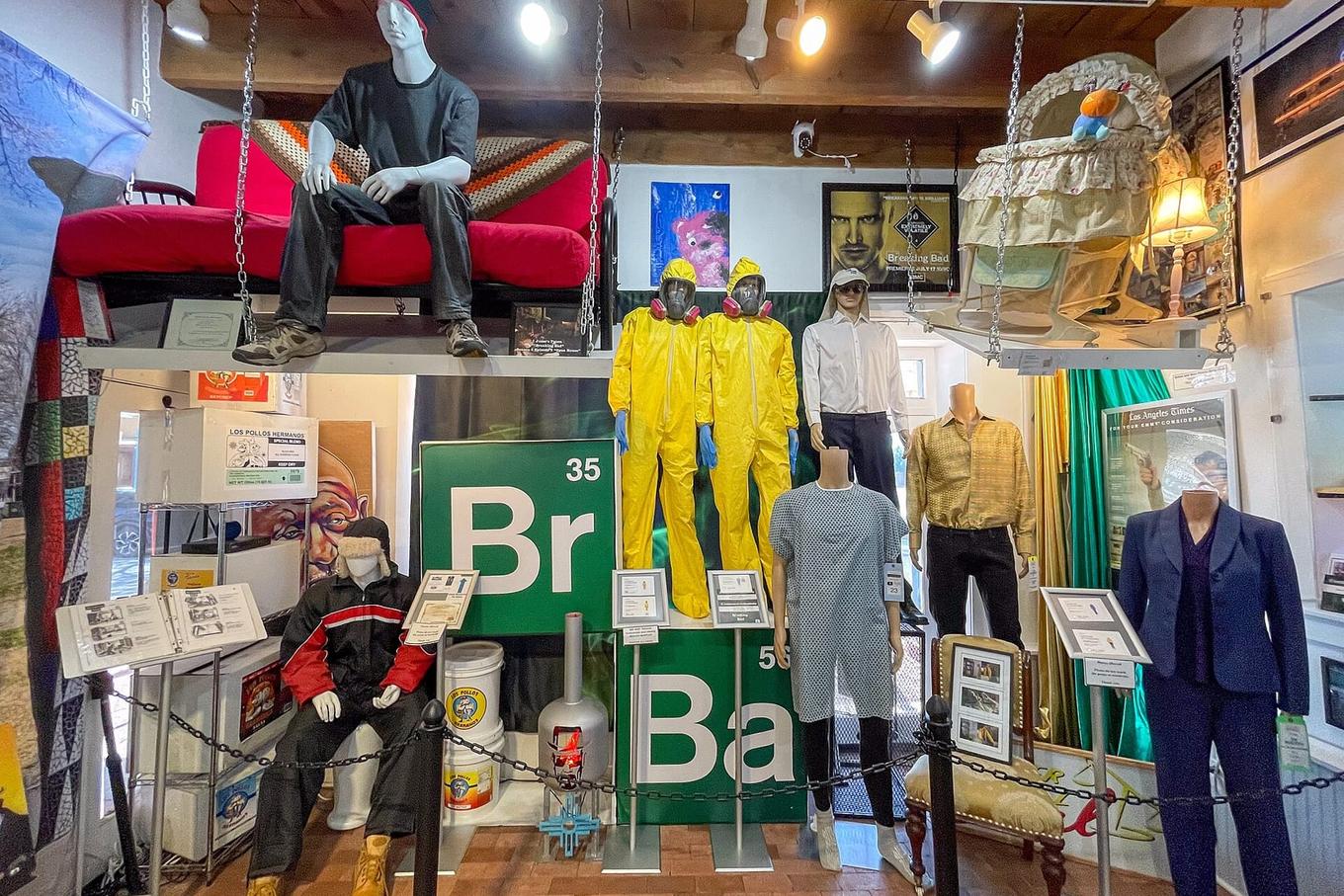
Long after its final episode aired, Breaking Bad keeps giving audiences new things to notice. One of the most enduring is not a plot twist but a design choice: the AMC drama’s costume team quietly used colour as a storytelling tool, charting each character’s descent or resistance through the clothes they wore on screen.
The observation is not fan speculation alone. It has been corroborated by multiple entertainment outlets and, crucially, by the show’s own creator, Vince Gilligan. A dedicated page on the Breaking Bad Wiki (Fandom) catalogues the pattern in detail, and it lines up with what costume designers Kathleen Detoro and Jennifer L. Bryan built into the show across its five seasons on air, from January 2008 to September 2013.
From beige chemistry teacher to black-clad kingpin
The clearest case is Walter White, the mild-mannered chemistry teacher played by Bryan Cranston who becomes the methamphetamine manufacturer known as Heisenberg. He begins the series dressed in the kind of clothing that draws no attention at all.
“Very beige and khaki-ish, very milquetoast,” Vince Gilligan said of Walt’s early wardrobe, as reported by CBS Texas via GQ.
As Walt embraces his double life, his clothing shifts toward green, before darkening into black as Heisenberg takes over. Gilligan has confirmed the early beige-to-green shift, visible from the pilot episode, was a deliberate visual signal rather than a coincidence of wardrobe availability.
The transformation matches how Gilligan has described his ambitions for the character in interviews cited across multiple outlets: to take a man from schoolteacher to hardened criminal.
Gilligan’s own shorthand for the arc, echoed in reporting drawing on his public remarks: turning “Mr. Chips into Scarface.”
A colour wheel for the whole cast
According to the Fandom wiki’s analysis, Walt’s green sits at the centre of a broader colour-wheel logic that extends to the people around him. Jesse Pinkman, his former student turned business partner, is closely associated with yellow, the same colour the show uses to signal methamphetamine itself, before his wardrobe darkens into blacks and greys as his own moral position deteriorates.
Skyler White, Walt’s wife, wears blue early on, a colour the wiki’s theory ties to loyalty and innocence. As she becomes aware of, and eventually complicit in, her husband’s drug operation, her clothing follows the same downward slide into darker tones seen elsewhere in the cast.
The wheel also extends to the extended family. Hank Schrader, Walt’s brother-in-law and a DEA agent who spends much of the series hunting Heisenberg without knowing his identity, is coded in orange, sitting in opposition to Walt’s green on the colour wheel. His wife, Marie Schrader, is dressed almost exclusively in purple throughout the show, a consistency multiple analyses have flagged as unusual given how much every other character’s palette shifts over time.
Even the villains got a palette
The system was not reserved for the White family. Gus Fring, the calculating drug distributor played by Giancarlo Esposito, moves between yellow, tied to his fast-food front business Los Pollos Hermanos, and black formal attire when operating as the more dangerous version of himself.
The idea reached a wider audience in August 2013, near the end of the show’s run, when Slate published an infographic by designer John LaRue mapping every main character’s on-screen wardrobe colour by season. That graphic has been referenced repeatedly in the years since, appearing in retrospective pieces from outlets including Gizmodo, CBR, Looper and Stylecaster, each revisiting how deliberately the show’s visual language was constructed.
Why the theory still holds up
Colour symbolism in costume design is hardly unique to Breaking Bad, but few television dramas have had the technique documented in as much detail, or confirmed as directly by the creator himself. For a show built around a chemistry teacher’s transformation, the choice to use something as visually literal as colour to track that change fits the series’ broader habit of embedding meaning into small, easily missed details.
More than a decade after the finale aired, that level of scrutiny has not faded. The continued attention from entertainment outlets and fan-run archives alike suggests that for many viewers, understanding Breaking Bad still means paying attention not just to what characters said and did, but to what they wore while doing it.
This article is free to read. It always will be — no paywall, no account, no tracking.