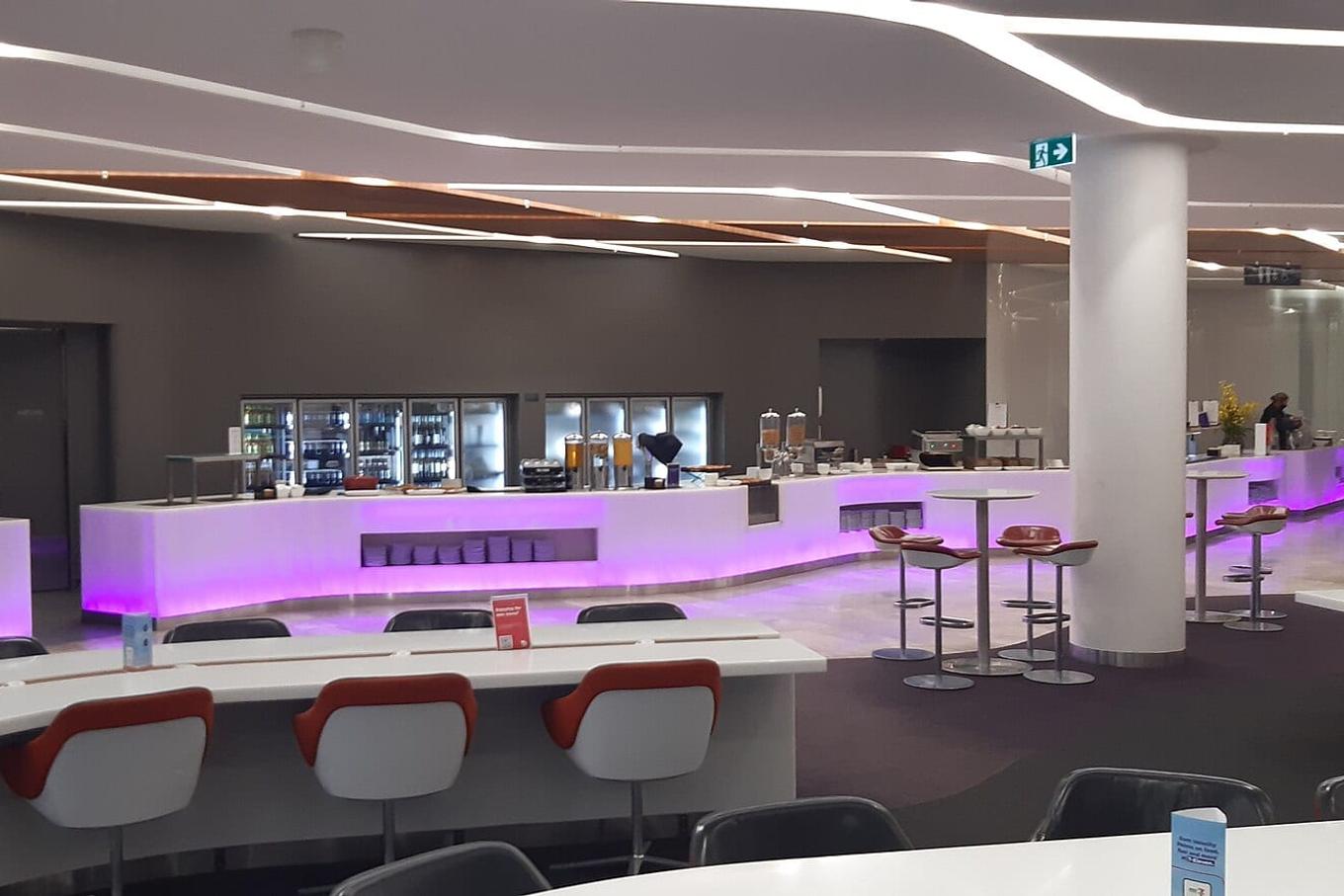
Revolut, the fintech that built its business on smartphone banking rather than branches, is moving into one of travel’s most demanding physical services. The company has signed an agreement with Copenhagen Airport to open its first branded lounge in 2027, according to Business Traveller, marking a deliberate step off the phone screen and into bricks and mortar.
From app to armchair
Founded in London in 2015, Revolut grew by bundling foreign exchange, payments, accounts and cards into a single app, and now says it serves more than 75 million customers globally, largely without the physical branch network of established banks. Launching a lounge takes the company into a capital- and labour-intensive business far removed from app distribution, one that requires terminal real estate, catering, staffing and crowd management, with quality tested whenever seats, showers and quiet areas are under pressure.
Revolut has signed an inaugural partnership agreement with Copenhagen Airport and selected Plaza Premium Group, which operates the world’s largest network of airport lounges, as its operating and investment partner. The company says the facility will be Copenhagen’s newest flagship lounge and the Schengen area’s largest common-use lounge, serving eligible travellers across multiple airlines, though it has disclosed no capacity, floor area, amenities or exact opening date.
“Everyone agrees airport lounges tend to underwhelm, we want to bring our design ethos into the real world, and will be creating something gutsy and beautiful.” — Hadi Nasrallah, Revolut’s director of Product GP and New Bets
Why Copenhagen, and why now
Nasrallah pointed to the Nordics, where Revolut counts more than two million customers and expects to pass three million by the end of 2026, and to Copenhagen’s single-terminal layout, which funnels every departing passenger through one concourse rather than scattering them across satellites. Copenhagen Airport handles roughly 30 million travellers a year, giving Revolut a concentrated audience to test its concept before wider rollout.
The lounge push follows Revolut’s decision to pilot its first physical retail store in Barcelona, part of a broader expansion that includes a £10bn investment plan and a goal of reaching 100 million customers by mid-2027, Euronews reports. Investors are watching closely because the Financial Times has reported Revolut is aiming for a valuation of up to $200bn in a stock market listing, not expected before 2028, and a highly visible consumer brand presence could support that pitch to public markets.
Some industry observers are more sceptical about what Revolut is actually contributing. The lounge “will be delivered with Plaza Premium Group, Revolut’s operating and investment partner for the launch”, prompting the travel newsletter Head for Points to ask what the fintech itself is bringing beyond its name, since Plaza Premium appears to be both running and funding the build, similar to naming-rights deals it has struck elsewhere, such as rebranding its Edinburgh lounge for Turkish Airlines.
A crowded, unforgiving market
Lounges are one of the most coveted perks in consumer finance, and the category is already crowded with schemes like Priority Pass and LoungeKey alongside airlines’ own rooms. Revolut’s Ultra tier already gives customers unlimited access to more than 1,600 third-party lounges, while Premium and Metal cardholders can buy discounted passes, so a proprietary lounge changes that relationship from paying for access to owning the space itself.
Whether that bet pays off depends on execution rather than ambition. Lounges are expensive to fit out and unforgiving to run, and building loyalty through a physical space is a very different discipline from shipping app features. For a company that has spent the past year adding services from trading to messaging in pursuit of “super-app” status, the Copenhagen lounge is as much a statement of brand confidence as it is a hospitality venture, and its success will likely shape whether Revolut follows through on turning it into a wider European network.
This article is free to read. It always will be — no paywall, no account, no tracking.