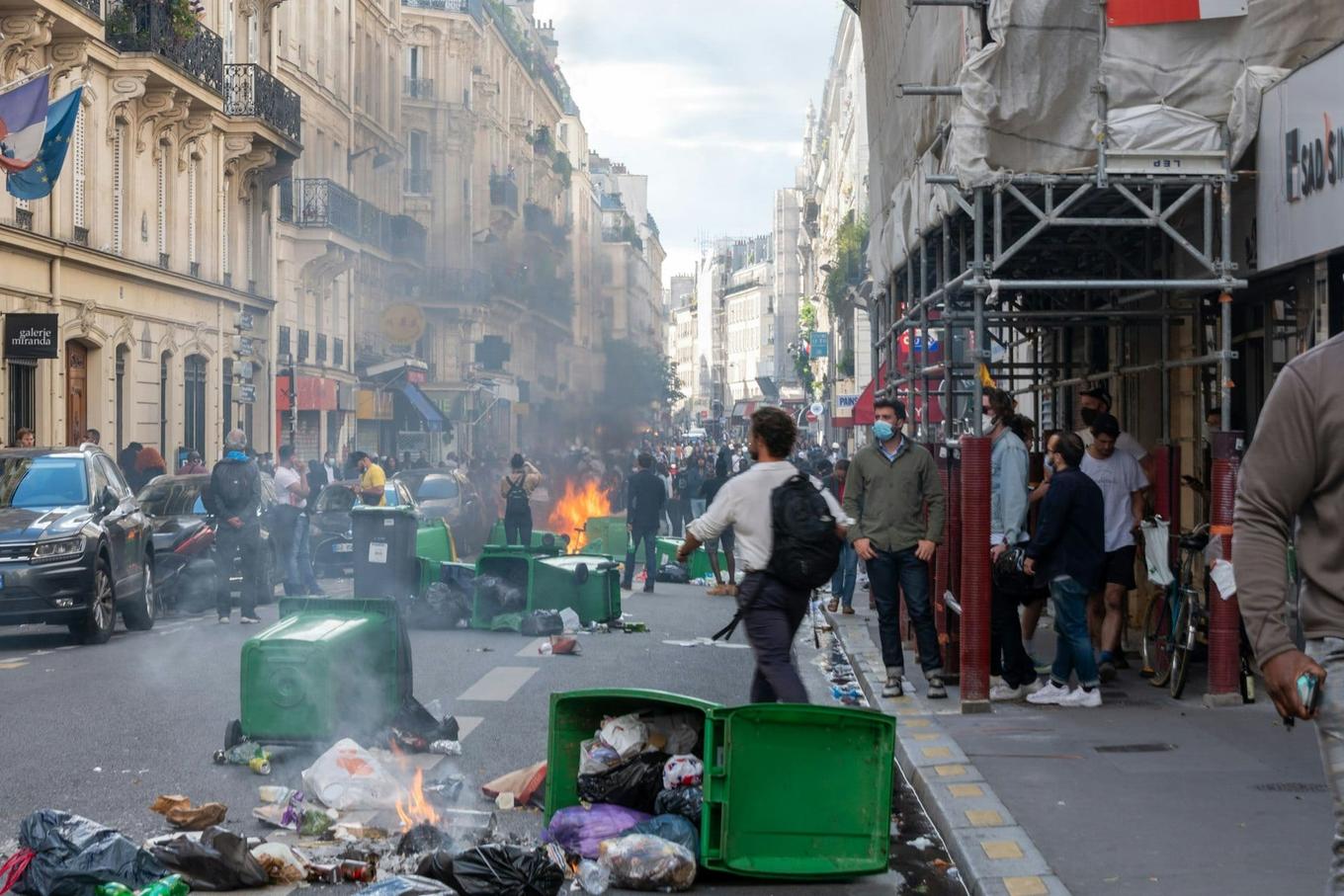
What began as a nationwide protest over the rising cost of living and the state of French schools turned, over the weekend of 17 and 18 October 2026, into some of the worst urban unrest France has seen in years. Roughly 550,000 people marched across the country, according to Forbes, with Gilets Jaunes groups joining student-led demonstrations. In Paris, Marseille, Lyon and Bordeaux, the marches gave way to rioting and looting that emptied shelves and smashed storefronts.
Luxury retailers bore much of the damage. Louis Vuitton stores in Marseille and Bordeaux were ransacked, as was Hermès in Marseille and Dior’s flagship on Rue Saint-Honoré in Paris. Céline, Rolex, Apple stores in Lille and Bordeaux, Decathlon, Sephora in Poitiers, and Galeries Lafayette outlets in Bordeaux, Rennes and Chambéry were also hit, alongside supermarket chains Carrefour and Franprix.
A government scrambles to respond
French Commerce Minister Serge Papin said at least 3,000 businesses nationwide suffered damage or looting over the weekend, a figure far higher than a separate Forbes tally of about 1,500 shops. Damages are estimated in the hundreds of millions of euros. Nearly 2,400 people were arrested, Forbes reported, though other outlets put the figure at around 1,800 on individual days.
Prime Minister Sébastien Lecornu convened an emergency meeting at the Hôtel de Matignon and announced localised curfews, including around Place de la République and the Les Halles shopping district in Paris, with a curfew-zone map to follow.
Despite scenes of severe violence and extensive property damage, no one was killed and that is a miracle.
Interior Minister Laurent Nuñez offered his resignation over the failure to prevent the riots, which Macron rejected. Nuñez pledged reinforced police and gendarmerie deployment for the following weekend. The unrest comes against a backdrop of stagnant living standards, with France’s inflation rate remaining a point of public frustration even as it has eased from its post-pandemic peak.
Stolen goods reappear online
Within days of the looting, items suspected of being stolen began showing up for resale. Designer bags, Dior perfume and Sephora cosmetics were listed on Vinted and eBay, some still bearing original price tags. Pokémon trading cards appeared alongside trophies and equipment belonging to esports club Team Vitality, including a trophy listed at €1,250. Six Sephora own-brand lip glosses were offered for €15, according to The Kyunghyang Shinmun, citing Business Insider.
The French government summoned representatives of Vinted, Amazon, eBay and TikTok to discuss removing listings of stolen goods. Vinted said it had identified and removed suspicious listings, strengthened monitoring, and introduced a policy to permanently suspend accounts confirmed to be fencing stolen merchandise. eBay said it could not confirm an increase in listings tied to the weekend’s thefts but that a specialised team uses detection tools and provides law enforcement with a dedicated reporting portal.
They’d taken everything.
That remark, from a Paris shopkeeper near Place de la République cited by Forbes, points to a divide in how the unrest’s aftermath is being felt. Large international brands like Louis Vuitton and Hermès have the resources to absorb losses and restock quickly. Independent, family-run retailers, many without comparable insurance cover, face a longer and more uncertain recovery.
This article is free to read. It always will be — no paywall, no account, no tracking.