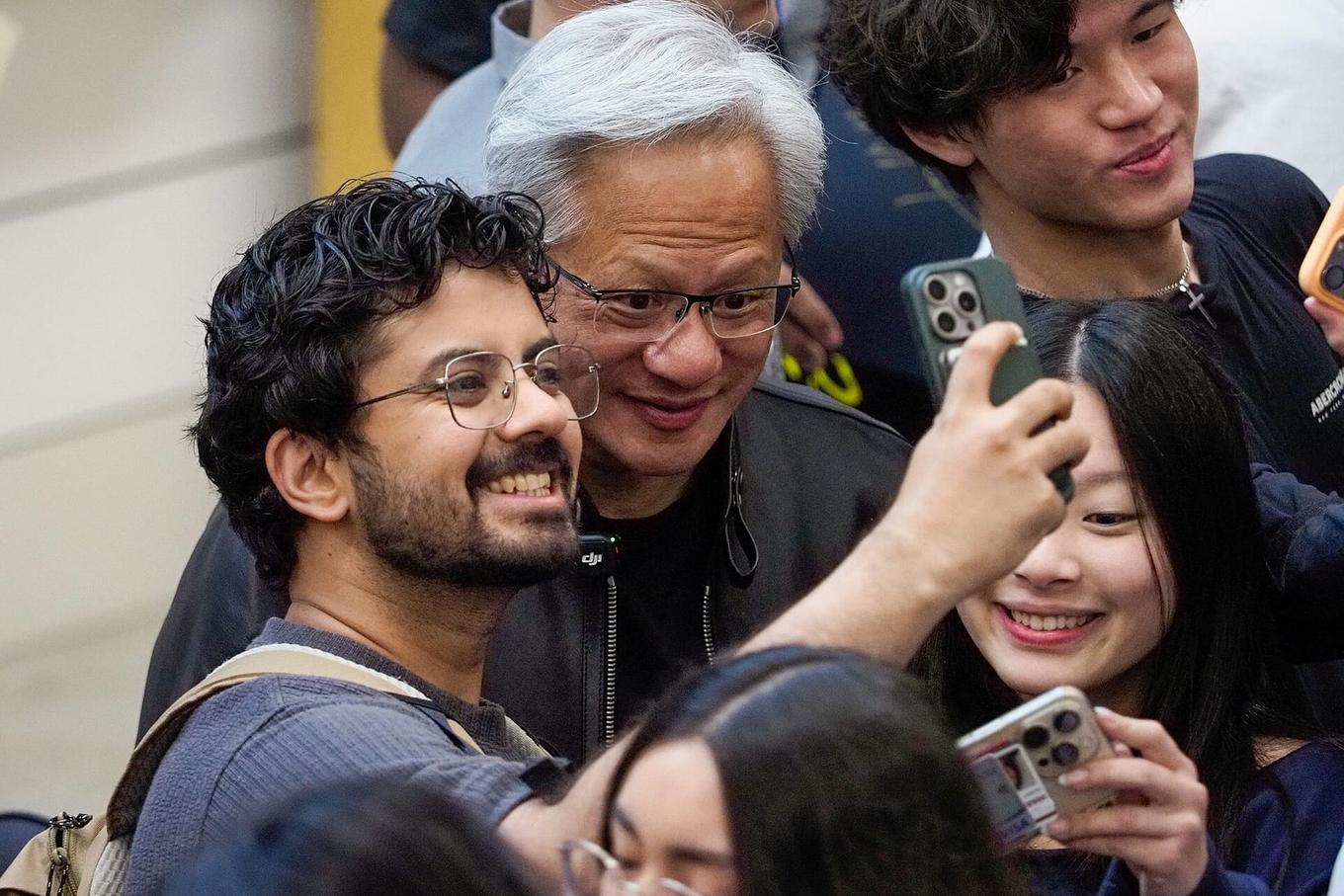
Nvidia’s board of directors met this week to consider whether founder and chief executive Jensen Huang should remain in charge of the world’s most valuable chipmaker, according to reports from the Wall Street Journal and ABC News. The meeting came after a second extramarital affair involving Huang emerged, just days after he had publicly admitted to an earlier one.
A scandal that began with a suspected spy
The crisis began on 29 October, when the New York Times reported that Huang had a ‘close relationship’ with Alice Huang, a senior executive at the Singapore-based data-centre company Megaspeed, whom US intelligence suspects of working for China’s Ministry of State Security. The two are not related. Photographs reportedly show them together in Taipei in 2024 and 2025, and American intelligence agencies are said to have circulated a memo last spring raising concerns about her. On 8 November, Nvidia’s board announced an independent investigation, to be overseen by a committee of independent directors with outside legal counsel, ‘in light of recent reporting that founder and CEO Jensen Huang has been the target of a foreign intelligence effort.’ The same day, Huang sent an internal message to employees acknowledging he had been unfaithful to his wife.
“I was unfaithful to my wife.” — Jensen Huang, founder and CEO, Nvidia
China’s government has rejected the espionage allegations outright. Foreign ministry spokesperson Guo Jiakun called the claim ‘unsubstantiated’ and said it amounted to nothing but ‘smears against China,’ according to Newsweek.
Trump’s defence, and a second affair
President Donald Trump has publicly backed Huang. He told reporters he had spoken with the Nvidia chief by phone and believed his account that he had no knowledge the woman was a spy. CNN has reported, citing a source familiar with the matter, that Secretary of State Marco Rubio briefed Trump on intelligence about Huang’s relationship with the suspected operative while the two travelled together to China in May 2026, despite Trump publicly saying he only learned of it recently.
“I really believe him... he had absolutely no idea that the person in question was a spy.” — Donald Trump, President of the United States
The situation escalated further on 11 November, when the New York Times and Wall Street Journal reported that Huang had engaged in a second affair, this time with a senior Nvidia executive who reported directly to him. The report triggered a further slide in Nvidia’s share price of nearly 7% in after-hours trading, on top of a 4.3 to 5% drop two days earlier that had already wiped out close to $200 billion in market value. Since the initial report on 29 October, Nvidia has lost close to $1 trillion in market capitalisation in total.
Political and legal pressure mounts
Congressional Republicans are pushing for answers. Representative Brian Mast said he was prepared to subpoena Huang if he did not respond to a request from House Republicans by 11 November, and the House Select Committee on China has asked Huang to appear for a closed-door briefing on 18 November concerning his relationship with Alice Huang. A proposed federal class-action lawsuit has also been filed against Nvidia and Huang, alleging the company made ‘false and misleading statements’ about his interactions with her.
Nvidia’s board has said it has no reason to believe national security or company secrets were compromised, but that its investigation will examine all available information. In a statement, the board said: ‘Jensen fully supports the review and has committed to cooperating with it.’ Whether that cooperation is enough to keep him in the job is now, by all accounts, an open question.
This article was researched and drafted with AI assistance and reviewed by Lasse Pedersen before publication. How we use AI
This article is free to read. It always will be — no paywall, no account, no tracking.