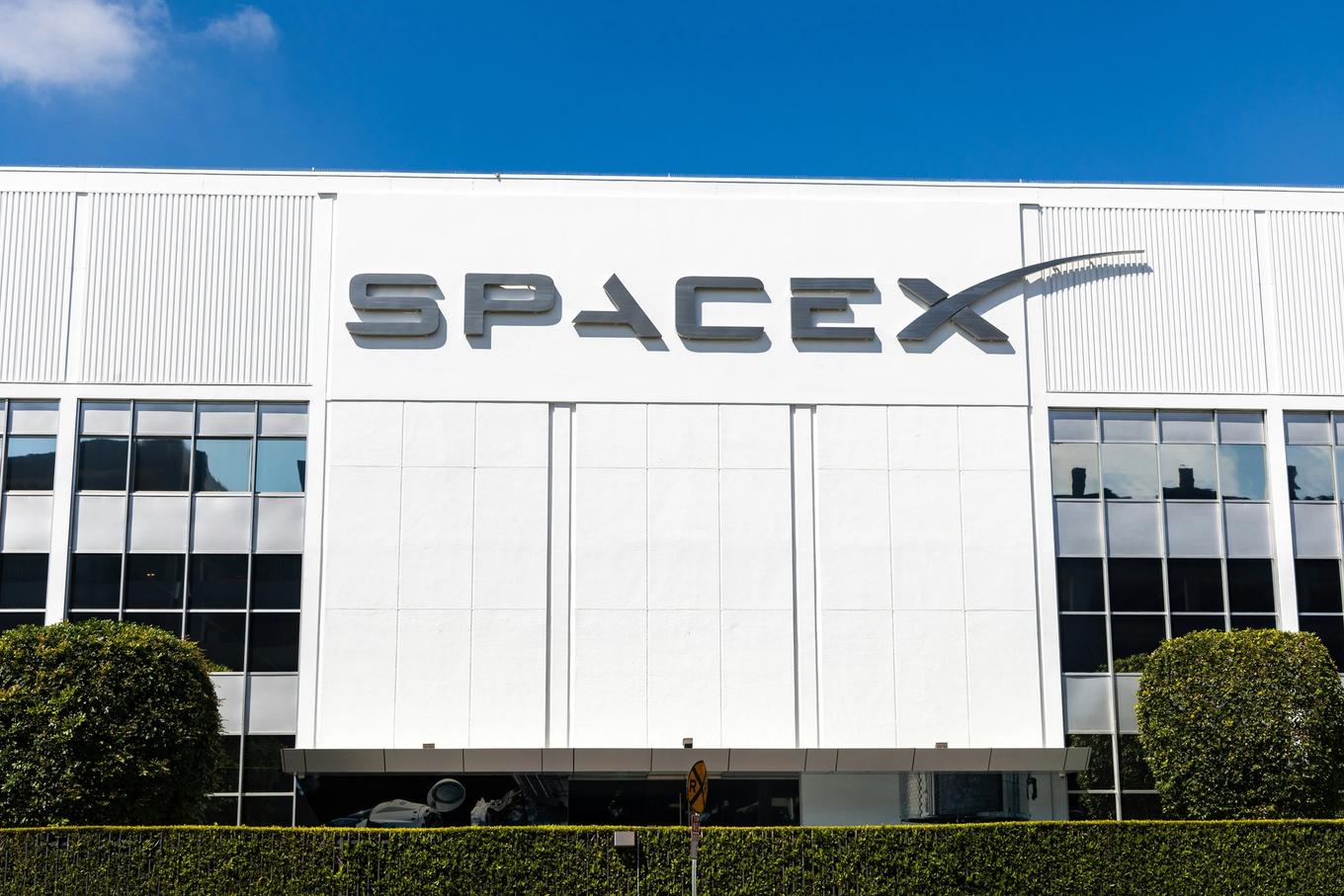
SpaceX shares fell as much as 9% on Thursday, June 18, extending two consecutive days of losses after one of the most closely watched stock market debuts in history. The decline came less than a week after the company’s blockbuster listing on the Nasdaq, which had sent its valuation soaring past $2 trillion and briefly pushed it into the ranks of the world’s five most valuable public companies.
At their lowest point during Thursday’s session, shares traded at $174.80 — down from an IPO offering price of $135 set just last week. Despite the sharp pullback, the stock still traded roughly 29–30% above that initial price, a reminder of just how explosive the opening days of trading had been. Earlier in the week, SpaceX’s market capitalisation had overtaken Amazon’s and momentarily surpassed Microsoft’s, a milestone that drew attention from investors and analysts across global financial markets.
Profit-taking after history’s largest IPO
Market analysts were quick to frame the sell-off as a predictable correction rather than a structural warning sign. IPOX Schuster analyst Kat Liu noted that “given the magnitude of the IPO and the strong initial performance, some degree of profit-taking is not surprising,” describing it as “a particularly eventful and shortened trading week for the largest IPO in history.”
Analysts and portfolio managers had warned ahead of the listing that SpaceX’s relatively small public float — meaning only a limited portion of shares were made available to the public — combined with its extraordinarily high valuation would likely produce sharp price swings in the early weeks of trading. Thursday’s session appeared to confirm that forecast. A small float amplifies volatility: with fewer shares in circulation, large buy or sell orders move the price more dramatically than they would in a deeply liquid stock.
An AI spending spree raises new questions
Compounding investor unease is the scale of SpaceX’s recent dealmaking. On Tuesday, the company announced it would acquire Anysphere — the startup behind Cursor, a widely used AI coding assistant — in an all-stock deal valued at $60 billion. The move is designed to accelerate SpaceX’s push into enterprise AI software, a market it entered more forcefully earlier this year when it absorbed Elon Musk’s AI startup xAI, the company behind the Grok chatbot, in a separate record-setting transaction.
“Its shares soared in their first two days of trading before giving up some gains as investors assessed whether the company’s rich valuation can be justified by its costly AI push.” — Reuters
On top of the Anysphere acquisition, SpaceX’s bankers are reported to be preparing a bond offering of at least $20 billion — a debt raise that would provide fresh capital for the company’s expanding AI infrastructure ambitions. For international investors, particularly those in Europe and Asia who participated in the IPO or hold positions through exchange-traded funds with US tech exposure, the combination of aggressive dealmaking and a soaring valuation demands careful scrutiny.
A ripple effect across the space sector
The turbulence was not confined to SpaceX. Shares across the broader US space industry fell in sympathy on Thursday. Rocket Lab and Planet Labs each dropped around 3%, while AST SpaceMobile — which provides satellite-based mobile broadband — fell approximately 7%, and Intuitive Machines declined around 3%. The sector-wide slide reflects how much SpaceX’s market dominance sets the tone for investor sentiment toward space as an asset class globally.
“Due to its relatively small public float and high valuation, analysts and portfolio managers have cautioned investors to anticipate volatility early in SpaceX’s life as a public company.” — Reuters
For now, the fundamentals of SpaceX’s core launch business — which includes the Falcon 9 rocket, the Starship programme, and the Starlink satellite internet constellation — remain intact and commercially dominant. But as the company transforms itself into something closer to an AI conglomerate, investors will need to weigh whether a valuation built on rocketry can also carry the weight of a trillion-dollar technology bet.
This article is free to read. It always will be — no paywall, no account, no tracking.